

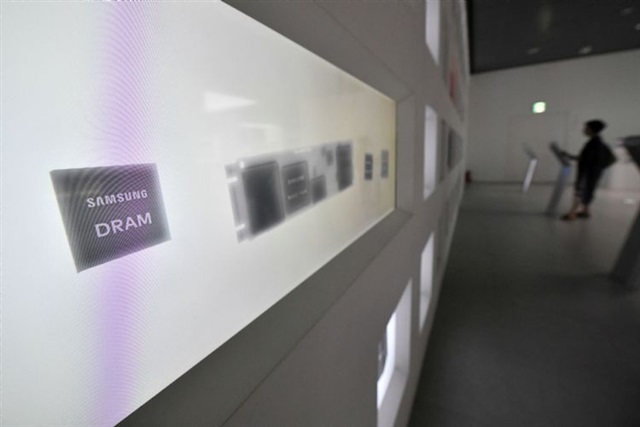
Samsung and SK Hynix are accelerating DRAM wafer production as demand rebounds and prices climb, while China's CXMT falls behind in the DDR5 transition, limiting its ability to compete in the high-end server market.
Chosunbiz, citing Omdia data, reports that Samsung's DRAM wafer input will reach 1.93 million by the end of the third quarter of 2025, a 5% increase from the first quarter. Industry observers add that Samsung is advancing its expansion at its Pyeongtaek campus in South Korea, with output forecast to top 2 million wafers per quarter in 2026 — a potential record.
iNews24 previously reported that Samsung moved to full DRAM capacity in August 2025. Chosunbiz noted that by the fourth quarter of 2025, the Pyeongtaek fab will run at maximum capacity, with Line 4 alone expected to produce more than 1 million wafers per quarter, about half of Samsung's total DRAM output.
Meanwhile, SK Hynix is also raising output. Quarterly wafer input was about 1.3 million in 2024, but with HBM volumes surging, the company aims to maintain production at 1.5 million wafers in 2025, nearing its 1.6 million peak. Expansion remains limited until its Yongin semiconductor cluster is completed, keeping its growth behind Samsung.
CXMT faces challenges in high-end markets
CXMT's DDR5 transition is advancing more slowly than expected. Hanwha Investment & Securities analysts say this delay hinders its entry into the high-speed server segment, while Samsung and SK Hynix maintain very low DDR5 inventories — conditions set to push prices higher.
Market conditions favor Korean manufacturers
Market dynamics favor the South Korean suppliers. As Samsung, SK Hynix, and Micron divert large portions of DRAM capacity to HBM, supply for conventional DRAM used in servers, PCs, and mobile devices remains constrained.
Hanwha Investment & Securities expects contract prices for key server DRAM products to continue rising through the end of 2025, with gains in the fourth quarter of 2025 likely to outpace those in the third quarter.
Article translated by Levi Li and edited by Jerry Chen