
South Korean test-equipment suppliers Digital Frontier and UniTest have secured four orders for HBM4 wafer testers from SK Hynix worth a combined KRW247.84 billion (approx. US$172 million) in 2026, expanding domestic vendors' role in a memory-testing segment where Japan's Advantest has long been an established supplier.
Dealsite reported, citing industry sources, that early HBM production often relied on general-purpose DRAM testers reconfigured for the job. The approach was adequate when volumes were lower, and some production used sampling, but became less productive as output and full-inspection workloads increased.
Existing DRAM platforms can still perform HBM tests, but insufficient output may lengthen test cycles or require the work to be divided into multiple passes. The report also cited expectations that Samsung Electronics could gradually diversify its tester purchases through South Korean supplier YC, although neither company has announced such a plan.
HBM4 raises testing requirements
HBM products undergo testing at several stages. Wafer-level testing screens individual dies before they are diced and assembled, while additional testing can take place after assembly and packaging. The four SK Hynix orders specifically cover wafer testers rather than final-test systems for completed HBM packages.
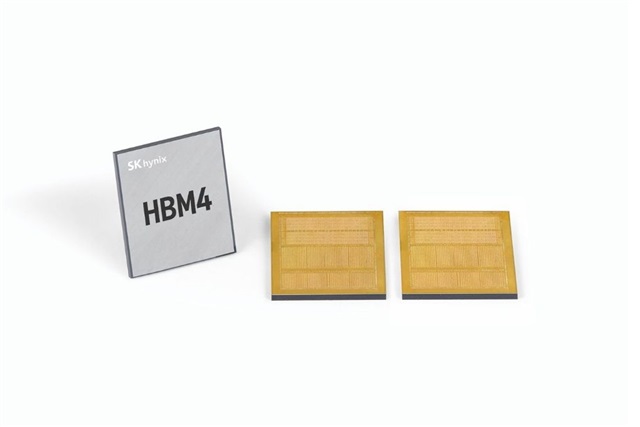
SK Hynix's HBM4 uses 2,048 I/O terminals, twice the previous generation, underscoring the increase in interface complexity. The company has not publicly detailed the tester architecture required for the product.
South Korean equipment makers were positioned to respond because of their experience supplying DRAM and NAND flash test systems. They initially added HBM functions to existing memory-test platforms before moving toward equipment designed specifically for newer HBM generations.
Digital Frontier and UniTest move into volume supply
DI said in its first-quarter report that its wafer tester business expanded from HBM3 and HBM3E applications in 2025 to a newly developed HBM4 wafer tester that completed customer qualification and entered volume supply in 2026.
The company attributed a 90.1% year-over-year increase in first-quarter operating profit partly to improved profitability from the new HBM4 equipment.
Regulatory filings show that Digital Frontier, DI's semiconductor test-equipment subsidiary, received a KRW 99.75 billion HBM4 wafer tester order from SK Hynix on January 29, followed by a KRW 96.25 billion order on March 27. The first contract ran through June 30, while the second runs through August 31.
UniTest secured a KRW 29.16 billion HBM4 wafer tester contract on May 11, with delivery scheduled through August 31. It disclosed another KRW 22.68 billion order on July 23, running through October 8. All four orders were explicitly designated for HBM4 wafer testers.
The orders show that the shift has progressed beyond equipment development and customer evaluation into commercial supply. They do not, however, establish that Advantest lost an equivalent amount of business or that SK Hynix is replacing the Japanese supplier.
Advantest demand remains strong
Advantest has worked with HBM since its initial production in 2013, and HBM accounted for roughly half of its memory tester business in 2024. Its latest results point to continued growth in memory-tester demand.
The company raised its calendar-2026 memory tester market forecast to US$2.5 billion to US$3 billion, citing stronger demand for high-performance DRAM. It said rising production of advanced AI-related semiconductors and increasing device complexity are driving growth in test requirements and test insertions.
Advantest also expects higher tester sales for high-performance DRAM back-end applications and is expanding memory tester capacity. Those comments concern the wider memory-testing market and do not specifically confirm its position in HBM4 wafer testing.
Samsung's supply chain offers a related but less conclusive example. YC signed a KRW 93 billion semiconductor test-equipment contract with Samsung on May 29. The filing does not identify the equipment as HBM or HBM4 gear, meaning the order cannot be used as direct evidence of a Samsung HBM4 sourcing shift.
For now, the clearest evidence comes from SK Hynix. Digital Frontier and UniTest have moved from developing and qualifying HBM equipment to receiving orders explicitly designated for HBM4 wafer testing, broadening South Korean participation as the memory industry adopts more specialized test platforms.
Article edited by Jack Wu