

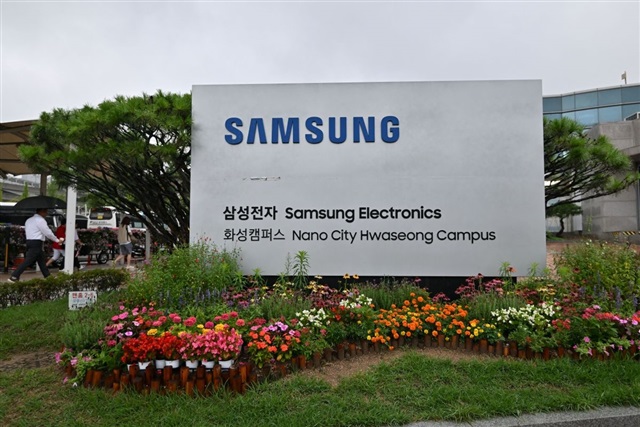
Samsung Electronics will halt 2D NAND flash production at its Hwaseong Line 12 and convert the facility into a 1c DRAM end fab, formally exiting planar NAND manufacturing and reallocating capacity toward advanced memory nodes.
The Elec, citing Industry sources, reported that Samsung would stop operating the 12-inch line as early as March 2026. Hwaseong Line 12 has a monthly capacity of about 80,000 to 100,000 wafers. Customers were informed of the shutdown in 2025, consistent with Samsung's fourth-quarter guidance to phase out legacy planar NAND and shift investment to advanced processes.
The shutdown ends Samsung's 2D NAND era. The company mass-produced 1Gb NAND in 2002 and later led the industry shift to 3D V-NAND in 2013 with a 24-layer stack. Thirteen years after launching 3D NAND, Samsung is closing its final planar production line.
Planar NAND gives way to full 3D transition
Planar NAND was mainly used in low-cost storage products such as USB drives. Demand fell as suppliers completed the transition to 3D NAND. Vertical stacking addressed density and reliability constraints that limited 2D scaling below the 40nm class.
Samsung's move follows an industry-wide transition. Micron and SK Hynix completed their shifts to fully 3D portfolios between 2020 and 2022, reducing planar MLC output as cost structures changed.
TrendForce reported that Samsung notified customers in 2025 of its plan to shut down planar NAND capacity. Output from Hwaseong will be offset by upgrades at Samsung's Xi'an plant in China, which produces about 40% of its NAND. The site is transitioning to 200-layer 3D NAND.
The closure underscores how completely the technology paradigm has shifted | ||
Year | Milestone | Industry impact |
1987 | Toshiba invents NAND | 2D planar foundation established |
2002 | Samsung mass-produces 1Gb NAND | Market leadership consolidated |
2013 | First 24-layer 3D V-NAND | Vertical stacking era begins |
2026 | Samsung ends last 2D NAND line | Full transition to 3D architectures |
Source: Samsung & Trendforce, compiled by DIGITIMES, Feb. 2026
Hwaseong Line 12 converted to 1c DRAM end fab
Hwaseong Line 12 will be converted into a DRAM end fab, handling metal interconnect and final front-end processes. The shift is intended to ease bottlenecks in Samsung's 1c DRAM production and improve efficiency across its Hwaseong operations.
The conversion supports Samsung's broader 1c DRAM expansion. Investment is increasing in both Hwaseong and Pyeongtaek. The P4 fab, originally designed as a hybrid DRAM, NAND, and foundry facility, has recently shifted its focus toward DRAM.
Existing Hwaseong lines are being upgraded from older DRAM nodes to 1c. Once completed, 1c DRAM is expected to represent a significant share of Samsung's total DRAM capacity.
1c DRAM underpins HBM4 expansion
The production shift aligns with Samsung's HBM4 expansion. The 1c node forms the base of its HBM4 stack, combining 1c DRAM with a 4nm logic base die. Samsung said HBM4 mass shipments have begun, with speeds above 11.7Gbps, exceeding the JEDEC 8Gbps standard and capable of reaching 13Gbps.
Yields on 1c DRAM have stabilized, supporting server and high-bandwidth applications. Samsung expects HBM revenue to more than triple year on year in 2026 and is expanding capacity.
By converting its final planar NAND line to 1c DRAM, Samsung is reallocating mature-node capacity toward AI and high-performance memory demand. The shutdown marks a full transition from 2D NAND to advanced DRAM and 3D NAND in Samsung's memory portfolio.
Article edited by Jack Wu