

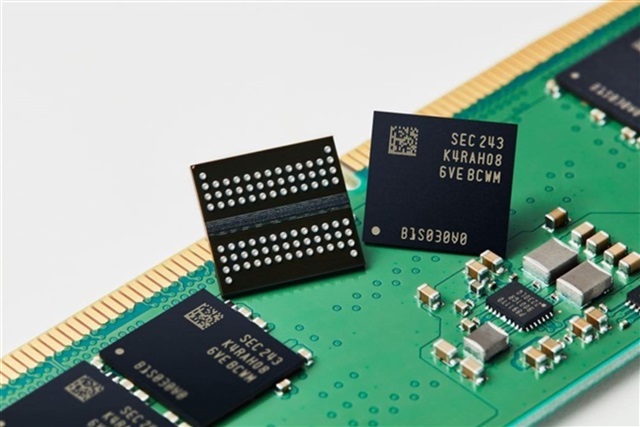
As demand for memory surges alongside the build-out of AI infrastructure and soaring data volumes from AI agents developed by OpenAI, Google, and others, consumption has spiked not only for high bandwidth memory (HBM) but also for standard DRAM.
South Korean industry sources say major global electronics and server makers are rushing to sign long-term DRAM supply deals with Samsung Electronics and SK Hynix as fears of shortages rise, sparking a fresh wave of bulk orders that could result in worldwide overstocking.
The Chosun Daily and ETNews report that electronics, IT firms, and data-center operators in the US, China, and elsewhere are negotiating two- to three-year DRAM supply contracts with Samsung and SK Hynix amid mounting concerns about limited availability.
Typically, electronics and server manufacturers manage inventory on quarterly or annual cycles, but with DRAM shortages persisting, clear signs of "overstocking" are now emerging across the market.
Samsung and SK Hynix together hold more than 70% of the global DRAM market. As both channels invest in HBM production, output of conventional DRAM is expected to keep shrinking.
A South Korean semiconductor insider explained that each wafer produces around 100 standard DRAM chips, compared with roughly 50 for HBM. As more capacity shifts toward HBM, output of conventional DRAM will inevitably be constrained.
Analysts note that with both firms prioritizing higher-margin HBM production, expanding output of standard DRAM will be increasingly difficult.
A South Korean securities source said mounting concern over DRAM shortages is driving buyers to order ahead, with some server clients already negotiating procurement schedules beyond 2027.
Citigroup forecasts that DRAM supply will stay tight for the next one to two years, making severe shortages inevitable. Other global investment banks likewise believe the memory industry has entered a rare cyclical upturn.
UBS recently raised its fourth-quarter 2025 forecast for fixed DRAM contract prices from a 5% to a 17% quarterly rise, predicting that soaring AI-server demand will push the memory market into its first major boom in a decade by 2026.
Higher memory prices are set to bolster supplier earnings. Samsung and SK Hynix are expected to report continued operating growth, while supply constraints and price inflation are likely to persist because production capacity cannot expand quickly.
Both Samsung and SK Hynix intend to start mass production of HBM4 by late 2025, aiming to supply Nvidia's next-generation AI accelerator, Rubin. The firms are reportedly conducting HBM4 performance tests with Nvidia, with results expected as early as November.
Industry observers in South Korea said SK Hynix, the current global HBM leader, will work to defend its lead, while Samsung seeks to overturn the competition by aggressively expanding its HBM4 operations.
Article translated by Levi Li and edited by Joseph Tsai