
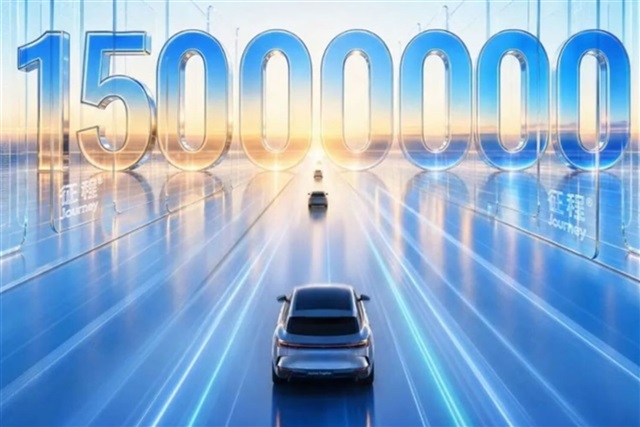
China's intelligent driving market continues to surge, with Black Sesame Technologies and Horizon Robotics both reporting solid top-line revenue growth for the first half of 2026. Highlighting the rapid commercialization curve, Horizon Robotics announced on September 3 that cumulative mass production of its Journey series smart driving processors surpassed 15 million units—signaling that competition in China's automotive IC sector is shifting from raw computing battles to large-scale mass deployment and market penetration.
Black Sesame Technologies reported revenue of CNY458 million (approx. US$68.2 million) in the first half of 2026, an 81.3% year-over-year increase. Gross profit surged 261.9% to CNY227 million (US$33.8 million), expanding gross margins from 24.8% to 49.5%. Revenue from driver-assistance products and solutions reached CNY395 million (US$58.9 million), up 66.8% and accounting for 86.2% of total top-line sales, with segment gross margins rising from 20.9% to 42.3%. The company shipped over 6 million chips during the period.
Black Sesame attributed the margin expansion to a higher share of advanced driver-assistance systems, proprietary algorithms, and software services, shifting its commercial model from pure silicon sales toward a bundled "chip + software + algorithm" strategy. Its flagship Huashan A2000 processor series, which scales compute from 200 TOPS to 1,000 TOPS, has secured projects with domestic Chinese automakers, including Dongfeng Motor, Yutong, and Chery Automobile, with mass production scheduled for the second half of the year.
Beyond automotive applications, Black Sesame is extending its automotive-grade AI technology into physical intelligence and edge AI devices. Related revenue reached CNY47.2 million (US$7 million) in the first half of 2026 with a 94.8% gross margin. The firm also finalized the acquisition of a 60% stake in Eeasy Tech to bolster its low-to-mid compute AI SoC portfolio across smart home appliances, action cameras, and AI eyewear.
Meanwhile, Horizon Robotics posted first-half 2026 revenue of CNY2.055 billion (US$306.2 million), up 32.9% year-over-year, with gross profit rising to CNY1.356 billion (US$202.1 million) while maintaining a 66% gross margin. Shipments of its Journey series chips reached 2.218 million units, up 12.1%. License and services revenue jumped 52.7% to CNY1.129 billion (US$168.2 million), surpassing hardware product revenue for the first time. The license and services business achieved a 90.4% gross margin, reflecting Horizon's strategic transition into a platform vendor offering integrated "chip + software + IP licensing" architectures.
The latest shipment figures underscore Horizon's scale advantage. After beginning mass production in 2020, Horizon took roughly five years to hit its first 10 million units. However, scaling from 10 million to 15 million units required just 12 months, with Horizon saying annual shipment growth reached 39%.
Horizon's Journey lineup now serves over 40 automotive brands, including all top 10 Chinese car companies. The vendor has secured design wins across 500 mass-production vehicle models, nearly 130 of which feature mid-to-high-end intelligent driving solutions, with design-win volume exceeding 20 million units.
In terms of market share, the China Autonomous Driving Scale Application Blue Book (2026) ranks Horizon first in the Chinese-brand passenger vehicle smart-driving processor market with a 31.94% share, ahead of Nvidia's 29.38%. In the urban navigate on autopilot (NOA) chip market for Chinese-brand passenger vehicles, Horizon's market share rose to 22.82%, ranking second nationwide.
This market expansion is driven by the adoption of advanced smart driving capabilities in mainstream, lower-priced vehicles. Volkswagen's ID. ERA 5S, for instance, utilizes a single Journey 6M chip to power urban NOA and full-scenario automated parking, demonstrating that urban NOA is rapidly moving from luxury tiers into the mass market.
However, Horizon allocated CNY2.755 billion (US$410.5 million) to R&D in the first half of 2026, exceeding its total revenue for the period, highlighting that its core technology development remains in a capital-intensive phase.
Overall, the competitive landscape for Chinese smart driving chips has evolved from "TOPS benchmarking" to execution metrics: mass-production scale, cost optimization, and software ecosystem maturity. Converting shipment volume into long-term profitability will serve as the defining benchmark for market leadership moving forward.
Article translated by Yunnie Cheng and edited by Ysi Chen