

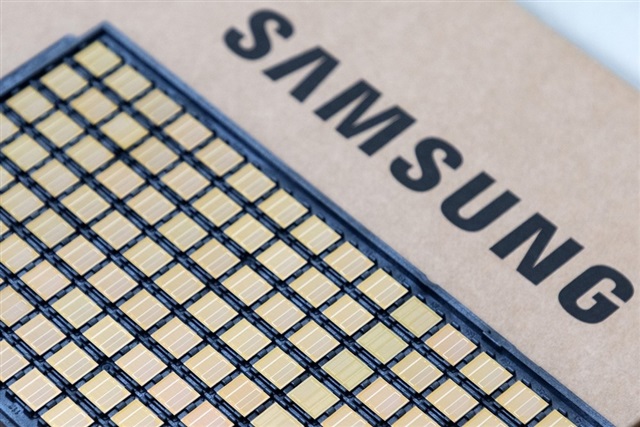
Samsung Electronics is said to be expanding its 8nm foundry customer base into Europe following earlier contract wins in the US and Japan.
The company's foundry division, which supplied chips to several customers last year, completed process stability and quality tests with those clients and is expected to ramp up production volumes in 2026, Chosun Biz reported.
European 8nm momentum and Ubitium contract
German fabless semiconductor company Ubitium, which has been receiving 8nm chip prototypes from Samsung, has completed performance and quality testing and is expected to sign a contract this year to expand production volumes, Chosun Biz reported, citing industry sources.
To meet rising demand, Samsung is reviewing measures to increase output beyond its typical three annual Multi-Project Wafer (MPW) runs or to supply chips through a separate production line.
MPW integrates multiple chip designs onto a single wafer for prototype production and is used during early-stage product development. Last year, Samsung conducted four MPW runs for its 4nm process and three runs each for 5nm and 8nm. Analysts said three annual runs are no longer sufficient to meet demand for 8nm, which has demonstrated price-performance competitiveness and quality stability.
In addition to Ubitium, Nintendo and Intel are sourcing chips from Samsung's 8nm process. Nintendo uses Samsung's 8nm chips in its consoles, and the original Switch has surpassed cumulative sales of about 155 million units. Intel is expected to begin sourcing its Platform Controller Hub (PCH) chips from Samsung's foundry lines this year.
Nvidia has also requested additional low-cost 8nm GPUs beyond those used in Nintendo's console devices, according to reports. As PC memory prices rise, demand for PC gaming devices has shifted toward consoles, with sales of existing console platforms expected to increase this year.
Samsung's ability to attract European fabless customers has been supported by strengthening cooperation with design solution partners (DSPs). AD Technology, one of Samsung's largest partners, was involved in Ubitium's outsourced chip production process and played a role in finalizing the contract.
Industry observers said close collaboration with design house partners will be essential for Samsung's foundry division to secure additional large and mid-sized customers. TSMC, the world's largest foundry, has expanded its order base and strengthened its domestic ecosystem through more than 230 design houses, led by Global Unichip (GUC).
2nm progress and earnings commentary
Separately, progress on Samsung's 2nm node and related customer order intake is proceeding as scheduled.
Following an order from Tesla, Samsung is in discussions with major US and Chinese customers and expects the number of 2nm-related orders to increase by more than 30% year on year this year, ZDNet reported, citing comments made during the company's earnings briefing.
During its fourth-quarter 2025 earnings call, Samsung said the 2nm process remains on track, with yield and performance targets achieved ahead of mass production planned for the second half of 2026. The company is conducting Benchmark Performance Assessment (BPA) evaluations and joint development work with customers, while pre-mass-production technology verification continues as scheduled.
The foundry business is targeting double-digit revenue growth and improved profitability in 2026, supported by advanced-node technologies, according to ZDNet.
Chosun Biz also reported that Samsung's Taylor, Texas foundry plant remains on track to begin operations in 2026.
1.4nm roadmap and Turnkey strategy
Development of Samsung's 1.4nm process is progressing as planned, with mass production targeted for 2029, ZDNet reported.
Newsis reported that Samsung plans to distribute Process Design Kit (PDK) 1.0 to customers in the second half of next year.
Samsung also underscored its "turnkey" strategy—integrating logic, foundry, memory and packaging services—as a key pillar of its system semiconductor competitiveness.
Article edited by Joseph Chen