
The global memory market is entering a "super cycle" driven by the booming adoption of AI, data center upgrades, and growing demand for high-performance computing (HPC). With inventories cleared and prices rebounding, both DRAM and NAND sectors are gaining strength, signaling a long-awaited upturn for the industry.
During this upward cycle, China's memory industry is stepping up its chase to close the gap with international competitors. Industry sources said CXMT and YMTC are ramping up technology development and capacity expansion, with IPOs scheduled for 2026. As memory prices stabilize and AI-driven storage demand accelerates, China's progress has once again taken center stage in the market.
CXMT advances LPDDR5X for AI and mobile
At the IEEE 16th International Conference on ASIC (ASICON 2025) in Kunming, Yunnan, CXMT senior director Li Hongwen unveiled the company's latest high-speed memory architecture and introduced its LPDDR5X product series. The lineup includes 12GB, 16GB, 24GB, and 32GB versions with data rates of 8,533 Mbps, 9,600 Mbps, and 10,677 Mbps, offering multiple packaging formats for different applications.
CXMT's LPDDR5X is now in mass production, and the company is developing an ultra-thin 0.58mm variant that could become the industry's thinnest LPDDR5X module once commercialized. The product targets premium smartphones, automotive electronics, and AI terminals while reinforcing localization across China's memory supply chain.
As defined by JEDEC's 2023 standard, LPDDR5X is a low-power, high-performance memory used broadly across mobile and computing platforms. Samsung, SK Hynix, and Micron currently lead this segment, but CXMT's entry underscores China's advancing capability in mass production and high-end mobile delivery.
YMTC ramps NAND for global growth
As CXMT progresses in DRAM, YMTC is expanding rapidly in the NAND flash segment. Counterpoint's global memory report for the second quarter of 2025 showed the NAND market up 24% quarter over quarter, driven by AI server demand and downstream restocking. YMTC's share rose to 9%, nearing double digits and highlighting its growing prominence in the global supply chain.
Samsung held the top position with a 32% market share, while SK Hynix posted the strongest quarterly growth. Micron's performance remained steady, whereas Japan's Kioxia saw its share slip to 14% on seasonal order declines.
In addition to its consumer storage business, YMTC is moving into enterprise-grade SSDs (eSSD), with commercial rollout slated for the third quarter of 2025. Industry analysts observed that rising AI computing and cloud data center needs are prompting hyperscale cloud providers to double eSSD capacity in AI training servers from 4TB to 8TB, with inference servers advancing toward 96TB setups, intensifying memory demand.
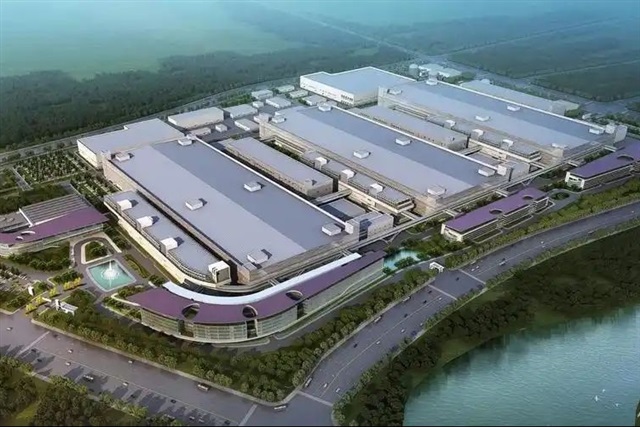
YMTC is constructing a new fab under its third-phase expansion with a monthly capacity of 100,000–150,000 wafers and targets surpassing a double-digit global market share. The company is also planning an IPO, expected as early as 2026 on China's A-share market, with an estimated valuation of CNY300 billion (US$42.1 billion). If successful, it would rank among China's largest semiconductor IPOs in recent years.
From CXMT's breakthroughs in mobile DRAM to YMTC's swift NAND expansion, China's memory sector is entering a phase of simultaneous technological and capital growth. If both companies proceed with their IPOs as scheduled, they could reinforce domestic R&D and production capacity while reshaping the global competitive landscape in memory manufacturing.
Article translated by Levi Li and edited by Jerry Chen