

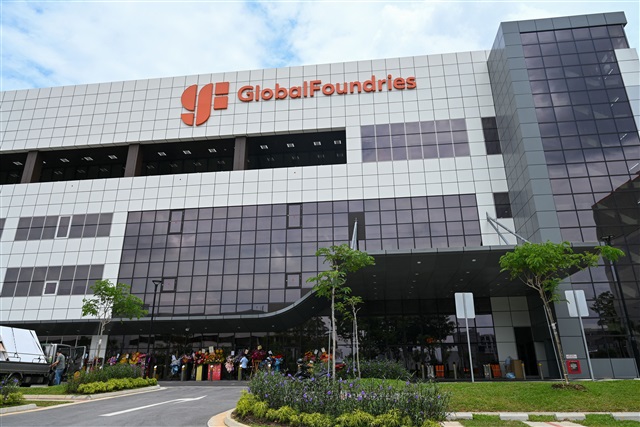
GlobalFoundries is gaining traction in custom silicon, processor intellectual property (IP) and physical AI applications, as the chipmaker seeks to expand its role beyond wafer manufacturing and capture more value from customer chip development. The company secured custom silicon design wins representing nearly US$1 billion in lifetime revenue during the third quarter, CEO Tim Breen said on its November 4, 2026, earnings call.
The wins span automotive radar, real-time processing, data center management and aerospace applications, highlighting GlobalFoundries' efforts to build a broader business around its manufacturing capabilities and recently expanded processor IP portfolio.
Custom silicon gains momentum
Among the third-quarter wins were a radar system-on-chip platform and a RISC-V-based processor core designed for real-time control. GlobalFoundries also secured a project with a leading high-performance data center computing provider to develop a custom board management controller SoC, integrating its processor technology with third-party IP.
Another notable win involves an engine control processor for a major global aerospace and propulsion company, extending the company's custom silicon reach into aerospace and defense.
Breen said these projects demonstrate how GlobalFoundries can engage with customers across more stages of the semiconductor value chain, turning initial design engagements into longer-term business opportunities.
The strategy builds on GlobalFoundries' acquisition of MIPS and the Synopsys ARC processor IP business. MIPS has introduced three physical AI-oriented reference platforms covering compute, AI inference, and real-time control, while GlobalFoundries is already working with several customers on systems based on these capabilities.
Physical AI opens new markets
GlobalFoundries sees physical AI as a long-term growth opportunity spanning vehicles, factories, robots, drones, satellites, and medical devices. These applications require combinations of connectivity, computing, power management, actuation, and sensing technologies, areas where the company believes its manufacturing platforms and processor IP can provide an advantage.
The company is also developing its custom silicon capabilities for automotive applications, including radar systems. Automotive customers are increasingly seeking geographically diversified semiconductor supply chains and engaging manufacturers directly in planning for their requirements over the next three to five years, Breen said.
Technology services offer higher-margin growth
The expansion into design and IP-related activities could also improve GlobalFoundries' revenue quality. Technology Services, which includes IP licensing, software, reticles and non-recurring engineering, accounted for approximately 12% of third-quarter revenue. CFO Sam Franklin said the segment's gross margin profile remains above the company's long-term target.
GlobalFoundries expects Technology Services to contribute approximately 12% of full-year 2026 revenue, with further growth in IP licensing and software expected to support revenue expansion and margin improvement beyond 2026.
While manufacturing services still account for the majority of revenue, the growing contribution from design wins, processor IP, and software suggests GlobalFoundries is seeking to become a more comprehensive technology partner rather than relying primarily on wafer production.
Article edited by Jack Wu