
Below are the most-read DIGITIMES Asia stories of the week of January 12-18, 2026.
TSMC's faces costs, politics, and capacity obstacles
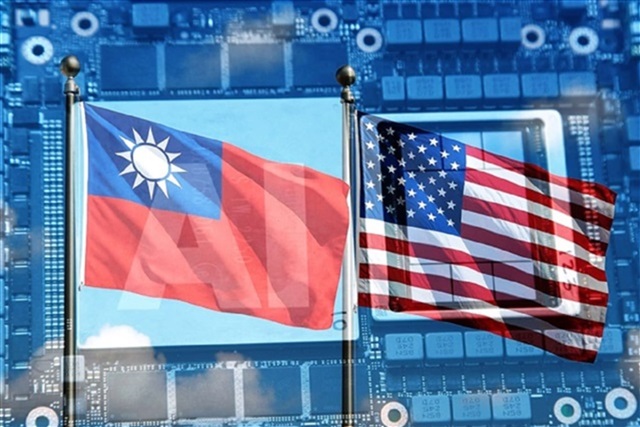
Once framed as politically motivated, TSMC's US expansion has evolved into a costly long-term commitment exceeding US$165 billion, with total investment potentially surpassing US$200 billion as the US pushes for greater domestic chip output. Despite repeated warnings from founder Morris Chang about structurally higher US costs (estimated at 50% above Taiwan), TSMC has continued expanding in Arizona. The company is now facing regulatory friction, labor shortages, supply chain disruptions, and inefficiencies that require rewriting thousands of compliance rules. While subsidies and pricing power have helped offset some financial strain, shifting US policy conditions and demands for a near 50-50 Taiwan–US production split continue to pressure profitability. The expansion reflects TSMC's transformation into a geopolitical asset, raising questions about how long it can balance strategic protection with commercial discipline.
Taiwan's semiconductor sector splits
Taiwan's semiconductor manufacturing in late 2025 reflected a sharply bifurcated cycle, with AI-related advanced logic, packaging, and memory rebounding strongly while mature nodes and consumer-driven segments recovered more cautiously. Foundry performance was anchored by TSMC's dominance in advanced nodes and packaging, while mature-node players saw modest utilization gains without meaningful pricing relief. Memory delivered the clearest cyclical reversal as AI server demand drove pricing recovery and operating leverage, benefiting firms such as Nanya and Winbond. OSAT results diverged along advanced packaging exposure, and power and discrete device makers faced mixed outcomes depending on product mix. Overall, 2025 confirmed that scale, advanced technology positioning, and AI data-center exposure increasingly define winners in Taiwan's semiconductor ecosystem.
TSMC turns Arizona into long-term profit medium
After years of regulatory setbacks and cost overruns, TSMC has stabilized its Arizona operations and leveraged its global dominance to convert high US manufacturing costs into a strategic advantage, providing Taiwanese suppliers with order visibility beyond 2030. Ongoing tariff negotiations between Taiwan and the US have reportedly tied lower tariffs to TSMC's commitment to build at least five more Arizona fabs, reinforcing its role as a geopolitical bargaining chip. Supported by strong AI-driven demand, pricing power, and advanced packaging expansion, TSMC has been able to pass on costs while improving operational control. As Arizona evolves into a full ecosystem for advanced logic and packaging, the company's US footprint has shifted from liability to profit-supporting for both TSMC and its supply chain.
Samsung pushes display boundaries with bezel-less microLED and 130-inch microLED RGB TVs
At CES 2026, Samsung highlighted both the physical limits of LCD-based displays and the future potential of microLED technology, showcasing a 130-inch Micro RGB TV publicly while privately revealing a 140-inch bezel-less microLED prototype. The microLED model employs AI-driven content analysis to extend visuals seamlessly onto the side bezel, effectively eliminating traditional black borders imposed by LCD and OLED packaging constraints. The showcase reinforced microLED's role as Samsung's long-term large-display strategy, even as suppliers like Playnitride navigated short-term shipment volatility. With applications expanding into wearables, automotive displays, and lighting, the demonstration signaled a broader commercialization runway for microLED despite near-term market fluctuations.
SK Hynix weighs consumer memory exposure
Speculation that SK Hynix may scale back consumer DRAM and NAND production reflects a broader industry pivot toward higher-margin AI and data center markets, although the company denies any formal exit plans. The shift follows Micron's decision to exit its Crucial consumer business and is reinforced by Solidigm's move to discontinue consumer SSDs in favor of enterprise storage. As memory makers prioritize capacity for AI servers, HBM, and enterprise SSDs, downstream effects are emerging, with PC OEMs exploring alternative suppliers to mitigate tightening supply. While consumer memory has not disappeared, it is clear that AI infrastructure now dictates capacity allocation.
TSMC accelerates advanced packaging expansion
TSMC is rapidly scaling its advanced packaging business into a major profit driver, with margins reportedly reaching as high as 80% as AI demand increases. To manage growing complexity and capacity across Taiwan and Arizona, the company is expected to appoint its first-ever general plant manager to oversee all advanced packaging operations, signaling organizational elevation of the segment. Technologies such as CoWoS, SoIC, and the emerging CoPoS platform are becoming central to AI and HPC systems, prompting aggressive capacity buildouts and new fabs scheduled through 2028. The move reflects advanced packaging's transition from a supporting to core role of TSMC's structure.
Samsung's modest DRAM output increase fails to relieve global supply shortage
Samsung Electronics plans to raise DRAM output by about 5% in 2026, but industry data suggest the increase will do little to alleviate severe supply shortages driven by AI server demand. Despite incremental capacity growth from Samsung and SK Hynix, overall DRAM supply is estimated to meet only around 60% of demand, with server DRAM even tighter. Inventory levels across DRAM and NAND have fallen to historically low levels, forcing customers to accept aggressive price hikes that reached up to 70% in late 2025. As suppliers prioritize advanced nodes and HBM for AI workloads, shortages and rising prices for PC and mobile memory are expected to persist well into 2026.
Article edited by Jerry Chen