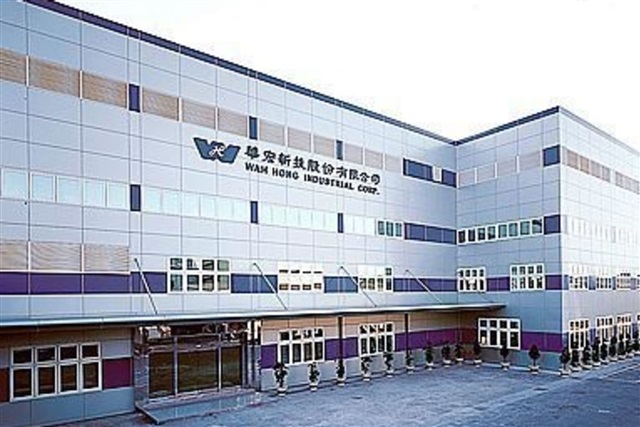
Wah Hong Industrial, a leading Taiwanese optical film and advanced materials maker, remains focused on product upgrades and structural adjustments to enhance overall competitiveness, despite tariff-related uncertainties and conservative demand in 2025, according to the company's president, Chih-Ming Lin.
The company's strategic focus centers on automotive, high-performance, and low-carbon applications while actively expanding into Southeast Asia to diversify regional risks and drive growth momentum. Although overall revenue slightly declined in 2025, Wah Hong maintained stable gross margins through an optimized product mix and process improvements.
Looking ahead, Wah Hong plans a pragmatic and cautious approach to seize new AI-driven application opportunities. Amid ongoing global supply chain adjustments, it aims to expand industrial applications, deepen its overseas presence, and accelerate new product development to strengthen mid-to-long-term competitiveness and achieve sustainable growth.
For 2026, Wah Hong expects diffusion films and composite films to decline due to reduced customer adoption of traditional diffusion films, while laminated films and QD-related products are projected to grow. Currently, optical materials account for about 64–65% of total revenue, with optical film cutting products yielding lower gross margins of around 10–11%. Over the past two years, Wah Hong has gradually phased out or stopped taking orders for ultra-low-margin cutting products to improve overall optical material profitability, while increasing the share of higher-margin functional materials, thermal management, and semiconductor-related products.
Regarding expansion plans for 2026, Lin noted that QD products will be the main focus, with capital expenditures estimated at NT$100 million (US$3.18 million) primarily for equipment investment and capacity enhancement. Additionally, automation and smart manufacturing initiatives include adding an AI coating production line and introducing online AI inspection equipment in LCD sheet processing. Total capital expenditures for 2026 are expected to exceed NT$150 million.
On miniLED packaging materials, Wah Hong reported entering small-volume shipments with existing customers and aims to broaden its client base to scale miniLED contributions. For microLED, besides collaborating with Taiwanese clients on small-scale trials and development, Wah Hong is also engaging Chinese customers for technical integration and application expansion, targeting significant revenue growth within the next few years.
In smart meter applications, after nearly three years of deep collaboration with Japanese clients, Wah Hong began mass production and shipments in August 2025. Shipment volumes have steadily increased, reaching approximately 40 tons in November and an estimated 50 tons in December. The total shipment volume for the fourth quarter of 2025 is expected to surpass 100 tons, with quarterly revenue from smart meters forecast at more than NT$85 million.
Starting from the first quarter of 2026, monthly shipments for smart meter applications are projected to maintain between 40 and 50 tons, further boosting revenue and profits. Besides Japanese clients, Wah Hong is currently conducting technical integrations with one or two Taiwanese customers, aiming to open up Taiwan's market channels.
Article edited by Jerry Chen