
Memory prices are expected to remain elevated through 2026 as AI and data-center demand strains supply, with meaningful supply relief unlikely until well into 2027. A South Korean securities analyst argues that the squeeze could also make it harder for China to expand AI use, although Washington has not identified high memory prices as a policy tool.
Jung Woo-sung, a senior analyst at LS Securities, said the US appears more focused on strengthening AI competitiveness than stabilizing memory prices and may see strategic value in prices remaining high. His assessment goes beyond any stated US policy.
Omdia expects DRAM and NAND shortages to persist through 2026 as memory makers prioritize high-bandwidth memory, which delivers lower production volumes but commands higher prices. The research firm raised its 2026 semiconductor revenue growth forecast to 62.7%, with the DRAM market projected to nearly double in value and the smaller NAND segment potentially quadrupling from 2025 levels.
The shift toward HBM is tightening conventional memory supply as manufacturers direct more production resources toward AI accelerators and servers. That relief remains unlikely before 2027, while higher average selling prices, rather than unit growth alone, are driving much of the industry's revenue expansion.
US policy prioritizes AI leadership
The Trump administration's July 2025 "Winning the AI Race: America's AI Action Plan" sets out more than 90 federal actions spanning innovation, infrastructure, and international diplomacy and security. It calls for faster permitting for data centers and semiconductor fabs, as well as exports of US AI hardware, models, software, and applications to allies.
The plan makes AI leadership, infrastructure and national security clear priorities, but it does not identify lower memory prices as a separate policy objective.
Washington also treats advanced memory as a strategic technology. In December 2024, the Commerce Department's Bureau of Industry and Security introduced controls covering 24 categories of semiconductor manufacturing equipment, three categories of software tools and HBM. BIS said the measures were intended to slow China's development of advanced semiconductors and AI capabilities with military applications.
The policy debate has become more visible as Apple explores Chinese memory suppliers. According to The Wall Street Journal and Bloomberg, Apple has discussed sourcing memory from ChangXin Memory Technologies and Yangtze Memory Technologies for products sold outside the US, including those sold in China, arguing that the move could ease supply pressure and lower costs.
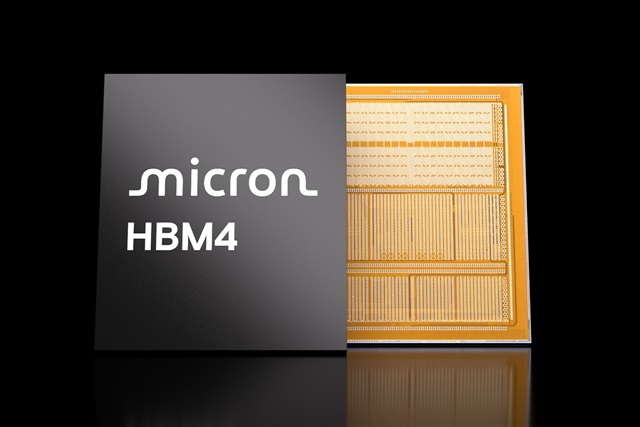
Micron Technology has opposed the proposal, warning US officials that allowing Chinese memory suppliers into American technology supply chains could weaken the domestic industry.
CXMT and YMTC both appear on the Defense Department's Section 1260H list of Chinese military companies. YMTC is also on the Commerce Department's Entity List, requiring BIS licenses for exports, reexports or in-country transfers of all items subject to the Export Administration Regulations. Neither measure constitutes a blanket ban on commercial purchases.
Apple may not require formal US approval to use the suppliers, although doing so could trigger political opposition. No final sourcing decision has been announced.
New capacity offers no quick relief
Washington has also supported domestic supply expansion. In December 2024, the Biden administration finalized up to US$6.165 billion in direct CHIPS Act funding for Micron's advanced DRAM projects in Idaho and New York.
Micron subsequently raised its planned US fab and technology investment to more than US$250 billion through 2035 and set a long-term goal of producing 40% of its DRAM in the US. The company expects first wafer output from its first Idaho fab in mid-2027 and from its second in late 2028, while its New York project has moved from site preparation to vertical construction.
That timetable means the added capacity is unlikely to ease the current shortage or reduce prices in the near term.
Sustained high memory prices could raise the cost of deploying AI services and weigh more heavily on markets with lower per-capita income. World Bank data put 2025 nominal GDP per capita at about US$90,000 in the US and US$13,900 in China.
Income alone, however, does not determine AI adoption. Subsidies, cloud pricing, domestic models, electricity costs, hardware access and model efficiency can all influence deployment. The strategic interpretation therefore remains an analyst's reading of the consequences of a supply shortage, not a policy Washington has publicly claimed.
Article edited by Jerry Chen