Samsung Display (SDC) and LG Display (LGD) have unveiled a range of display concepts for next-generation AI applications at the 2026 Korea Display Exhibition (K-Display) in Seoul, ranging from face displays for humanoid robots and AI smart glasses to hidden or retractable in-car screens, building upon the companies' focus on OLED panels for IT applications to sketch out future use cases.
LGD showcased a humanoid robot face wall built with P-OLED panels, which allows for flexible designs that could potentially be used for other humanoid robot parts in addition to the face. In addition, the humanoid robot display employs automotive-grade Tandem OLED technology, allowing stable operation in extreme temperatures from -30 to 85℃ and meeting the weather-resistance needs in both domestic and industrial settings. With a brightness of up to 1000 nits and a lifespan of 15,000 hours, the display is being positioned by LGD as a key solution for achieving maximum completeness in AI-powered robots.
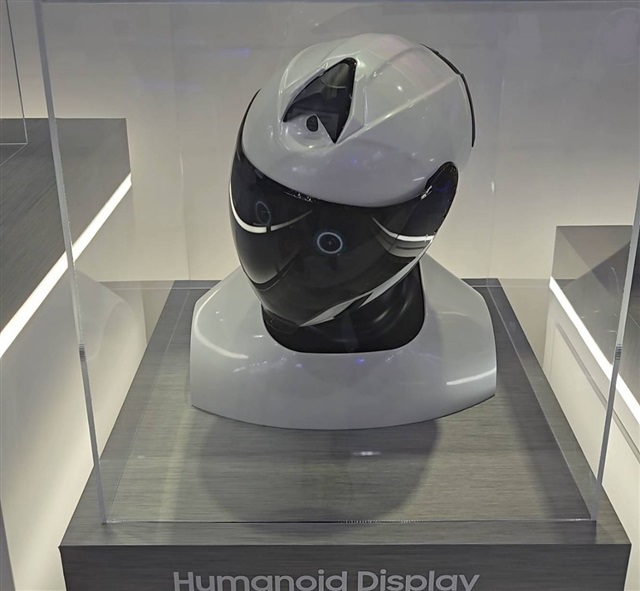
SDC also set up a dedicated AI zone at the exhibition to showcase its curved humanoid robot display, which can naturally present a robot's facial contours and expressions, while also integrating eye-tracking functionality. Other AI product concepts included a circular display that can serve as a desktop device or an interface for an AI agent, as well as a conceptual AI necklace with an integrated display.
Credit: DIGITIMES
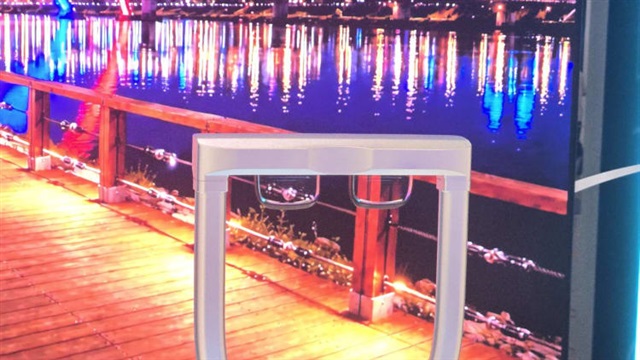
Also drawing attention was an AR glasses device featuring RGB OLEDoS technology, which allows users to see a clear map displayed in the lenses, as well as an XR headset that delivered an immersive K-Pop performance.
Credit: DIGITIMES
Automotive displays were another key battleground for the two display giants. SDC debuted its Big Hole technology, which cuts holes directly into the display panel to integrate air-conditioning vents into the screen and improve cabin design integration. Meanwhile, LGD demoed a slidable OLED that can be slid out when needed from the rear-seat ceiling.
According to an SDC representative, displays need to become more personalized in the AI era as each user expects a different experience, and SDC is thus focusing development on four main directions: optimized form factors, privacy and security, power efficiency, and next-generation innovative technologies.
However, industry sources note that the outlook for the robot display market remains uncertain. Directly deploying humanoid robots on real production lines is not the optimal solution at the current stage, and movable robotic arms and other automated solutions remain better suited to factory environments. It will take more time for humanoid robots to achieve the posture and functions required for use in practical production. Although AI has created a wide range of opportunities for diverse display applications, most of these remain in the experimental or concept stages and will require many more checks and trials before real commercial deployment.
Article translated by Kevin Wang and edited by Jack Wu