

CONNECT WITH US
Sign out

Samsung's HBM4 comeback hinges on one chip-level advantage

, DIGITIMES, Taipei
0

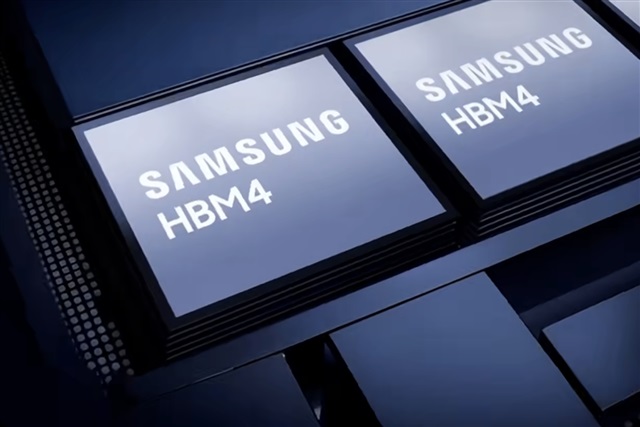
Credit: Samsung

Samsung Electronics is using HBM4 to test whether its memory, logic, foundry, and advanced packaging businesses can finally work as one AI semiconductor platform, turning a broad portfolio into a clearer competitive weapon.

The stakes are rising because HBM4 competition is shifting beyond memory capacity and speed. Its logic base die, made on advanced process technology, is becoming central to performance, customization, and customer lock-in, putting Samsung's integrated semiconductor model under its sharpest test yet, according to Dealsite.

HBM4 changes the rules

Samsung has long been an IDM in memory, while also operating a foundry business for external chip customers. That structure has often looked impressive on paper but delivered weaker results in the market.

Counterpoint Research data showed SK Hynix held 58% of the global HBM market in the first quarter of 2026, while Samsung and Micron each had 21%. In the foundry, TrendForce put TSMC's first-quarter share at 72.3%, compared with Samsung's 6.5%.

HBM4 gives Samsung a new opening. The base die sits beneath the DRAM stack and links memory to processors such as GPUs and CPUs. With HBM4 doubling the interface width from HBM3E's 1,024 bits to 2,048 bits, efficient logic design and advanced manufacturing become increasingly important.

Samsung can produce HBM DRAM and use its own 4nm process for the base die. SK Hynix, by contrast, makes HBM DRAM but relies on external foundry partners for advanced logic.

ASIC demand gives Samsung a second lane

Samsung's HBM4 recovery is also showing early commercial momentum. Einfomax reported in late June that Samsung had surpassed US$1 billion in HBM4 revenue about four months after beginning mass-production shipments in February, with industry estimates pointing to roughly US$1.2 billion by the end of June.

Bernstein also reportedly found signs of ramp-up in Korean export data, including a 79% month-on-month increase in May HBM exports from South Chungcheong, where Samsung has HBM packaging operations.

The bigger opportunity may be ASICs. While SK Hynix remains strongly tied to Nvidia's AI GPU supply chain, Samsung is seeking growth from Broadcom, Google, Amazon, Microsoft, and Meta, as major cloud players expand custom AI chips to reduce dependence on Nvidia GPUs.

UBS projected Samsung's HBM shipments could reach 230 billion gigabits in 2027, nearly matching SK Hynix's projected 231 billion gigabits. That would imply a market closer to a Samsung-SK Hynix duopoly, with Micron around 20%.

Integration is not victory

The catch is simple: structure does not equal superiority. Samsung still has to prove performance, yield, customer qualification, and high-value supply, especially for Nvidia-related HBM4 demand.

Bit-share gains alone would not guarantee revenue or margin leadership. HBM pricing depends heavily on generation, stack height, packaging yield, and customer certification.

That makes HBM4 less a coronation than an audit. Samsung's IDM model finally has a product where memory, logic, foundry, and packaging can converge. Whether that becomes a true AI semiconductor advantage depends on execution, not PowerPoint architecture.

Article edited by Jerry Chen