China has quietly crossed a psychological and potentially strategic threshold in the global semiconductor race. In a tightly controlled laboratory in Shenzhen, Chinese scientists have built a working prototype of an extreme ultraviolet (EUV) lithography machine, the most complex and geopolitically sensitive tool in modern chipmaking, according to Reuters.
While the system has yet to produce commercial chips, its existence highlights how export controls meant to freeze China out of advanced AI hardware have instead triggered a state-backed mobilization reminiscent of the Cold War — one Western policymakers increasingly fear is advancing faster than expected.
Key focal points
China appears to have built a working prototype of an EUV lithography machine:
● Developed in a secret Shenzhen laboratory
● Built by a team including former ASML engineers
● Assembled using reverse-engineered parts from global secondary markets
● Operational, but not yet producing working chips
● Deep coordination and supply-chain integration led by Huawei
● Official target of 2028, with engineers pointing to 2030 as more realistic
A prototype Washington tried to prevent
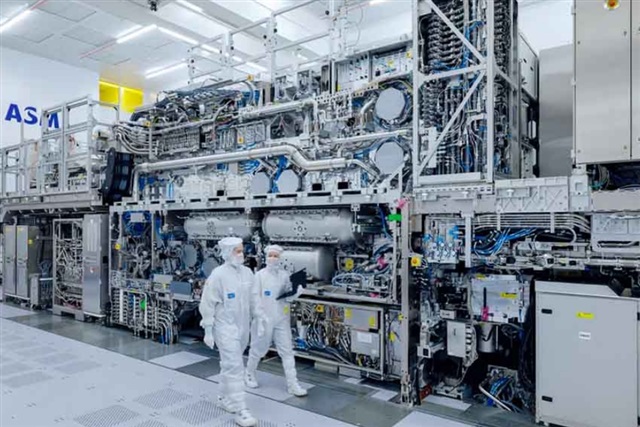
Completed in early 2025 and now undergoing testing, the Shenzhen prototype occupies nearly an entire factory floor. It can generate extreme ultraviolet light — the key prerequisite for producing advanced logic chips used in AI, smartphones, and modern weapons systems. It has not yet fabricated working chips, according to people familiar with the project.
The machine was developed by a team that includes former engineers from ASML, the world's sole commercial supplier of EUV lithography systems, whose familiarity with the technology enabled the reverse engineering of key subsystems that were previously thought to be beyond China's reach.
EUV at the heart of a technological cold war
EUV lithography has become the central choke point in the US–China technology rivalry. ASML's machines, roughly the size of a school bus and weighing about 180 tonnes, fire high-powered lasers at molten tin droplets tens of thousands of times per second, creating plasma approaching 200,000°C (360,032°F). The light is guided through ultra-precise mirrors, mainly supplied by Germany's Carl Zeiss AG, to etch circuits thousands of times thinner than a human hair.
ASML spent nearly two decades and billions of euros developing EUV before producing commercially viable chips in 2019, and no EUV system has ever been sold to China. Since 2018, the US has pressured the Netherlands to block such exports, later expanding restrictions to advanced deep ultraviolet (DUV) tools to keep China at least one generation behind.
Those controls have slowed China's progress, but they have also reshaped it.
Inside China's 'Manhattan Project'
The EUV effort is part of a broader six-year push for semiconductor self-sufficiency, one of President Xi Jinping's top priorities. The programme falls under the Communist Party's Central Science and Technology Commission, led by Xi confidant Ding Xuexiang, and is operationally coordinated by Huawei.
People familiar with the project describe it as China's version of the Manhattan Project. Huawei is involved across the entire stack — from chip design and equipment development to manufacturing integration and end products such as smartphones — with chief executive Ren Zhengfei said to brief senior Chinese leaders directly.
Security is extreme. Recruited engineers, many of them recently retired, Chinese-born former ASML staff, work under aliases with false identification. Teams are isolated, and employees assigned to sensitive semiconductor work often sleep on-site, with phone access restricted during the week.
China's recruitment drive accelerated after 2019, offering overseas semiconductor experts signing bonuses of CNY3 million to CNY5 million (US$420,000–US$700,000), along with housing subsidies and research funding. Among them was Lin Nan, ASML's former head of light source technology, whose team at the Chinese Academy of Sciences' Shanghai Institute of Optics has since filed multiple EUV-related patents.
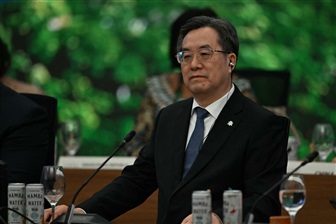
China's Deputy Prime Minister Ding Xuexiang. Credit: AFP
Engineering progress and stubborn bottlenecks
Technically, China's EUV prototype remains crude compared with ASML's production systems. After failed attempts to replicate ASML's compact design, engineers scaled the machine up to boost power output. The biggest obstacle remains optics, as reproducing Carl Zeiss–level mirrors has proven extraordinarily difficult.
Chinese research institutes have stepped in. The Changchun Institute of Optics, Fine Mechanics and Physics (CIOMP) under the Chinese Academy of Sciences integrated EUV light into the optical system, enabling operation in early 2025, though substantial refinement is still required.
To source parts, China dismantled older ASML tools purchased through international auctions, including listings as recent as October 2025 on Alibaba Auction. Export-restricted components from Nikon and Canon were also used, often acquired through intermediary firms, according to people familiar with the effort.
Inside the Shenzhen facility, around 100 recent graduates focus exclusively on reverse-engineering EUV and DUV components. Each workstation is monitored by cameras as parts are dismantled and reassembled, with bonuses awarded for successful reconstruction.
Jeff Koch, an analyst at SemiAnalysis and a former ASML engineer, said China would have made "meaningful progress" if the light source proves powerful, reliable, and clean. "This is technically feasible," he said. "The question is timeline. Commercial EUV already exists, so China isn't starting from zero."
ASML's unease and the market China represents
While Western governments frame export controls as a way to slow China's advance, industry leaders are increasingly warning of the risks of pushing Beijing too far. ASML chief executive Christophe Fouquet has cautioned that permanently denying China advanced tools could ultimately create a formidable competitor and cost the West its largest market.
China accounts for roughly one-third of global semiconductor consumption. Chinese media report that ASML's China revenue fell about 30% year-over-year in the first three quarters of 2025, even as domestic equipment makers expanded rapidly.
The concern extends beyond corporate earnings. In an October 2025 analysis, French daily Le Monde reported that persistent lithography bottlenecks are driving Chinese chipmakers to accelerate self-sufficiency under state backing. The industry has set an ambitious goal of controlling close to one-third of global wafer foundry capacity by around 2030, with technology restrictions reinforcing — rather than weakening — a domestic consensus to replace Western choke points.
Even ASML's near-monopoly offers no guarantee of long-term security. Bloomberg noted that while ASML remains unrivaled today, its dominance faces mounting challenges. In China, state-backed Shanghai Micro Electronics Equipment (SMEE) is still 10 to 15 years behind technologically, but is accelerating development with government support. In the US, San Francisco-based startup Substrate, backed by Peter Thiel, is pursuing alternative laser-based lithography, though commercial deployment remains years away.
A calibrated response, not an on–off switch
Analysts note that China's push for self-reliance is not binary. Kyle Chan, a Brookings Institution fellow who studies China's technology policy, said Beijing continually adjusts how hard it presses in response to external pressure. "China does not simply choose to pursue self-reliance in a given tech or not," Chan wrote on X, adding that Beijing can "turn the dial" by calibrating fiscal support and pressure on domestic firms.
In the case of EUV lithography, that dial now appears to have been turned sharply upward.
A race where time, not feasibility, is the variable
China's EUV prototype has not yet produced chips, and officials privately concede that meaningful output is unlikely before 2030, despite a formal 2028 target. Even so, that timeline would compress what took ASML nearly two decades into a single decade.
Export controls have slowed China, but they have also triggered one of the most ambitious industrial mobilization efforts since the Cold War. Whether the Shenzhen prototype ultimately succeeds matters less than what it represents: a strategic decision that, in the age of AI, China will no longer tolerate dependence on a single foreign choke point and is willing to bear enormous cost to remove it.
Article edited by Jerry Chen