
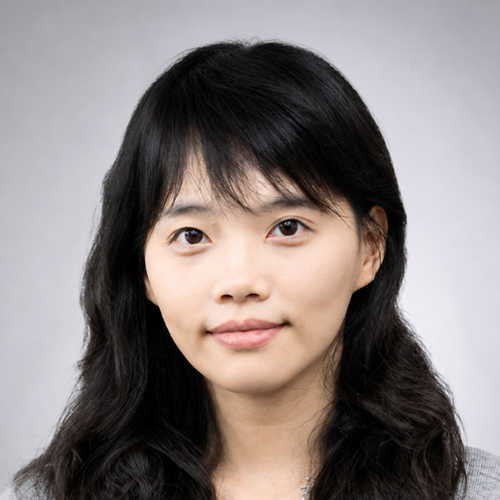
Intel has named Lip-Bu Tan as its new CEO, following a three-month search. The market has reacted positively to this appointment, but some insiders in the semiconductor supply chain remain skeptical. They express concern that as an outsider, Tan might find it challenging to initiate change at Intel, particularly in revitalizing its foundry business, without establishing clear goals.
Lip-Bu Tan faces the formidable challenge of leading Intel with no grace period as he must immediately craft a rescue plan for the company—a dilemma that has long puzzled both Silicon Valley and Wall Street.
Intel has named Tan as its first Asian American CEO, aiming to rejuvenate the company with an outsider's expertise. While some consider this a bold move, others see it as a desperate effort to improve the company's fortunes.
Intel emphasizes Tan's technological expertise, strong foundry ties, and potential to boost shareholder value. Frank Yeary, chairman of the board, praised Tan's success in driving customer innovation, expressing confidence in his ability to advance Intel's transformation and seize growth opportunities.
Tan has over 20 years of experience in the semiconductor and software industries, building strong ties within the Intel ecosystem. As CEO of Cadence from 2009 to 2021, he doubled the company's revenue and later served as executive chairman until 2023. He is a founding managing partner at Walden Catalyst Ventures and chairman of Walden International. Tan serves on the boards of Credo Technology Group and Schneider Electric. He holds a Bachelor's in Physics from Nanyang Technological University, a Master's in Nuclear Engineering from MIT, and an MBA from the University of San Francisco.
Few candidates expressed interest
Industry experts highlight Intel's struggles, noting competition from Taiwan Semiconductor Manufacturing Company (TSMC) and its effective foundry model, which exposes weaknesses in Intel's IDM model. Furthermore, Advanced Micro Devices (AMD) and Nvidia have captured significant market share, indicating that rescuing Intel may demand exceptional measures.
For more than ten years, Intel has faced challenges with unclear divisions between IC design and foundry, affecting its appeal to external customers. High outsourcing costs and issues with process and yield have forced Intel to rely heavily on its own production, resulting in lower utilization rates and substantial capital expenditure. Consequently, the company finds itself in a tough financial spot, needing external support, including pressure from the US government on TSMC.
While many companies value Intel's design capabilities and avoid its foundry services, the design division would likely attract significant interest if separated. Presently, Intel's pressing need is a solution for its struggling foundry segment. Industry experts are skeptical about the future of Intel's foundry, suggesting that solutions are unlikely without a split. Even if Intel does separate its operations, TSMC's dominance remains a significant hurdle.
Intel's strategic gamble on an outsider
Tan's decision to take on Intel's challenging leadership role surprised the market, given the urgent need to turn the company around. While his reputation is at stake without successful outcomes, Tan might see this as a chance to defy the odds. Unlike Gelsinger, who had strong emotional connections to Intel, Tan brings a professionally detached perspective.
Industry observers suggest that the board viewed Tan as the best option due to his fresh perspective, unaffected by the constraints of being an "Intel insider." His semiconductor expertise and extensive network, coupled with a clear vision, could spearhead Intel's financial transformation, provided he has the authority for decisive action.
While serving on Intel's board, Tan was tasked with overseeing the foundry business but reportedly had disagreements with Gelsinger on transformation strategies and expressed concerns about corporate culture. Nonetheless, the board might see Tan's deep knowledge of Intel's wafer manufacturing as beneficial.
Speculation about Tan's appointment suggests potential collaborations with TSMC, Nvidia, and AMD to support Intel. His ties with industry leaders like C.C. Wei, Jensen Huang, and Lisa Su, along with his finance and investment expertise, make him an ideal negotiator, ensuring "professional neutrality" in his dealings.
Intel rescue: A steeper climb than AMD's revival
If Tan seeks to emulate Lisa Su's successful turnaround of AMD, he may encounter challenges due to the differences in industry dynamics, scale, and technical complexities. Additionally, US manufacturing policies and geopolitical factors complicate Intel's restructuring efforts.
Furthermore, speculation about potential layoffs under Tan's leadership is causing employee anxiety, making morale management and trust-building key challenges.
Industry insiders recommend that Tan explore partnerships with second-tier foundries such as UMC, Samsung Electronics, and GlobalFoundries but stress the importance of evaluating each company's strengths.
Currently, the best chance for Intel to survive would be for TSMC to gather major US companies, adopt a joint venture model to acquire shares in Intel and secure operational control.
Secondly, TSMC could release advanced packaging orders, have its team collaborate on-site, or directly have retired top executives take charge, assisting in securing orders and transforming processes and factory operations.
Notably, significant speculation surrounds the potential rescue plans for Intel, prominently involving key figures of Chinese descent who play pivotal roles in the tech industry. Among the names mentioned are TSMC's C.C. Wei, Nvidia's Jensen Huang, AMD's Lisa Su, and Broadcom's Hock Tan. Should these industry leaders join forces, it could represent a landmark moment in Intel's rejuvenation.
Article translated by Jingyue Hsiao and edited by Jerry Chen