CONNECT WITH US

Volkswagen outlines aggressive EV, AI and capacity reset ahead of Beijing show

Nuying Huang, Taipei
0

Credit: AFP

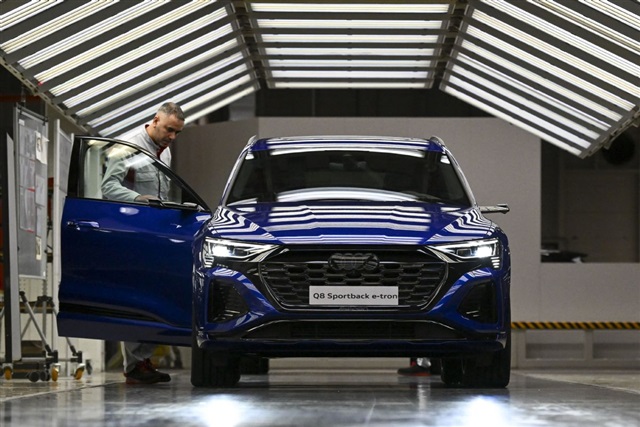
Volkswagen's plan to launch 50 electric models by 2030 while cutting global production capacity signals major structural shifts for consumers, suppliers, and markets worldwide. The company is reallocating resources toward rapid localized development, AI-defined vehicles, and software moves that could reshape competition in China while forcing difficult trade-offs across Europe and other regions.

Blueprint for transformation

On the eve of the 2026 Beijing Auto Show, Volkswagen Group CEO Oliver Blume presented a strategic blueprint pairing a broad electrification push with substantial global capacity reductions to free resources for transformation. The company will introduce 50 electric vehicle models by 2030, reallocating output and investment toward software, rapid development, and AI capabilities.

Racing the clock in China

In China, Volkswagen is accelerating localized development and shortening engineering cycles — moving from longer German timetables to development windows of 24 to 36 months to improve product iteration speed and better meet local consumer preferences. Collaborative projects such as the Unyx 08, developed with Xpeng Motors, and new vehicle platforms built on China's electronic/electrical architecture are intended to restore the company's R&D leadership in the region.

Beyond EVs: the AI-defined car

Beyond electrification, Volkswagen is pursuing AI-defined vehicles. The strategy emphasizes integrating large language models and AI agent technologies to evolve cars from passive command responders into perceptive systems capable of inferring driver intent and coordinating multiple subsystems. Volkswagen plans to process data locally to enable real-time decision-making, reduce reliance on the cloud, and enhance both user experience and data security.

Cutting the fat

Funding for the shift will come from restructuring excess capacity. Blume noted that global capacity stands at roughly 12 million units while sales hover near 9 million, leaving approximately 3 million units of surplus. The company has already cut about 1 million units each in China and Europe — including roughly 730,000 units in Germany — but estimates a remaining structural overcapacity of around 1 million units.

Beijing as proving ground

The Beijing Auto Show serves as a proving ground for Volkswagen's transformation. Success in China, however, will demand careful balancing of development priorities across Europe, China, and other markets as the company pursues a faster, software-driven future.

Article translated by Jingyue Hsiao and edited by Jerry Chen