

China's draft 15th Five-Year Plan for 2026–2030 signals that Beijing is seeking to rebalance its economic model while keeping technological development at the center of national strategy.
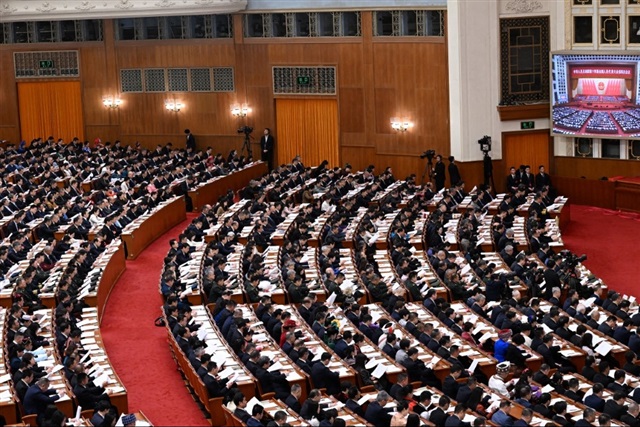
Unveiled at the National People's Congress, the blueprint continues to prioritize advanced manufacturing, digital infrastructure, and technological self-reliance. At the same time, it places greater emphasis on domestic demand, social welfare, and demographic support than earlier plans, reflecting concern about weak household confidence and structural pressures on growth.
The shift underscores a delicate policy balancing act: sustaining industrial and technology ambitions while strengthening the domestic foundations needed to support them.
Technology strategy stays central
Technological capability remains central to the development strategy. According to Xinhua News Agency, the plan prioritizes building a modern industrial system anchored in advanced manufacturing, advancing key technologies, expanding digital infrastructure and strengthening coordination between innovation, industry and talent development.
Priority sectors include semiconductors, industrial software, artificial intelligence, advanced materials and high-end equipment manufacturing. Policymakers also emphasize enterprise-led innovation and stronger coordination between research institutions, universities and industry.
The emphasis reflects the external pressures facing Chinese firms, including export controls, tighter compliance rules and shifting supply chains. For Beijing, the challenge now extends beyond identifying priority sectors. After several years of large-scale state mobilization, improving capital efficiency and reducing duplicate investment have become key policy concerns.
Consumption moves up the agenda
A notable shift in the plan is its stronger emphasis on domestic demand. According to Bloomberg Economics, boosting consumption and expanding effective investment now appear as separate priorities near the top of the document, whereas earlier plans combined them in a single chapter.
The change reflects recognition that weak demand has become a major constraint on China's growth model. Policymakers are emphasizing employment stability, higher household incomes and stronger consumer expectations to support spending.
Service-sector expansion is expected to play a larger role. The plan encourages new consumption areas including culture, sports, tourism, cruise travel, recreational vehicle camping and low-altitude economic activities.
The approach reflects a broader policy logic: technological expansion requires stronger domestic demand to absorb new supply and sustain growth.
Credit: AFP
Demographics push social policy
The plan also expands social policies aimed at supporting domestic demand.
One major addition is a chapter on building a "birth-friendly society." Measures include child subsidies, tax incentives, expanded parental leave, flexible work arrangements and policies to reduce childcare and education costs.
These measures reflect rising concern over declining birth rates and an aging population. While they may not quickly reverse demographic trends, policymakers hope they can gradually ease household financial pressures and support consumption.
Housing policy is also being adjusted. While the property sector remains a financial risk, the plan places greater emphasis on housing's role in supporting living standards and demand. Measures include strengthening social housing systems, stabilizing the real estate market, and releasing pent-up housing demand to absorb excess inventory.
Fiscal reform enters focus
The draft also acknowledges persistent fiscal imbalances between China's central and local governments.
The plan signals stronger efforts to integrate multiple government budgets, bring more government-backed revenues into formal fiscal management, and increase the central government's share of public spending.
Local governments have faced growing financial pressure since the property downturn sharply reduced land-sale revenue, historically a major funding source. Addressing the mismatch between fiscal responsibilities and revenue sources is increasingly critical for sustaining public investment and social programs.
Infrastructure investment remains key
Infrastructure investment remains an important growth lever. The plan calls for continued expansion of communications networks, computing power infrastructure, and data systems.
However, policymakers appear more cautious than in previous planning cycles. Investment should run somewhat ahead of demand, but not excessively so — reflecting concerns about overcapacity and inefficient construction.
Employment policy reflects the same balancing approach. While advanced technology industries remain a priority, policymakers are also supporting labor-intensive sectors such as trade, construction, hospitality, and catering to stabilize employment.
The plan also mentions efforts to curb "involution-style" competition — referring to destructive price wars and redundant capacity expansion — though specific policy tools remain limited.
Growth outlook shapes policy
The stronger focus on consumption reflects broader macroeconomic pressures. According to the BBC, China's economic growth remains resilient, but demand has stayed weak, with subdued inflation and many households maintaining precautionary savings following the prolonged property downturn.
International institutions expect growth to moderate. The International Monetary Fund (IMF) recently projected China's economy could expand about 4.5% this year, underscoring the challenge of sustaining momentum as traditional growth drivers weaken.
The key policy question is not whether domestic demand should play a larger role, but how far Beijing will shift resources toward households, social welfare, and income support to stimulate spending.
Security remains a policy factor
Even as economic priorities evolve, national security remains embedded in the plan.
Supply chain resilience, energy security, food security, and cybersecurity all feature prominently, alongside continued investment in defense modernization. According to Reuters, China's defense budget will rise about 7% this year, continuing a pattern in which military spending grows faster than overall economic targets.
The combination highlights the broader context shaping China's policy choices: slower growth, demographic pressures, and a more uncertain international environment.
For Beijing, the new Five-Year Plan does not mark a departure from its industrial strategy. Instead, it signals a gradual recalibration — one that strengthens the domestic economic base while continuing to push technology and strategic industries forward.
Hard tech remains pivotal to China's development model. Yet the plan makes clear that reviving consumption and stabilizing household expectations will be critical to sustaining that strategy in the coming decade.
Article edited by Jerry Chen