

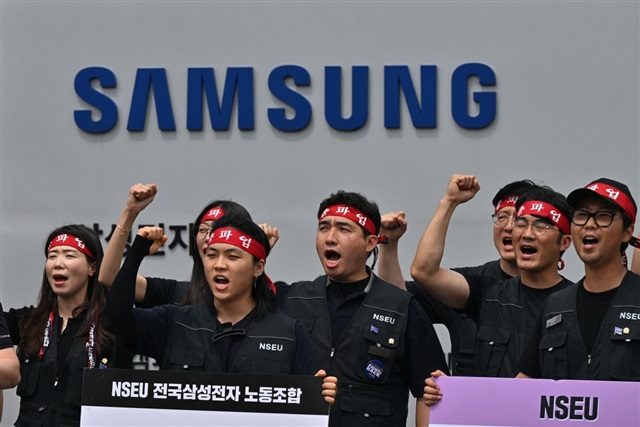
Samsung Electronics' labor union recently announced that employees who do not participate in a planned 18-day general strike from May 21 to June 7, 2026, will face penalties, sparking widespread concern and controversy across South Korea. The vote on whether to proceed with the strike began March 9 and runs through March 18.
According to media outlets including ET News and Bloomberg, the union declared its firm intention to hold the strike, emphasizing punishments and blacklisting for non-participating workers.
The union's hardline stance has drawn criticism, with some voices warning that managing dissenting employees via "blacklists" could be illegal.
Industry observers note that if the strike materializes, its scale would surpass the first nationwide Samsung union-led strike in 2024. The current union membership has grown from about 32,000 to over 66,000, including roughly 50,000 workers in the semiconductor business under the Device Solutions (DS) division. This raises the likelihood of disruptions in the high-bandwidth memory (HBM) supply chain.
Reports indicate Samsung has started mass production of its sixth-generation HBM4 products amid peak manufacturing season, heightening concerns among global customers and investors about potential impacts from the strike. Previous reports revealed that labor negotiations broke down over disputes regarding limits on over-performance incentives (OPI). The union insists on removing the cap, while management worries this could undermine fair profit distribution across multiple divisions, leading them to reject the union's demands.
South Korean industry insiders warn that if the strike proceeds, it will not only disrupt Samsung's production lines but also affect stability throughout the global semiconductor market supply chain.
Article translated by Charlene Chen and edited by Jack Wu