Below are the most-read DIGITIMES Asia stories from the week of January 19-25, 2026.

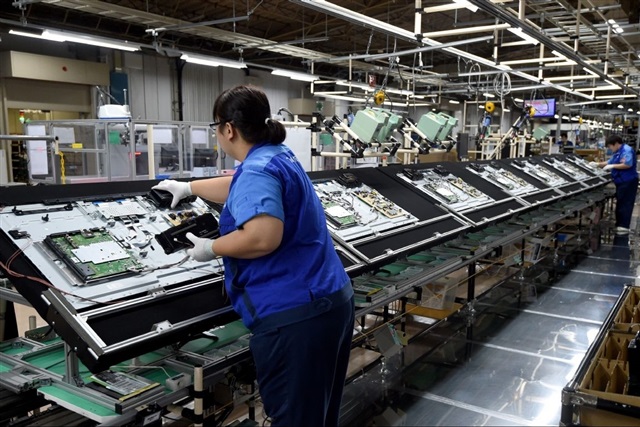
Sony exits TVs as scale economics overpower brand premium
Sony's decision to spin off its TV business into a TCL-controlled joint venture marks the end of a long retreat from mass-market consumer electronics and demonstrates how unforgiving scale economics have become in displays. While Sony's Bravia line survived for years through premium positioning tied to its content ecosystem, thin margins, relentless price competition, and the rise of vertically integrated rivals ultimately eroded its strategic value.
For TCL, acquiring the Bravia brand offers a shortcut into the premium segment; for Sony, the move frees capital and focus for higher-margin businesses built on IP, including gaming, music, and film. This closes an important chapter in Japanese consumer electronics history.
Intel pauses 14A expansion and bets on yield, tools, and packaging
Intel is making a more disciplined manufacturing reset by prioritizing yield improvement, tool availability, and advanced packaging over aggressive node expansion. While Intel is ramping Intel 7, Intel 3, and 18A where demand exists, it is deliberately holding back major 14A capacity investments until foundry customers commit, positioning high-NA EUV squarely for that node.
Management acknowledges steady yield gains but admits it has not yet reached industry-leading execution, even as advanced packaging emerges as a near-term revenue bright spot potentially exceeding US$1 billion. Near-term margin pressure remains unavoidable, framing Intel's strategy as a trade-off between short-term pain and long-term foundry credibility.
8-inch wafer cuts ease oversupply pressure
Despite capacity reductions by TSMC and Samsung that will trim global 8-inch foundry output by an estimated 2–3% in 2026, the mature-node market remains oversupplied. Taiwanese players such as VIS, UMC, and PSMC are seeing incremental improvements, supported by de-Sinicization orders, AI-driven PMIC demand, and rising Chinese foundry prices.
However, supply chain sources caution that the market has only modestly tightened, with consumer, automotive, and industrial demand still soft. Chinese foundries, buoyed by domestic EV and AI-related demand, have shifted toward profit-oriented pricing, but the overall balance has yet to swing decisively in favor of non-Chinese foundries.
2nm race continues as process gains lose marketing punch
Apple, Qualcomm, and MediaTek are all set to move smartphone SoCs to 2nm in 2026, underscoring how leading-edge process technology remains a strategic necessity even as its consumer appeal fades. While performance and power gains persist, they are increasingly incremental, pushing vendors to emphasize architectural optimization, cache expansion, and system integration over raw node shrink.
The synchronized 2nm timelines suggest both a desire to avoid falling behind Apple and a push to secure scarce advanced-node capacity early. As consumers grow less responsive to spec-sheet gains, the industry is pivoting toward user experience and feature differentiation rather than process leadership alone.
China pushes T1000 carbon fiber toward semiconductor-grade materials
China's progress in T1000-grade carbon fiber highlights a strategic shift from capacity expansion to material quality, consistency, and high-end applications relevant to semiconductor equipment. While carbon fiber does not directly enter chip fabrication, its role in ensuring dimensional stability and thermal control makes it increasingly critical as nodes shrink.
Domestic suppliers such as Zhongfu Shenying, GW Compos, and others are focusing on process control and long-term validation rather than rapid premium-market entry, while equipment makers gain prominence in scaling production. The advance toward T1000-grade consistency signals China's ambition to move deeper into advanced manufacturing and semiconductor-adjacent material ecosystems.
TSMC and Apple operate as a virtual IDM
TSMC and Apple's partnership has evolved into what SemiAnalysis describes as a true "virtual IDM," with hundreds of Apple engineers embedded at TSMC and deeply involved in process design kit co-development. This tight integration, which spans DTCO, process windows, and node-specific customization, has enabled Apple to extract maximum performance from each new process generation while giving TSMC the scale and confidence to invest aggressively in leading-edge capacity.
The relationship, rooted in collaboration since the early 2010s, illustrates how co-optimization between design and manufacturing can outweigh the benefits of vertical integration through owned fabs.
Micron's India ATMP plant enters commercial phase
Micron's Gujarat ATMP facility is set to begin commercial output by late February 2026, marking a tangible step forward in India's semiconductor ambitions. While focused on back-end processes, the project is seen as foundational for integrating India into global chip supply chains and building manufacturing credibility alongside its growing design ecosystem. Despite timeline delays tied to cleanroom and infrastructure complexity, the project's commissioning underscores New Delhi's problem-solving approach and its use of strategic partnerships with the US, EU, Japan, and others to position India as a trusted semiconductor partner amid geopolitical realignment.
Article edited by Jack Wu