

Cable assembly manufacturer BizLink is advancing its research and development capabilities by integrating AI, automation, multiphysics simulation, and digital twin technologies to meet the surging demand in the high-speed computing market. The company points out that the core R&D challenges lie in achieving both high speed and high power, extending into mechanical structure analysis, making cross-domain integration an essential capability.
In 2024, BizLink established a high-speed computing center in Tainan focused on developing high-speed connector products. Production and stamping equipment have been installed, with manufacturing already underway. Grand Lin, a senior director of R&D at BizLink, recently shared insights at the Dassault Systèmes technology conference about BizLink's long-standing collaboration with Dassault in high-speed connector development.
Lin explained that through Dassault's product lifecycle platform, engineers can enhance efficiency across design, simulation, proposal, and management processes while generating reliable results. This approach helps BizLink accelerate engagement with international clients facing complex technical challenges.
Addressing high-speed computing R&D demands, Lin emphasized the dual challenges of speed and power, noting that cross-physics integration combining electrical, thermal, and structural domains is critical. He pointed out that server connectivity involves both internal and external cabling, with increasing optical transmission needs complicating development further. High-speed data transfer also raises power consumption and heat dissipation issues, requiring integrated multiphysics approaches to keep pace with rapidly evolving server architectures.
Moreover, frequency testing requirements in high-speed transmission have risen from 20-30GHz to 50GHz and even 100GHz. This trend necessitates expanding material databases to cover higher frequency bands for accurate simulation and measurement alignment. Lin cited TSMC's process evolution as an example: when technology scales down to 2nm, traditional physical models no longer suffice, demanding concurrent upgrades in EDA tools, a principle equally applicable to high-speed transmission material simulations.
Looking ahead, Lin stressed that virtual-physical integration will be pivotal for future high-speed computing R&D. Simulations must realistically reflect variations and discrepancies in high-frequency materials post-manufacturing to serve as dependable bases for design decisions. BizLink plans to collaborate further with Dassault to expand the scope of high-speed computing applications and enhance material database completeness.
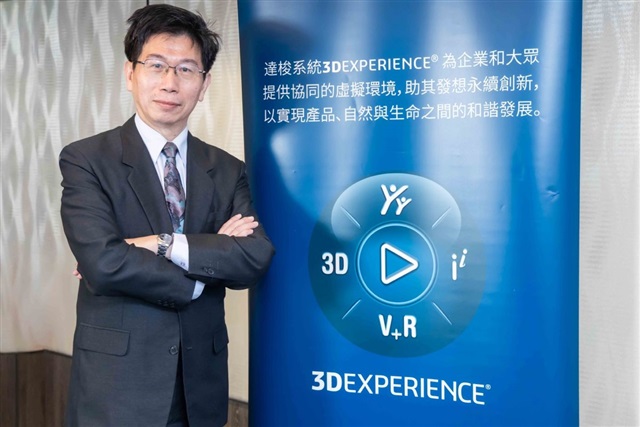
Meanwhile, Wayne Chang, general manager of Simutech Solution—Dassault Systèmes' agent in Taiwan—observed that electronic industry departments handling mechanical, electrical, and thermal simulations often operate separately. This siloed approach delays information synchronization during design changes, prolonging development cycles. Chang hopes Dassault's 3D collaboration platform will enable multidisciplinary engineers to work concurrently on unified models, improving cross-domain integration efficiency.
Article translated by Rodney Chan and edited by Jack Wu
