

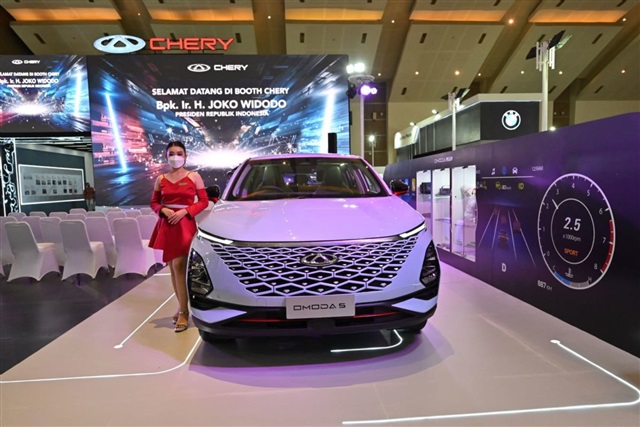
China's Ministry of Industry and Information Technology launched surprise inspections in late July 2026 at five electric vehicle makers as Beijing widened its crackdown on "involution" industries. The checks focused on battery quality, smart-driving safety and marketing claims after years of intense price competition had raised concerns over product consistency and safety.
According to Chinese media reports, inspection teams arrived unannounced at GAC Aion, Xpeng, Chery, NIO and JAC Group, the parent of Anhui Jianghuai Automobile Group. Officials entered production lines, took random samples, sealed items on site and sent vehicles and matching power batteries to third-party laboratories for testing.
The first round targeted GAC Aion and Xpeng, with regulators examining battery fire risks linked to earlier discount-driven competition, complaints over battery management systems, product-spec mismatches, and smart-driving accidents tied to exaggerated promotion. The second round focused on Chery, NIO and JAC, with NIO scrutinized for battery-pack thermal-runaway protection at swap stations and production consistency, Chery for range performance and electric-control quality, and JAC for complex cross-platform procurement tied to Huawei's high-end contract manufacturing business.
Chinese media said the inspections were not routine and reflected MIIT's effort to address long-accumulated quality risks in the sector. Authorities are also reviewing battery supply chains, including frequent shifts to lower-tier suppliers that have contributed to uneven range degradation, inconsistent charging speeds and higher fire risks across batches of the same model.
Regulators are also tightening oversight of over-the-air software updates and advanced driver-assistance systems, with a focus on immature algorithms and safety assessments for autonomous-driving functions. A third priority is to curb false marketing and irrational competition, including claims that overstate assisted driving as full autonomous driving.
Article edited by Jerry Chen