
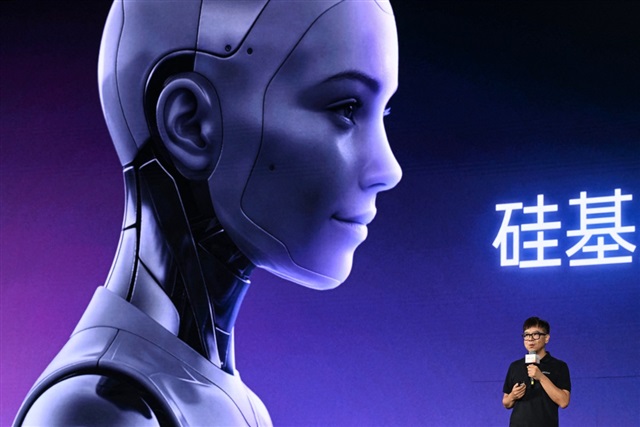
China's humanoid robot sector is moving faster than expected, with new unicorns, policy support and maturing supply chains pushing physical AI from lab validation toward early deployment.
AI² Robotics and X Square Robot have each reached valuations above CNY20 billion (approx. US$2.94 billion), joining a small group of high-value Chinese humanoid robot startups. Bloomberg reported that AI² Robotics raised nearly CNY5 billion to build a factory capable of producing tens of thousands of humanoid robots a year.
X Square Robot did not disclose the size of its latest fundraising round, but said it completed several consecutive rounds. Backers include Alibaba, ByteDance, and Meituan, showing how China's internet capital is moving into physical AI.
China robotics companies have raised at least CNY46 billion so far in 2026, already exceeding the full-year total for 2025, according to ITjuzi. The surge shows rising investor confidence that humanoid robots could become China's next major industrial platform after EVs and AI servers.
Capital targets production
China's robotics leaders are also moving toward public markets. Hangzhou-based Unitree Robotics received approval in early June for a Shanghai listing that could raise CNY4.2 billion, adding momentum to robotics listings in China and Hong Kong.
Nvidia CEO Jensen Huang has called physical AI the industry's next major wave, and Chinese capital is increasingly targeting robot-specific AI models. More than 140 companies are active in China's humanoid robot market, many focused on factory deployment and replacing repetitive labour.
The market is shifting from prototypes to production readiness. Morgan Stanley now expects China humanoid robot shipments to exceed 50,000 units in 2026, nearly double its January forecast of 28,000, according to reports citing CNBC and the South China Morning Post. It also raised its 2030 forecast to 446,000 units from 262,000.
Omdia said global humanoid robot shipments reached about 13,000 units in 2025, with Chinese companies taking the top five positions. Morgan Stanley also raised its target price for precision component supplier Leaderdrive, citing stronger component demand from rising shipments.
Orders validate demand
EV makers are becoming key players in China's embodied AI push. Xpeng said it has entered early humanoid robot mass production and commercialisation, with Iron production planned by the end of 2026. Initial deployment will start in its EV showrooms before expanding in China and overseas markets.
Commercial demand is becoming visible. Beijing-based Galbot secured a CNY236 million order for about 500 robots, the largest disclosed humanoid-like robot procurement so far in 2026. UBTech Robotics said its companion robot sold more than 5,000 units within 20 days of launch.
Unitree said its humanoid robot shipments exceeded 5,500 units in 2025, above market expectations. The figures suggest Chinese firms are turning capital, supply chain capacity, and early demand into measurable volume.
Policy drives rollout
Policy support is accelerating deployment. China has launched a national application verification programme requiring local governments and state-owned enterprises to test humanoid robots in factories, warehouses and medical settings within six months. The goal is to complete verification by the end of 2026 and move selected scenarios into regular operation.
The strategy aims to generate real-world operating data and improve commercial viability. While many US and European companies remain focused on R&D, China is seeking an adoption edge through policy-led deployment, dense supply chains and faster field testing.
China's humanoid robot ecosystem now spans AI models, precision components, machine assembly, and industrial applications. EV makers, startups, and traditional robotics firms are all entering and building a supply base for scale production.
Global expansion remains harder. Hong Kong-listed Shanghai Seer Intelligent Technology said it operates in more than 65 countries, with overseas revenue at about 18% of 2025 total revenue, but warned that geopolitics and trade tensions remain major challenges.
The next phase depends on cost control, reliability verification, and overseas market access. If mass production stays on track, China could build one of the world's first scaled humanoid robot markets and strengthen its role in the global physical AI supply chain.
Article edited by Jack Wu