Alphabet's Google has unveiled its KV cache quantization compression technology, TurboQuant, promising dramatic reductions in memory usage for AI inference. While the innovation has captured global attention, South Korea's academic and industrial sectors remain skeptical about its practical feasibility, even as they firmly expect AI inference to continue driving substantial growth in memory demand.
Skepticism meets structural optimism
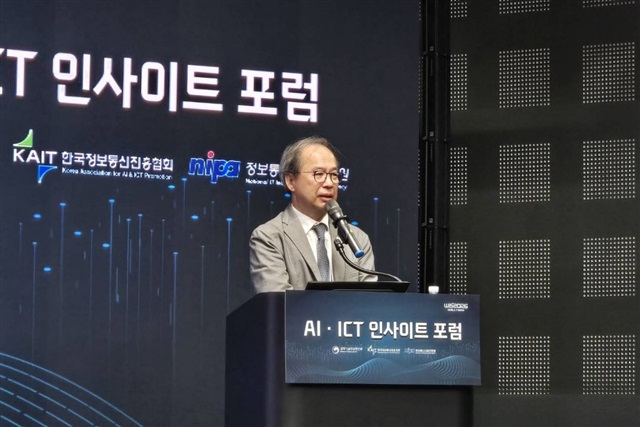
Professor Kim Jung-ho of the Korea Advanced Institute of Science and Technology—widely known as the "father of HBM"—recently said that total memory capacity required by AI systems could increase 1,000-fold within the next 10 to 30 years. He emphasized that in the AI era, competitive advantage is shifting from hardware specifications to capabilities in memory architecture and software management.
Exploding KV cache demands
Kim explained that memory capacity requirements are set to rise sharply as longer context lengths and expanding KV cache demands take hold, intensifying system bottlenecks. For instance, a sequence length of 1K tokens requires roughly 0.5GB of KV cache, but scaling to 128K tokens drives demand up to about 64GB.
Moreover, the rise of agentic AI means a single user request may engage five to 15 agents operating concurrently, with context memory persistence extending from minutes to days. When combined with multi-window workflows and parallel model execution, total memory requirements per session could increase more than eightfold.
TurboQuant's promise and its limits
Google's TurboQuant applies a two-stage KV cache compression approach: "Polar Quant" first restructures the data, followed by "QJL (Quantized Johnson–Lindenstrauss)" for error correction. The method compresses 32-bit floating-point data down to three bits without requiring model retraining, cutting memory usage to roughly one-sixth and drawing significant industry attention.
However, Kim cautioned that the research was conducted on relatively small models of around three billion parameters, with context lengths capped at 8K tokens. Such conditions, he argued, fall short of reflecting real-world long-context workloads. While the results may be academically valid, their practical effectiveness remains to be seen.
Risks in high-stakes applications
Concerns are particularly acute in domains requiring near-perfect accuracy, such as autonomous driving and physical AI systems. Even less critical applications like document summarization or image processing may suffer from quality degradation under aggressive quantization.
Additionally, TurboQuant lacks sufficient empirical validation under real-world traffic conditions, including adversarial prompts, unstructured data formats, and cross-lingual inputs. Edge cases arising from aggressive quantization could introduce unacceptable liability risks, particularly in highly regulated sectors such as finance, healthcare, and legal services.
Memory demand still set to surge
Despite these reservations, South Korea's memory industry sees quantization advances as additive rather than disruptive. SK Hynix, in its first-quarter 2026 earnings call, emphasized that efficiency gains will expand the AI ecosystem, enabling longer contexts and more complex reasoning, ultimately driving higher memory consumption.
Jinwon Lee, CTO of HyperAccel, noted that TurboQuant's improvement of AI model efficiency could lower barriers to AI adoption by reducing GPU cost constraints. If validated by forums such as the International Conference on Learning Representations, such technologies could further stimulate semiconductor demand.
Korea's countermoves in AI compression
South Korean firms are not standing still. Companies like Quantum AI are developing alternatives such as "QuantumQuant," which leverages combinational quantization in simplex space for real-time, high-precision compression of high-dimensional vectors.
Meanwhile, startup ENERZAi has achieved compression of large language models (LLMs) to 1.58-bit precision with minimal accuracy loss, and is collaborating with partners including Taiwan's Advantech to expand edge AI deployment.
Industry consensus is forming around a dual-track future: software-driven efficiency improvements and memory-centric hardware expansion are complementary forces. For industry leaders like Samsung Electronics and SK Hynix, the strategic focus remains on advancing memory technologies, scaling capacity, and preparing for architectural shifts beyond Transformer-based models.
Article translated by Willis Ke and edited by Jack Wu