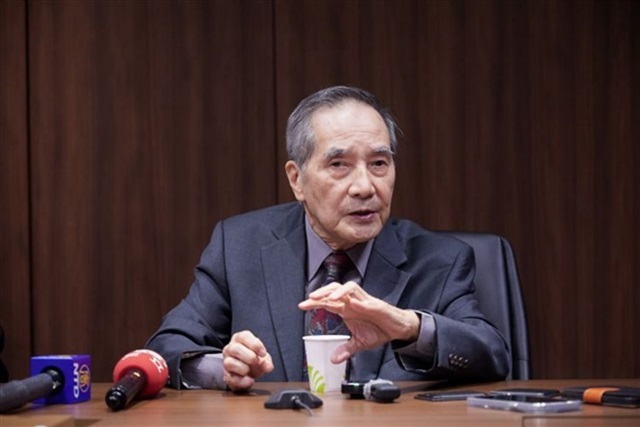
Intel's recruitment of Wei-jen Lo, formerly TSMC's Senior Vice President of Strategy Development, signals an aggressive push by the US IDM to regain process leadership. However, industry veteran Burn J. Lin argues that while high-level talent acquisition is significant, it does not guarantee the ability to replicate TSMC's manufacturing success.
Lin is revered as the 'Father of Immersion Lithography' for pioneering the technology that extended Moore's Law for nearly two decades, a breakthrough instrumental in establishing TSMC's global manufacturing dominance.
Legal battle over trade secrets
The dispute escalated on November 25, 2025, when TSMC filed suit against Lo in the Intellectual Property and Commercial Court. The foundry alleges that Lo, who joined Intel as Executive Vice President immediately after retiring from TSMC, risks leaking trade secrets related to sub-2nm nodes. Intel has firmly backed Lo, framing the hire as a "return to the team" given his prior history with the company.
Burden of proof shifts to Intel
Speaking at a Topco Scientific event on December 16, 2025, Lin—former TSMC R&D SVP and current Dean of the NTHU College of Semiconductor Research—viewed the hire as a symptom of Intel's current crisis. He warned that the move invites legal and public scrutiny: should Intel's future roadmap show sudden convergence with TSMC's proprietary technologies, the burden of proof will fall on Intel to establish independent development.
Knowing versus producing
Despite the sensitivity of Lo's knowledge, Lin downplayed the threat to TSMC's dominance. He emphasized that in the modern semiconductor industry, "knowing" the technology is distinct from successfully "producing" it. TSMC's advantage, Lin noted, lies not in the mind of a single strategist but in the seamless coordination of its mass-production teams.
"Samsung and Intel have smart engineers," Lin observed, "but they still struggle to match TSMC's tightly coordinated team operations." With technology generations evolving every two to three years, Lin suggested that individual transfers of knowledge are less decisive than the organizational execution required to bring those technologies to fruition.
Article edited by Jerry Chen