
After months of sluggish demand, Europe's car market finally posted a sign of recovery in August 2025 — a hopeful signal driven less by consumer enthusiasm and more by the tightening grip of regulatory pressure.
According to newly released data from the research firm Dataforce, new car registrations in Europe rose 4.5% in August — traditionally one of the weakest sales months of the year — marking a second consecutive month of growth. The uptick pushed cumulative 2025 sales into positive territory for the first time this year, reaching 8.7 million units, a modest year-on-year increase of 0.3%.
Behind this rebound lies a familiar force: the electric revolution. Battery electric vehicles (BEVs) led the charge, with August sales rising 26% from a year earlier, matching their 26% cumulative growth through the first eight months of the year. Plug-in hybrid vehicles (PHEVs) fared even better, surging 56% year-on-year, with total PHEV sales up 28% so far in 2025.
The urgency for this shift is not purely market-driven. It's regulatory.
Facing the looming 2025–2027 phase of the European Union's increasingly strict CO₂ emissions targets, automakers are under immense pressure to electrify their fleets. According to industry estimates, BEVs must make up at least 20–25% of sales for manufacturers to remain compliant. In August, BEVs accounted for 20% of the EU market, while PHEVs and traditional hybrids (HEVs) stood at 10% and 12%, respectively.
The August data reveals a clear divide: while some automakers are thriving in the electric transition, others are falling behind.
Chinese brands have emerged as standout winners. BYD posted more than 10,000 sales in the EU for the month, up a staggering 230% year-on-year. MG (a subsidiary of SAIC) sold approximately 15,000 vehicles, a 46% increase. Chery, another Chinese brand, recorded an explosive 470% jump in sales.
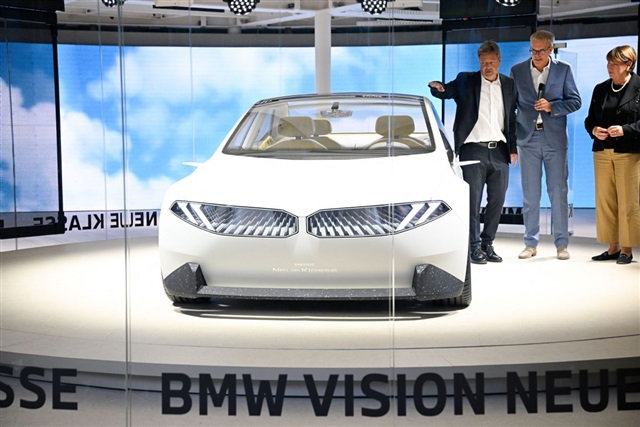
Among European players, German brands held their ground. BMW Group saw a 13% rise in sales, while Stellantis — after a prolonged slump — inched up 3.9%, boosted by Citroën's new C3, which alone posted a 32% increase in registrations.
However, not all players fared well in the increasingly competitive and regulatory-driven environment. Mitsubishi's EU sales fell 31%, while select Stellantis brands saw a drop of 26%. Tesla, once the face of electric mobility, reported a 23% decline, with monthly sales falling to just 14,000 units in the region. Geely dropped 13%, Nissan 6.2%, and Toyota 2.6%.
Industry analysts say August's sales figures mark a pivotal moment for the European auto sector, which is undergoing one of its most radical transformations in decades.
As new emissions regulations accelerate the shift to electric vehicles, automakers are being forced to rapidly adapt — or risk obsolescence. For legacy manufacturers, the challenge is to recalibrate product portfolios to match evolving standards and consumer expectations. For consumers, however, the growing competition is yielding tangible benefits: more choices, better value, and faster innovation.
In this regulatory and technological race, agility is everything, said one supplier executive. The winners will be those who can pivot quickly, scale fast, and deliver on both compliance and customer experience.
Article translated by Elaine Chen and edited by Joseph Chen