中文網
繁體
简体
SUBSCRIBE
My account
Sign in
Sign up
TECH
Tech Home
Semiconductors
Communications
ICT
Displays
Electric Vehicles
Sustainability
Aerospace
REGIONS
Asia Home
East Asia
Southeast Asia
South Asia
AsiaTech Frontier
RESEARCH
OPINIONS
Opinions Home
Interviews
Colley & Friends
Commentary
Research Insights
Column
FINANCE
BIZ FOCUS
Biz Focus Home
Trending Issues
COMPUTEX
SEMICON
CES
EVENT+
Event+ home
Featured Events
MULTIMEDIA
SUBSCRIBE
Trending
Nvidia
TSMC
Meet the Analysts
Server EMS Tracker
On-Demand Briefing
AI Server Report
SCMP Bundle
Trending
SUBSCRIBE
CONNECT WITH US
Home
Tech
Jul 18, 12:13
SEMICONDUCTORS
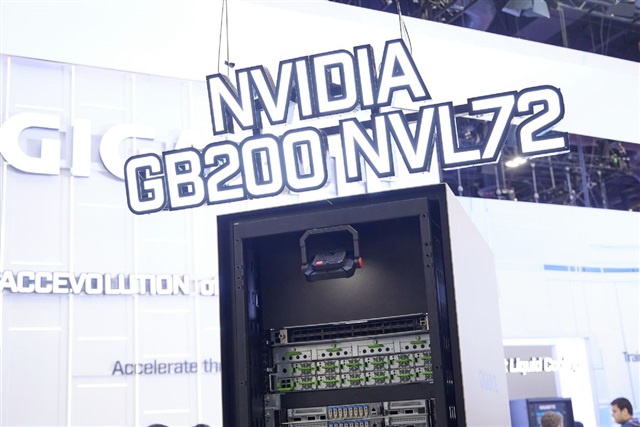
GB300 production underway: Nvidia's strategic shift brings relief to ODMs
Jul 18, 11:20
SEMICONDUCTORS
JS Foundry's collapse hands China the keys to power chip market
Jul 18, 10:14
SEMICONDUCTORS
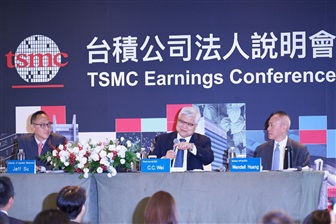
TSMC shrugs off macro headwinds with bold guidance hike — here's what's driving it
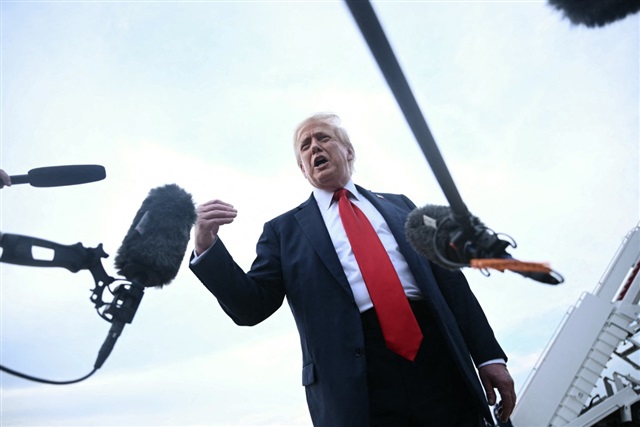
Trump's reciprocal tariff rates
Following the initial deal with Vietnam on July 2, the Trump administration has been gradually disclosing the reciprocal tariff rates for more and more countries.
Trump's 30% tariff threat to EU and Mexico comes with fine print
Trump says 50% copper tariff to take effect August 1
Philippine-made goods face higher US tariffs, affecting Taiwanese tech suppliers
...More
SEMICONDUCTORS
Jul 18, 16:27
H20 comeback sparks rush for HBM with Samsung set to benefit
Nvidia's H20 chip has been granted approval by the US government to be sold in China, despite being a lower-spec version compared to its original design. This approval has quickly led to a surge in demand, with Chinese customers placing substantial orders. The H20 is available in two versions: initially featuring Samsung Electronics' HBM3, before switching to SK Hynix's 8-layer HBM3E.
Jul 18, 17:14
Rapidus showcases 2nm chip prototypes, eying 2027 mass production
Rapidus, Japan's leading semiconductor company, unveiled its first set of 2nm prototype chips on July 18 during a press event held in Chitose City, Hokkaido. The unveiling took place at a hotel near the company's pilot production site and drew a crowd of about 200 suppliers and prospective clients.
Jul 18, 16:50
China's chip surge pushes Japan's JS Foundry into bankruptcy after Taiwan deal stalls
JS Foundry, a Japanese contract chipmaker specializing in power semiconductors, has filed for bankruptcy with the Tokyo District Court after failing to withstand mounting pressure from a wave of Chinese capacity expansions. The company's inability to secure a strategic partnership with a Taiwanese firm and a collapse in fab utilization forced its exit, marking a sobering end to what had once been a symbol of Japan's semiconductor revitalization push.
ICT
Jul 18, 15:08
Pegatron chair hails Indonesia tariff cut, urges balance in US-China AI strategy
Pegatron Chairman T.H. Tung welcomed the sharp reduction in US tariffs on Indonesian exports to 19%—the lowest among Asian countries to date—as a timely boost for the company's newly ramped-up production facility in Batam. He noted that the cut offers Taiwanese companies with operations in Southeast Asia a stronger foothold in global tech competition.
Jul 18, 13:37
OpenAI diversifies cloud providers as AI compute demand outpaces supply
OpenAI has diversified its cloud infrastructure beyond Microsoft Corp. to include Google Cloud, CoreWeave Inc., and Oracle Corp., underscoring the intensifying competition for scarce AI computing resources that has left multiple providers reporting capacity constraints in early 2025.
Jul 18, 06:24
Taiwan customs crack down on 179,000 Chinese transshipments to the US
The US has yet again extended the deadline for its reciprocal tariff negotiations to August 1, leaving many exporters on edge. US policy mainly aims to control China's low-priced dumping. Many countries' customs agencies have launched strict inspections to prevent becoming unwitting conduits for China's origin-washing and counterfeit rebranding.
TRENDING
TELECOM SERVICE, INFRASTRUCTURE
NVIDIA
COOLING
DATA CENTER
2023
SEMICONDUCTOR INDUSTRY
COMMUNICATIONS
Jul 18, 16:05
Foldable smartphone brands strategize to break growth plateau
The foldable smartphone space is buzzing with increased support from brands, hardware innovations, and generative AI enhancements. Since the release of Samsung's Galaxy Z Fold 7, the market has the potential to expand.
Jul 18, 16:35
FWA has huge growth potential in Taiwan
Fixed wireless access (FWA) is only playing second fiddle to fiber in Taiwan's broadband market. Despite that, FWA is far from being just an optional technology, as it offers huge growth potential.
Jul 18, 09:28
Chunghwa Telecom targets AI cloud network needs with new submarine cable
Chunghwa Telecom (CHT), Taiwan's largest integrated telecommunications operator, announced last month it would invest more than NT$2.4 billion (approx. US$81.6 million) in the new Asia United Gateway (AUG) East submarine cable system. On July 16, CHT participated in the signing ceremony for the new AUG East cable in Singapore, where it shared construction details for the new cable.
ELECTRIC VEHICLES
Jul 18, 06:19
Chinese Premier orders end to cutthroat EV price war
Chinese Premier Li Qiang has pledged to rein in aggressive price-cutting in China's fast-growing electric vehicle (EV) sector, marking a clear pivot from self-regulation to direct government oversight. Speaking at a recent State Council executive meeting, Li called for restoring order in the new energy vehicle market and denounced what he termed "irrational competition," according to China Central Television (CCTV).
Jul 17
LGES and GM jointly build LFP EV battery production line in the US, LMR batteries to become next focus
LG Energy Solution (LGES) and General Motors (GM) have decided to convert the second factory of their joint venture, Ultium Cells, located in Spring Hill, Tennessee, from producing nickel-cobalt-manganese (NCM) ternary batteries to manufacturing lithium iron phosphate (LFP) batteries.
Jul 17
Import tariff talks with the US spark fears among Taiwan's domestic carmakers
Taiwan's domestic and imported car markets have long been locked in a delicate tug-of-war. In 2024, local vehicles held a narrow lead with a 52% market share, compared to 48% for imports. But that balance could be upended if the latest trade rumors prove true.
SUSTAINABILITY
Jul 16
Trump hails US$92 billion in investments for AI, energy projects
President Donald Trump hailed more than US$92 billion in investments in artificial intelligence and energy infrastructure during a visit to Pennsylvania, highlighting his efforts to bolster US competitiveness in the AI field.
Jul 15
Taiwan solar industry group denies toxic leakage concerns after typhoon damage
Taiwan's photovoltaic industry association dismissed public concerns about toxic liquid leakage from solar panels damaged by Typhoon Danas, saying the public is confusing solar cells with household batteries.
Jul 14
US judges diverge on AI but land on same legal ground
Meta Platforms and Anthropic secured separate legal victories in copyright disputes over using books to train artificial intelligence models, with federal judges ruling the practice constitutes fair use despite expressing divergent views on the technology's implications.
AEROSPACE
Jul 18, 11:44
Taiwan drone maker pushes dual-use capabilities as military demand grows
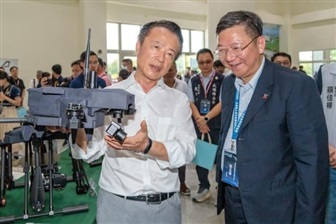
HY Tech unveiled its SkyVTOL 2 electric long-range drone, highlighting Taiwan's growing capabilities in unmanned aerial vehicle development as the island seeks to strengthen its defense industry. The Taipei-based company's latest model can carry 5-kilogram payloads for logistics applications while also serving potential military reconnaissance roles.
Jul 17
Taiwan's Hsuan Yuan Tech eyes US, Europe expansion as drone demand shifts to components
Taiwan's Hsuan Yuan Tech Co., a drone systems integrator and component developer, is targeting the US and European markets as global demand shifts from complete aircraft to high-value modules amid rising geopolitical tensions.
Jul 17
US pressures Taiwan drone suppliers to relocate production as security rules tighten
The US is intensifying efforts to reshape the unmanned aerial systems (UAS) landscape, tightening oversight of the drone supply chain in a bid to reclaim technological leadership and fortify national security. At the center of this strategy is the Blue UAS Cleared List—a Defense Department-approved roster of drone makers deemed safe for government use. While inclusion isn't limited to US companies, industry officials say the criteria have quietly expanded to favor American-made drones, pushing foreign suppliers to bring production stateside if they want access to the lucrative US market.
DISPLAYS
Jul 18, 16:13
Inside Innolux’s retreat from a fading LCD battlefield
With China's domination in the global LCD panel industry, coupled with long-term overcapacity in panel production and the fact that higher-generation fabs are more efficient and cost-effective than older, lower-generation lines, panel players from Taiwan, South Korea, and Japan have been continuously closing and selling plants in recent years.
Jul 17
Taiwan polarizer makers secure price hikes amid cost pressures
Taiwan's polarizer manufacturers have successfully negotiated price increases exceeding 10% with panel makers as they grapple with currency headwinds and rising raw material costs, according to industry sources.
Jul 17
Polarizer makers face mounting cost pressures as PET shortages persist
Polyethylene terephthalate (PET) shortages continue to squeeze polarizer manufacturers as Japanese suppliers announce consecutive price increases effective in 2025. Industry sources estimate PET costs will climb another 10% in the third quarter of 2025, adding to pressure from rising optical film prices.
BIZ FOCUS
Jul 9, 10:42
TRI unveils new multi-camera AOI, TR7500 SIII Ultra
Wednesday 9 July 2025
How distribution is evolving in 2025
Wednesday 9 July 2025
AI apprentice available online; Profet AI facilitates manufacturing transformation and resolves industry challenges
Monday 30 June 2025
Why age verification online is facing more scrutiny in 2025
MOST-READ
7 DAYS NEWS
HBM capacity crunch triggers price surge in DDR5 and VRAM markets
TSMC, ASE close ranks on PLP, 310x310mm emerges as the format to watch
Micron tightens grip on AI memory market as Samsung certification lags
TSMC turns US expansion crisis into opportunity; personnel reshuffle set for 2026
Exclusive: TSMC’s GaN exit pulls rug from under BYD
GB300 production underway: Nvidia's strategic shift brings relief to ODMs
China’s AI star disappears from home and quietly reemerges in Singapore
H20 comeback sparks rush for HBM with Samsung set to benefit
MediaTek's C-X1 takes market by storm to fuel 2026 revenue
JS Foundry's collapse hands China the keys to power chip market
Full list
MULTIMEDIA
TSMC CEO: $4T Giant Hasn’t Called About China-Bound H20 Chips
Members only
×
Sorry, the page you are trying to open is available only for our paid subscribers.
Please
login
to read more
New users, please
register
first