
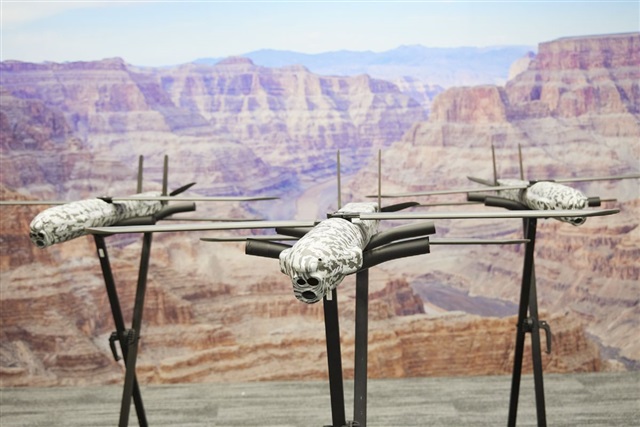
The US is intensifying efforts to reshape the unmanned aerial systems (UAS) landscape, tightening oversight of the drone supply chain in a bid to reclaim technological leadership and fortify national security. At the center of this strategy is the Blue UAS Cleared List—a Defense Department-approved roster of drone makers deemed safe for government use. While inclusion isn't limited to US companies, industry officials say the criteria have quietly expanded to favor American-made drones, pushing foreign suppliers to bring production stateside if they want access to the lucrative US market.
Since the Blue UAS initiative launched in 2020, Washington has steadily escalated its drone policy. That acceleration reached a new level in June 2025, when President Donald Trump signed two executive orders: Unleashing American Drone Dominance (UADD) and Restoring American Airspace Sovereignty (RAAS).
The UADD directive focuses on building up the domestic drone and electric vertical takeoff and landing ecosystem, shoring up supply chains, supporting research and development, and expanding export capacity. RAAS, meanwhile, centers on defending US airspace from surveillance and cyber threats posed by foreign-made drones.
Together, the orders underscore a broader effort to reassert US control over emerging aerospace technologies—not just in software and sensors, but in the physical production footprint behind them.
The Pentagon has indicated it will prioritize procurement of US-manufactured drones under the Blue UAS framework and is calling for deeper private sector engagement. That stance is already changing market dynamics, triggering a wave of investment into American drone startups.
Publicly traded companies like Joby Aviation and Archer Aviation saw their shares jump following the executive orders, as investors bet on a policy-driven shift toward homegrown suppliers.

Credit: DIGITIMES
Security rules favor US-made components
Taiwanese drone suppliers are facing new headwinds as the United States sharpens its defense procurement policies. Industry insiders say current Blue UAS protocols go beyond cybersecurity compliance and increasingly emphasize domestic manufacturing. Even components labeled "Made in Taiwan" may no longer qualify, potentially shutting out Taiwanese vendors unless they build production capacity on US soil.
Some Taiwanese firms are already taking steps to adapt. Thunder Tiger, a drone and robotics company, has announced plans to begin producing first-person view components in the United States by 2025, targeting both American and European customers. While California was initially under consideration, high operating costs have prompted a shift in focus to more affordable states such as Ohio and Alabama.
That approach follows the lead of US defense-tech company Anduril Industries, which is reportedly planning a major manufacturing site in Ohio. The move could help establish the Midwest as a key hub for the emerging drone economy.
Despite early moves, analysts caution that building US-based facilities poses a significant challenge for most Taiwanese drone companies. The industry in Taiwan remains in its infancy, with many players still operating at a limited scale. For most, even achieving full-scale production within Taiwan itself remains a hurdle, let alone overseas.
Partnerships offer a potential path forward
An alternative path may lie in integration rather than independence. Industry insiders report that several US drone and electric vertical takeoff and landing firms are actively courting Taiwanese suppliers, drawn to their manufacturing capabilities. The US is renowned for innovation, but lacks the robust supply chain management and manufacturing depth seen in East Asia.
However, this strategy introduces uncertainty. If US companies rely on Taiwanese manufacturers for components, questions arise about whether these parts will comply with the Blue UAS program's "localization" requirements. The determination could hinge on how rigorously Washington enforces its recent executive orders.
As US defense policy continues to evolve, clear guidelines regarding what qualifies as acceptable "local content" will be crucial in assessing the role of Taiwanese suppliers. Their ability to compete, whether independently or within the broader US drone supply network, will largely depend on these forthcoming interpretations.
Article translated by Sherri Wang and edited by Jerry Chen