As US defense procurement restrictions and European Union (EU) supply-chain due diligence requirements advance, South Korean risk-intelligence startup Helios is targeting verification needs in Taiwan and South Korea's AI, semiconductor, and defense industries. The company plans to bring public-information analysis and on-site verification services to Taiwan while strengthening maritime-threat analysis around the Taiwan Strait for corporate and national-security applications.
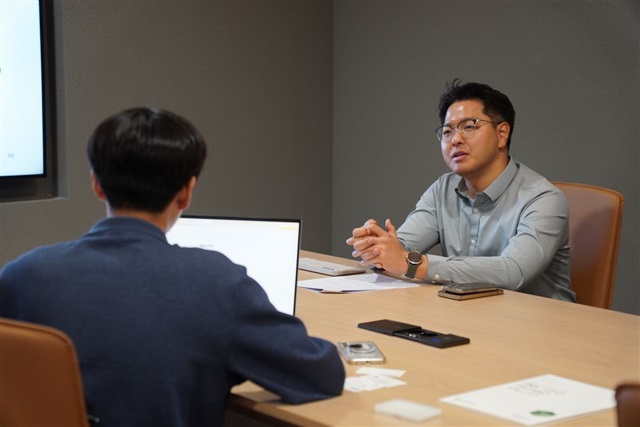
Helios CEO Antonio Kim said South Korea and Taiwan face similar challenges: Both are deeply integrated into US supply chains and rely on many of the same materials and components. By 2030, global markets will use various regulations to require companies to conduct investigations and verification related to non-China supply chains and environmental, social, and governance (ESG) issues, but few companies currently specialize in supply-chain risk management (SCRM).
Founded in June 2023, Helios is headquartered in Pangyo, South Korea, and has a US legal entity. It provides corporate supply-chain risk management and defense-security intelligence analysis, helping manufacturers, exporters, and public institutions identify risks involving third-tier and deeper suppliers that are invisible to internal procurement systems, as well as risks related to raw-material origins.
Two products, one analysis engine
Helios currently offers two products powered by the same analysis engine. Helios Atlas, designed for corporate users, monitors risks including supplier sanctions exposure, dependence on specific countries, opaque beneficial ownership, and supply disruptions.
Helios Aegis, designed for defense and public-sector users, can be deployed on closed networks to provide security-situation analysis and alerts on strategic-material supply risks.
Centered on open-source intelligence (OSINT) analysis, Helios collects multilingual news reports, corporate announcements, vessel and aircraft movements, satellite hotspots, and raw-material prices. By comparing this information with normal patterns, it identifies anomalous signals, which analysts and local partner networks then verify.
Kim said the company also has a partner network in Taiwan and can conduct verification within 72 hours of receiving a request.
According to company data, Helios' revenue grew to 3.5 times its 2023 level in 2025. Its exports to the US totaled US$43,500 during 2025 through the first half of 2026. The company is currently conducting trials involving regular briefings for two defense and public-sector customers, while its core technology has been submitted for patent protection in South Korea and is undergoing expedited examination.
Kim stressed that as supply-chain regulations advance—from Europe's Corporate Sustainability Due Diligence Directive (CSDDD) to the US National Defense Authorization Act and the Uyghur Forced Labor Prevention Act (UFLPA)—South Korean and Taiwanese companies supplying the US AI, semiconductor, and defense supply chains will face growing demand for supplier verification.
Companies will need to determine who their suppliers' suppliers are, he said.
Helios therefore views Taiwan as a key market, particularly among component makers and electronics manufacturing services (EMS) providers with high export exposure to the US. The company is seeking partnerships with supply-chain research institutions and local consulting firms.
Kim said a supply-chain threat in Taiwan could deliver a massive shock to the national economy. Helios hopes to enter the Taiwanese market aggressively by providing advance threat analysis to help companies prevent and reduce risks.
Beyond manufacturing, security conditions around the Taiwan Strait are another major focus of Helios' Taiwan strategy. Kim said he observed European defense companies actively analyzing the situation around the Taiwan Strait during a recent visit to the International Defence Industry Exhibition (MSPO) in Poland.
The company has also begun strengthening its maritime-threat analysis in recent weeks and aims to accelerate its entry into the Taiwanese market once the system is fully developed.
Article translated by Lily Hess and edited by Jack Wu