
Every major consumer electronics company has raised prices this year. The reason, in almost every case, is the same: memory costs have surged, driven by AI data center demand that has overwhelmed global DRAM and NAND supply. Apple raised prices on its MacBook and iPad lines, too. However, to group Apple's move with everyone else's is to miss what is actually happening.
"Apple is not raising prices to survive," says Luke Lin, senior analyst at DIGITIMES. "It is raising prices to win."
Why Apple was the last to move — and what that tells you
The memory price surge began in earnest in the second half of 2025. Mid- and low-end Android device makers felt it almost immediately. Margins compressed, production was cut, prices went up — in many cases, just to keep the lights on. Apple, by contrast, did not begin absorbing meaningfully higher memory costs until the first quarter of 2026.
Lin attributes the lag to three structural advantages that most observers underestimate.
First, Apple's purchasing scale is in a category of its own, giving it negotiating leverage that smaller buyers simply cannot match. Second, Apple's product line has an unusual degree of component consistency — the entry-level MacBook and older iPhone models share processor and memory specifications, allowing Apple to pool procurement across product lines in ways that compress per-unit costs.
Third, and most importantly, Apple had locked in long-term supply agreements that kept it on pre-surge pricing well into late 2025, while competitors were already paying spot-market rates.
By the time Apple's low-cost inventory ran out and its contracts rolled over, it was the last major consumer electronics company still selling at old prices.
"Every other company had already moved," Lin notes. "When Apple finally raised prices, it was doing so from a position of strength, not necessity."
The distinction matters. Where mid- and low-end Android manufacturers raised prices — or cut production — to survive margin compression, Lin is emphatic that Apple's motivation was categorically different: to protect margins that were already strong. That difference in posture, he argues, shapes everything about how Apple's moves should be read.
The trade-in maneuver
Several months before Apple announced price increases on its iPad and MacBook lines, it quietly raised the maximum trade-in credit it offers on older devices. Lin says he flagged the move to colleagues as soon as he saw it. "When Apple raises the trade-in ceiling, that's the signal," he says. "The price increases are coming."
The sequencing was deliberate. By lifting trade-in values first, Apple cushioned the psychological impact of the increases that followed. A customer trading in an older iPhone or MacBook found that the net out-of-pocket cost of upgrading remained manageable, even as sticker prices rose. The headline number went up; the actual cost of switching felt roughly flat.
The secondary effect, Lin argues, was equally calculated. By aggressively buying back used iPhones at higher prices, Apple reduced the supply of affordable second-hand devices circulating in the market. Consumers on tighter budgets who might have opted for gray-market or third-party used hardware found themselves steered toward Apple's own certified refurbished channel instead — which Apple controls, prices, and profits from directly.
"Apple transferred its cost increases to consumers, absorbed a larger share of the used device market, deepened ecosystem lock-in, and opened a new margin stream on refurbished hardware — all in one move," Lin says.
"Most people didn't notice it happening." He describes Apple as the clearest winner in the current consumer electronics pricing cycle — a characterization that may seem counterintuitive for a company that just raised prices, but which he says holds up on every metric that matters.
iPad and MacBook first — iPhone is the real target
Apple's sequencing of its price increases is not random, and Lin is direct about what it signals. The MacBook and iPad lines moved first. The iPhone has not moved yet. That ordering is strategic.
With hundreds of millions of units sold annually, the iPhone is Apple's most consequential pricing decision by an order of magnitude. A miscalibrated move — too much, too fast — carries real demand risk.
"Before Apple adjusts iPhone pricing, it needs to know how much consumer tolerance has shifted," Lin explains. "The iPad and MacBook increases are a controlled test. Apple is reading the market before it makes its biggest move."
The early signals, Lin believes, are coming back within an acceptable range. Which means the iPhone increases, when they come, are likely to be executed with more confidence than caution.
What to expect from iPhone 18
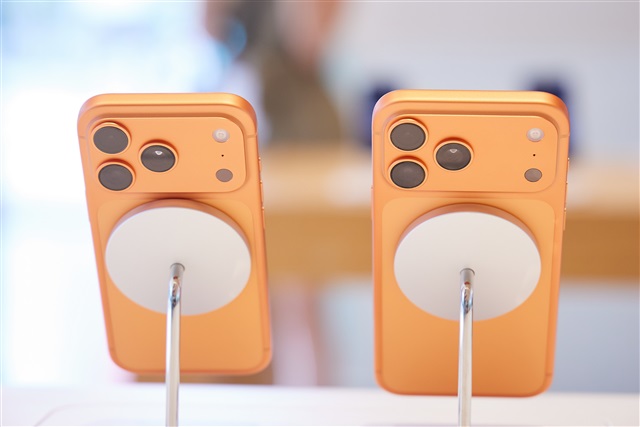
Based on current supply chain indicators, Lin expects the iPhone 18 Pro and Pro Max to carry price increases of at least US$100 at comparable storage tiers, with higher-capacity configurations potentially rising by US$200 or more. The pattern mirrors what Apple has already done with iPad: larger storage premiums bear a disproportionate share of the increase, reflecting memory cost pass-through concentrated at the top of the product stack.
Perhaps more significant for consumers is what Apple is expected not to do. Under its standard product cycle, Apple typically reduces the price of the previous year's numbered model when a new generation launches. Lin expects that cut to be skipped entirely this year.
The iPhone 17, which would normally receive a US$100 price reduction when the iPhone 18 arrives, is likely to hold at its current price point. The effective price increase for buyers choosing last year's model will be invisible on a spec sheet but real at the register.
On the hardware side, Lin flags one key decision that remains unresolved. iPhone 18 was originally planned to ship with 12GB of DRAM — an upgrade from the current 8GB — to support more advanced on-device Apple Intelligence features, including more fluid conversational responses and improved voice recognition accuracy.
With memory prices where they are, that upgrade is now in question. "Apple may hold iPhone 18's base configuration at 8GB to contain costs," Lin says. "The 12GB spec would go to Pro models, and the feature differentiation follows from there."
He notes that a final decision has likely not been made — the launch is still roughly nine months out — but the trade-off is real, and memory pricing between now and then will influence the outcome.
The competitive math
Lin is precise about who Apple is actually competing with in this environment, and the distinction matters for understanding its pricing power. Apple's rivals are not memory makers. They are not hyperscalers. There are other consumer electronics companies — and those companies are in a structurally worse position than Apple on every dimension that matters right now.
Samsung's mobile division has raised prices and seen shipment volumes decline. Its profitability in handsets remains under pressure even after the increases. Mid-tier Android manufacturers have cut entry-level SKUs outright, shrinking the addressable market at the low end. "The competitive set Apple faces in premium smartphones has thinned, not deepened," Lin observes.
Apple's customers are also, as a group, less price-sensitive than the buyers that competitors are chasing. Lin acknowledges that price increases affect demand at the margin — Apple is not immune to elasticity — but argues the elasticity it is working with is materially lower than what its competitors face.
"Apple can raise prices further, absorb less demand impact, and let the market do the work of pushing marginal buyers toward its own refurbished channel rather than toward Android alternatives."
On a full-year basis, Lin's current estimate is that Apple's iPhone shipments will grow approximately 2- 3% in 2026, driven largely by stronger-than-expected first-half performance. The second half is likely to be flat to slightly negative year-over-year, partly because the iPhone 17 had an unusually strong launch quarter last year, and partly because a price increase at launch tends to soften initial demand.
But even a flat second-half performance, against a backdrop where most Android competitors are contracting, represents a meaningful gain in market share.
"The memory price surge was a crisis for most of the consumer electronics industry," Lin concludes. "For Apple, it was an opportunity — to test pricing power, reshape the used device market, and extend its ecosystem reach while competitors retrenched. The price increases are not the story. The architecture behind them is."
Article edited by Jack Wu