
As India's semiconductor ambitions move from policy announcements to execution, Lam Research sees the country's opportunity extending beyond fabs to the less visible ecosystem that will determine whether it can become a meaningful part of the global chip manufacturing supply chain.
For the US-based semiconductor equipment maker, India's role is not limited to attracting wafer fabs. It also lies in developing precision suppliers, systems engineering talent, and virtual fab training capacity that can serve the global industry.
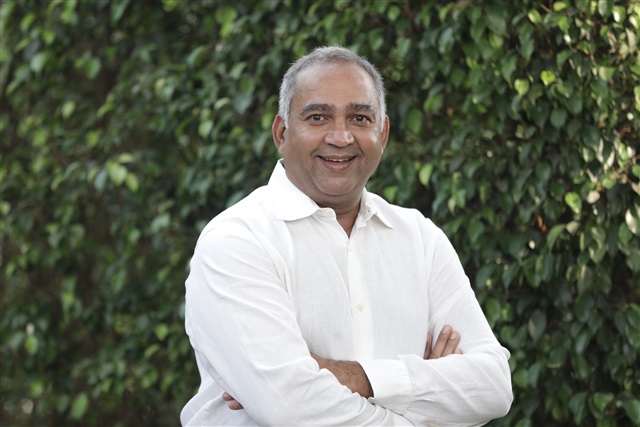
Rangesh Raghavan, Managing Director of Lam Research India, said the company's 25-year journey in India began in a familiar way for many multinational companies, with software development and back-office support. But over the past five to six years, Lam has set a more aggressive vision for its India operations, driven by access to engineering talent and the semiconductor industry's growing need for people and supply-chain resilience.
"When you look at what's happening in the industry, especially the sheer demand for human resources despite the fact that we are enabling AI, we continue to need even more people to enable AI," Raghavan told DIGITIMES Asia.
More than just fabs
Lam is a major supplier of deposition and etch technologies, which Raghavan said represent around 35% of the steps in silicon manufacturing. As demand grows, he said the company needs to diversify not only its talent base, but also its supply chain. The pandemic exposed the limitations of existing supply networks, which were adequate for earlier levels of growth but not for what the company expects ahead.
"For Lam alone, we will need north of 100,000 people around the world in our supply chain to do work for us," he said. "So we decided that we needed to diversify our supply chain, rather than remain limited to where we were before. In that context, we started to develop the supply chain in India as well."
Raghavan said the company sees a parallel with India's automotive sector, where suppliers that initially grew around domestic manufacturing clusters eventually became part of global supply chains.
"I see something very similar happening with the semiconductor industry," he said. "Many of the suppliers we are developing and qualifying will have the opportunity to serve the global semiconductor market."
For India, the near-term opportunity may lie in areas adjacent to existing industrial capabilities. Raghavan said semiconductor equipment uses many mechanical and electrical elements similar to those found in aerospace, trains, and other complex systems. India does not yet have strong capabilities in more specialized areas such as specialty chemistries, specialty chemistry delivery, radio frequency, and plasma generation units. But it does have relevant strengths in precision-machined parts, electrical distribution systems, PCBs, and power-related engineering.
"The vast majority of what we need are precision-machined parts," he said. "We also need electrical distribution systems. India has developed a lot of skills in these areas over the past few decades."
However, semiconductor-grade manufacturing brings requirements that differ from automotive and aerospace. The challenge, Raghavan said, is the "last 20%" that suppliers must master.
"One of the most common concerns — it is not a gap, but rather a lack of previously having had to do it — is surface quality and surface precision," he said. "One of the things that is very important in semiconductors is contamination: particulation and metallic contamination. These are very dangerous for chips at the nanoscale."
That means suppliers must learn ultra-polishing, tighter surface roughness standards, and post-machining surface processing. But Raghavan said the larger challenge may be the commercial mindset. In automotive or aerospace, suppliers can often wait for a purchase order before investing. Semiconductor cycles are faster.
"Our product cycles are two to five years, so speed and time to market are everything in our industry," he said. "Moore's Law says you have to have a new node out every 18 months."
Suppliers, he added, must sometimes invest ahead of demand, as chipmakers and equipment companies do.
While fabs remain part of India's semiconductor ambitions, Raghavan said supply-chain participation could become broader and more global in nature. Fabs, by contrast, will be fewer because they are much harder to build.
"The reality is that supply-chain participation is more likely to be broad and global in nature," he said. "Fabs, on the other hand, will be fewer in number."
Developing chip talent
Talent is the second major pillar of Lam's India strategy. Raghavan said India has a large number of engineers, but not enough semiconductor-specific experience. Physical training infrastructure is limited, with only a few nano labs in leading institutes.
Lam's Semiverse program aims to address this by allowing students to virtually build and test chips. The platform, used commercially by fabs, lets users replicate the semiconductor process flow digitally.
"You can virtually build a digital twin of a chip on your computer and go through the entire semiconductor process sequence, which is highly complex and intensive," Raghavan said. "It can take up to a thousand steps, but you can replicate all of that virtually on your laptop."
He said the platform can close "80 to 90%" of the learning gap, although hands-on fab experience remains essential. Lam's target, with the India Semiconductor Mission, is to train 60,000 or more students over 10 years. More than 3,000 students and over 100 universities have already joined the initiative, he said.
The program also uses a train-the-trainer model with the Indian Institute of Science. Faculty members spend four weeks at IISc, where they physically build a chip and build the same chip virtually before returning to their universities to teach the course.
For Lam, India's semiconductor challenge is therefore not just about capital investment in fabs. It is about building the suppliers, faculty, engineers, and systems-thinking culture needed to support advanced manufacturing.
"I may be biased, but I would say the machines we build are more complex than rocket science," Raghavan said. "Building and designing these machines, and troubleshooting problems with them, requires a multidisciplinary understanding of chemical mechanisms, mechanical engineering, electrical engineering, and robotics engineering."
Article edited by Jack Wu