

A year-old startup from Hsinchu, Taiwan is preparing to make its American debut. Fluidiconic Bio will join four other Taiwanese startups at the Plug and Play Silicon Valley Summit this May, pitching a high-information-density tumor-on-a-chip platform that its founders believe can do what decades of animal testing cannot: reveal, with greater resolution, how a cancer drug behaves inside a human tumor — and help pharma teams make better decisions before they reach the clinic.
Built in a Lab, Backed by the Government, Now Heading to Market
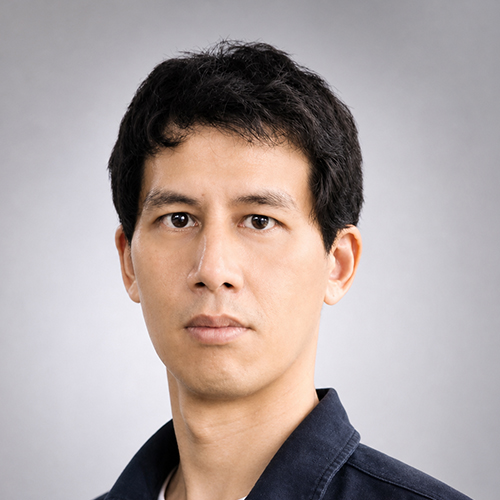
Fluidiconic Bio CEO Steven Mu holds a Ph.D. in chemical engineering from National Tsing Hua University (NTHU) — one of Taiwan's leading research universities, broadly comparable in standing to a top U.S. engineering school — where he spent years as a postdoctoral researcher before spinning out the company.
The transition from academia to startup wasn't abrupt. Before formally incorporating last year, Mu's team spent more than three years developing core technology under Taiwanese government R&D grant programs, including the Industrial Technology Research Institute's (ITRI) Tree initiative. That government runway covered the hardest stretch: building a product without revenue. "Once we left to form the company," Mu says, "it became much easier to move directly into the market."
The company's target customers are drug developers — primarily pharmaceutical companies, but also hospitals and academic research centers. Mu distills the core value proposition into a single sentence: help pharma clients determine, at the preclinical stage, which drug, at what dose, works for which patient population — and is safe. That's a more granular question than most preclinical platforms are designed to answer.
The need is real. Cancer drugs frequently show strong efficacy against tumors while proving toxic to the liver, kidneys, or other healthy tissue — a discovery that, if made late in development, can erase years of investment. Finding candidates that are both effective and safe, as early as possible, is one of the industry's most persistent unsolved problems.
The Problem With Mice — and With Most Organ Chips
The standard tool for preclinical drug screening is the animal model, typically mice — a method the pharmaceutical industry has relied on for seven or eight decades. The limitations are well-documented: mouse biology doesn't reliably predict human responses, and failure rates for drugs that clear animal trials but collapse in human clinical trials remain stubbornly high.
Organ-on-a-chip technology emerged in the early 2000s as one potential answer. As microfabrication and injection-molding techniques matured, researchers began building miniaturized devices that could house living human cells — healthy adult tissue or patient-derived disease cells — in environments designed to mimic actual physiology. The goal: more human-relevant data, earlier in development.
Fluidiconic Bio's platform, however, is not positioned as a wholesale replacement for animal testing. Rather, it is designed as a precision decision-support tool — a way to generate richer, more human-relevant data that complements existing workflows and helps drug developers narrow their candidate pool with greater confidence before committing to costly later-stage studies.
The specific gap the company targets is intratumoral heterogeneity: the biological reality that tumors are not uniform masses, but complex ecosystems with meaningfully different microenvironments at different locations.
"Every position within a tumor is different," Mu explains. "Some cells are close to blood vessels, some are far away. Some divide quickly, some slowly. When you apply a drug, you may find that resistance only develops in certain regions — not across the entire tumor." That localized resistance is a primary driver of clinical relapse: a treatment appears to work, the tumor partially responds, but surviving pockets of resistant cells eventually repopulate. If preclinical screening can't detect that signal, drug developers may advance candidates with a fundamentally incomplete picture of efficacy.
Mid-Throughput, High Reproducibility, Closer to Reality
Fluidiconic Bio's core platform, MedSelect, combines a proprietary 3D co-culture chip architecture with automated, mid-throughput workflows designed for the practical demands of early-stage drug development pipelines. Programs at that stage routinely carry 20 to 30 candidate compounds simultaneously; the platform is built to process that volume efficiently without sacrificing data quality.
The headline specification: up to 144 independent samples per run. Comparable organ-chip platforms typically support a few dozen. More important than raw throughput, Mu emphasizes, is reproducibility: the 144 samples exhibit high inter-sample consistency, which means the statistical confidence behind each result is meaningfully stronger. "We can tell a pharma company, with more confidence, whether something actually works or doesn't," he says.
The platform is also built for next-generation drug modalities. Immunotherapies and cell therapies — now among the most active and capital-intensive areas in oncology R&D — involve biological mechanisms too complex for standard 2D cell cultures or conventional animal models to capture reliably. MedSelect™'s 3D tumor microenvironment is specifically engineered to accommodate those interactions.
The compounding advantages: mid-throughput automated processing, higher reproducibility across samples, and a more physiologically relevant tumor environment that captures the heterogeneity driving real-world treatment failure.
Why Hsinchu — and Why a Second Lab in Taipei Is Coming
Fluidiconic Bio is headquartered in Hsinchu, a city in northwestern Taiwan best known internationally as the home of TSMC and the island's semiconductor supply chain. The location invites an obvious question: is this a semiconductor play?
Not exactly, says Mu. What Hsinchu offers is a dense ecosystem of precision equipment manufacturers and component suppliers, plus the cross-disciplinary talent available at NTHU and National Yang Ming Chiao Tung University (NYCU), both of which run strong programs spanning engineering and life sciences. For a company that needs to manufacture sophisticated microfluidic hardware while recruiting researchers who can operate across biology and engineering, Hsinchu is a practical fit.
The commercial picture, however, points elsewhere. Taiwan's pharmaceutical and biotech industry clusters around Nangang, a district in eastern Taipei that houses the Nangang Biotech Park and a concentration of drug development companies. To stay close to customers, Fluidiconic Bio plans to open a dedicated commercial service laboratory in Nangang — manufacturing and R&D in Hsinchu, client-facing operations in the capital.
A Services-First Model That Lowers the Bar for Adoption
Fluidiconic Bio's go-to-market strategy is built around services, not equipment sales — and the logic is deliberately customer-centric. Pharmaceutical companies don't want to procure, install, validate, and maintain specialized lab hardware. They want data, and they want it without adding capital expenditure or headcount.
The model works like a contract research organization (CRO): clients submit drug candidates and tumor model specifications, Fluidiconic Bio runs the assays and delivers a report. "The client doesn't have to build the instrument or hire a team to maintain it," Mu says. "That lowers their adoption barrier and speeds up their decision cycle. It's a win for both sides." Large research centers that prefer to build in-house capabilities can still procure the equipment directly, says Mu.
The May Summit: Three Problems to Solve on U.S. Soil
Fluidiconic Bio joined Plug and Play's accelerator program in late 2024. After approximately six months of evaluation and mentorship, the startup was selected to attend the accelerator's Silicon Valley summit this May alongside four other Taiwanese companies — chosen in part because of the alignment between their technology and Plug and Play's investor and industry network along the U.S. West Coast, a center of gravity for both venture capital and pharmaceutical R&D.
For Mu, the trip is less about visibility and more about building the three pieces of American infrastructure his business model actually requires: a U.S.-based Biohub or lab partner where Fluidiconic Bio can deliver services domestically; distributor and research center relationships to anchor a local commercial network; and connections with other service providers that might license the platform or purchase equipment to run their own operations. "These connections are the first step into the U.S. market," he says. "We need to be on the ground to understand the pace and figure out our landing strategy."
The company will arrive with three well-defined structural obstacles to work through.
FDA regulatory ambiguity. The agency has moved in a favorable direction — FDA guidance now allows non-animal models to be submitted as supporting evidence under a "fit-for-purpose" or "weight of evidence" framework — but a fully standardized pathway for organ-chip platforms in drug applications does not yet exist. In practice, pharma companies considering adoption need to accumulate sufficient validation data before they're willing to act. "They're afraid they'll pay and get nothing recognized," Mu says.
Organizational inertia at large pharma. The pharmaceutical industry has run animal studies for 70 to 80 years. Switching platforms isn't purely a scientific decision — it requires changing entrenched workflows, risk tolerances, and institutional habits. Without a clear regulatory mandate, the urgency to switch is limited, and the default is to stay with what's worked.
Brand recognition. Established players already exist in the U.S. organ-chip market, and Fluidiconic Bio, as a Taiwanese startup, enters comparatively unknown. Building credibility with pharma procurement teams, investors, and the research community requires sustained effort. The Plug and Play platform — and coverage like this — is part of a deliberate strategy to close that gap incrementally.
May's summit is where that strategy gets its first real test on American soil.
What the Name Means
"Fluidiconic" compounds Fluid and Iconic. The fluid reference is personal — Mu's background is in chemical engineering, a discipline grounded in fluid dynamics, and the human body is governed by fluid flows that determine how drugs move through tissue, reach tumor cells, and interact with the surrounding microenvironment. Iconic is the ambition: to become the default reference point when anyone in pharma thinks about human organ simulation technology.
The Chinese name, 蔚流 (Wèi Liú), carries a different emotional register. Liú (流) means flow or fluid, connecting to the microfluidics at the company's technical core. Wèi (蔚) is a homophone of Wèi (未), the character for "not yet" or "future." Together, the name evokes something like "the future in flow" — and Mu says it's meant to carry a specific weight: hope, for patients and for the researchers who work on their behalf, that the future of cancer treatment is still being written, and worth working toward.
From a university lab in Hsinchu to a summit stage in Silicon Valley, that's the case Fluidiconic Bio is now preparing to make.
Article edited by Jerry Chen
