
CONNECT WITH US
Sign out

Canada welcomes Chinese EVs as US draws hard line

, Elaine Chen, DIGITIMES Asia
0

Credit: AFP

In January 2026, Canada reached an agreement with China to allow the annual import of 49,000 Chinese electric vehicles (EVs), replacing tariffs that had previously reached as high as 100%. The policy shift has fueled consumer speculation about the prospect of "half-price" cars. In practice, however, industry executives say such expectations are unlikely to materialize.

Supply-chain analysts caution that Chinese automakers' price advantage in Canada will be limited in the near term, with discounts likely confined to the single digits. Carmakers entering overseas markets must still absorb the costs of local testing and certification, dealer network build-outs, and marketing. With duty-free imports capped at roughly 50,000 vehicles a year, aggressively pricing entry-level models would not only compress margins but also quickly exhaust the quota—an approach seen as unsustainable for long-term brand development.

Instead, most Chinese manufacturers are expected to benchmark pricing against Canada's average transaction price for EVs, positioning their models slightly below prevailing levels rather than pursuing steep discounts. While the price gap may be modest, industry observers say advantages in driving range and charging efficiency could still make these vehicles competitive on value.

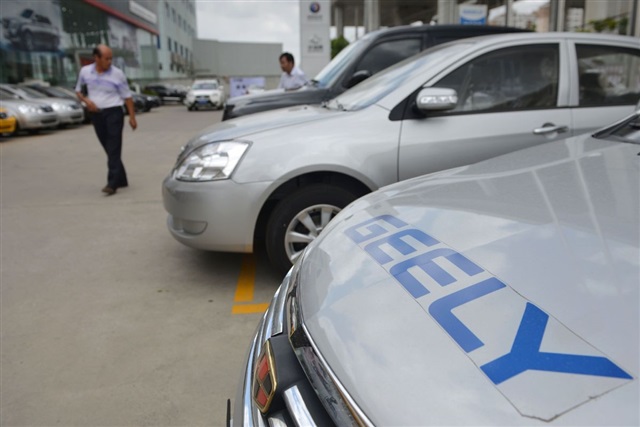
According to JD Power Canada, brands such as BYD, Chery, and Geely have generally adopted single-digit discount strategies in their initial push into the Canadian market. The consulting firm Deloitte estimates the average transaction price of an electric vehicle in Canada at about US$57,600, suggesting that pricing vehicles just 3 to 5% below comparable models could be sufficient to attract buyers and gain market share.

Quota constraints are also shaping product strategy. Automakers are expected to prioritize higher-volume, higher-margin core models over low-cost vehicles to maximize returns within the import cap.

Beginning in 2027, regulators will require that 10% of imported vehicles carry a declared value below US$35,000. However, because this threshold is based on cost, insurance, and freight (CIF) rather than final retail pricing, it is unlikely to translate directly into lower showroom prices, which will continue to be set by market dynamics and distribution strategies.

At the same time, Canada currently offers electric-vehicle subsidies of up to US$5,000, though these apply only to domestically produced vehicles or those from free-trade partners, excluding Chinese brands and creating an additional barrier to entry.

Over time, however, that disadvantage may narrow. Subsidies are expected to be gradually reduced to about US$2,000 by 2030 and eventually phased out altogether, potentially enhancing the relative price competitiveness of Chinese EVs and making them more appealing to cost-conscious consumers.

The policy shift has also drawn scrutiny from the US, which has made clear it will not allow Chinese EVs to enter its market by way of Canada. Officials in Washington cite not only economic concerns but also national security risks, including the potential for connected vehicles to collect and transmit sensitive data.

Speaking recently, US Ambassador to Canada Pete Hoekstra said the US would block any such indirect entry. He added that while global competitors include Japan, South Korea, and Mexico, China represents the most significant challenge, particularly to the North American trade framework.

Analysts increasingly describe the situation as a three-way strategic contest among the US, Canada, and China. Under pressure from US tariffs and reshoring policies, Canada has opened its market to Chinese EVs in part to expand its own export opportunities, while also positioning itself—along with Mexico—as a potential gateway for Chinese automakers.

Even so, geopolitical tensions continue to constrain direct access to the US market. And while some American dealers are watching closely, betting that tariffs may not last indefinitely, the near-term outlook suggests that policy—not price—will remain the decisive factor shaping the trajectory of Chinese electric vehicles in North America.

Article translated by Elaine Chen and edited by Jack Wu