

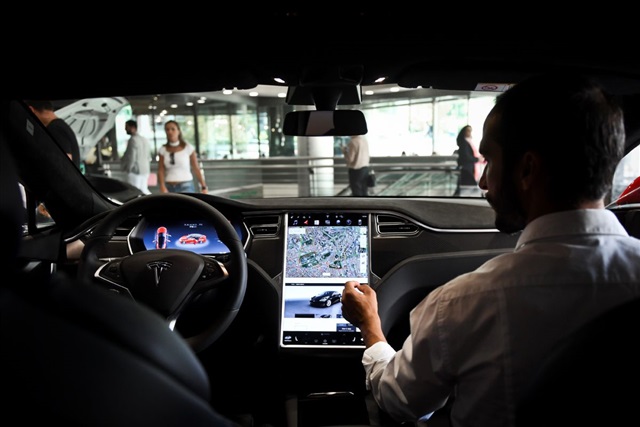
Slower-than-expected monetization of smart cockpits is prompting a global reassessment of in-car payments, with implications for automakers, tech platforms, and financial institutions. Industry players say meaningful demand hinges on advanced autonomous driving freeing driver attention, while short-term focus will shift to maintenance and connectivity services as the market recalibrates.
The smart cockpit, once viewed as a major new revenue stream for automakers, has slowed, forcing companies worldwide to rethink strategies for in-car payments and services. Industry experts now broadly agree that significant consumer demand is unlikely to emerge until advanced autonomous driving matures and drivers' hands and attention are freed.
Supply chain participants link the slow progress to a struggle over who controls the smart cockpit ecosystem. Early momentum came from smartphone integration, but automakers fear losing financial flows and data to software platform giants such as Apple and Google, leading them to intervene. At the same time, many automakers lack the in-house software capabilities needed and continue to collaborate with cloud and platform providers, including Google, Amazon Web Services, and Microsoft, to explore diverse business models.
Market progress has fallen well short of early forecasts. Juniper Research predicted in 2020 that in-car payments would grow from US$500 million in 2025 to US$86 billion, but supply chain estimates put the current market at only several hundred million dollars. That gap has prompted financial firms to reposition. J.P. Morgan plans to wind down its Mobility Payments platform, acquired through Volkswagen's VW Pay, by the end of 2025 after low merchant penetration and sustained losses made continued investment untenable.
Analysts attribute underperformance primarily to a mismatch between what automakers have pushed—entertainment and gaming features that appeal to only around 29% of users—and what consumers are actually interested in: the practical services, such as safety maintenance, parts alerts, and connectivity conveniences that appeal to roughly 60% of users.
Industry maturity is also limited: by 2025, only about 60% of automakers were prepared to monetize in-vehicle services, and just 26% expected to profit effectively, constrained by shortages of software and AI talent, regulatory uncertainty over data protection, and inadequate digital infrastructure.
Surveys indicate that 91% of respondents see autonomous driving as the key threshold for advancing in-car payments from ancillary functions to essential needs. Over the next three years, the sector anticipates a period of integration and adjustment, with safety maintenance and basic connectivity leading modest growth and serving an educational role for consumers. The current correction is being framed as a structural realignment rather than an endpoint, with long-term growth potential tied to steady progress in autonomous driving technology.
Article translated by Jingyue Hsiao and edited by Jack Wu


