China's electric vehicle industry is shifting its competitive focus from driving range to charging speed, as automakers and battery suppliers race to cut recharging times and improve energy replenishment efficiency.
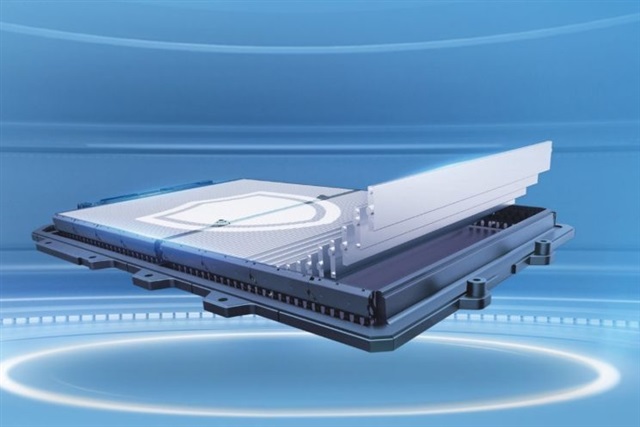
Chinese EV giant BYD recently unveiled its second-generation Blade Battery alongside a new flash-charging technology, claiming it can deliver a near-full charge in minutes. The announcement is widely seen as a direct challenge to battery leader CATL and its Shenxing fast-charging battery series.
This head-to-head contest between the two industry leaders is intensifying the technology race across the global power battery sector.
BYD's ultra-fast charging leap
At the launch event, BYD chairman and CEO Wang Chuanfu said the second-generation Blade Battery marks a major step forward in charging speed. The battery can charge from 10% to 70% in just five minutes and from 10% to 97% in nine minutes. Even in extreme cold conditions of –20°C (–4°F), it can charge from 20% to 97% within 12 minutes.
Wang noted that, unlike conventional batteries, BYD caps charging at 97% rather than a full charge. The remaining 3% of capacity is reserved for regenerative braking, which helps reduce overall vehicle energy consumption and improve efficiency.
From a technical standpoint, BYD stressed that the new Blade Battery is not simply a higher-power charging upgrade. Instead, the company redesigned the system across four layers: materials, electrodes, cells, and overall architecture.
By creating what it calls a "high-speed lithium-ion channel" and a "full-temperature intelligent thermal management system," the battery can reduce heat generation and distribute heat more evenly during rapid charging, while maintaining safety and longevity.
According to BYD, the second-generation Blade Battery improves energy density by more than 5% compared with the first generation, striking a balance between fast charging and driving range.
BYD also announced that the first wave of vehicles equipped with the new battery and flash-charging system will include ten models, among them the Song Ultra, Sealion 06, Seal 07 EV, Fangchengbao Tai 3, and Yangwang U7. The rollout indicates the technology will be deployed across mainstream models rather than limited to premium vehicles.
20,000 stations and counting
Beyond battery technology, BYD also introduced its "Flash Charging China" strategy, pledging to build 20,000 flash-charging stations by the end of 2026.
Of these, 18,000 will be integrated flash-charging units built in partnership with existing public charging network operators, deployable inside current charging stations, with construction taking as little as one week. BYD said that once completed, around 90% of urban areas will have a flash-charging station within a 5-kilometer radius.
The remaining 2,000 stations will be built along highways, with an average spacing of slightly over 100 kilometers (62.14 miles). The first batch of 1,000 highway stations is scheduled to begin operation around the Labor Day holiday this year.
CATL raises the bar on Shenxing
BYD's second-generation Blade Battery is widely seen as a response to CATL's rapid advances in fast-charging LFP battery technology.
Since launching its first Shenxing ultra-fast charging battery in 2023, CATL has steadily increased charging performance for lithium iron phosphate batteries from 4C fast charging to nearly 12C ultra-fast charging capability.
The first-generation Shenxing battery, introduced in 2023, was described as the world's first 4C ultra-fast charging LFP battery, capable of adding 400 kilometers of driving range in 10 minutes. The design uses ultra-electronic cathode materials and a second-generation graphite fast-ion ring structure to address the relatively low conductivity of LFP batteries, enabling high-power fast charging for the first time.
Credit: AFP
In 2024, CATL introduced the upgraded Shenxing PLUS battery, raising energy density to 205Wh/kg. The battery enables 1,000 kilometers of range while improving charging efficiency to deliver 600 kilometers of range in 10 minutes. A 3D honeycomb material structure and integrated casing design improve space utilization inside the battery pack.
In 2025, CATL launched the second-generation Shenxing ultra-fast charging battery, increasing charging rates to nearly 12C with peak charging power exceeding 1.3MW, entering what the company describes as the "five-minute charging era." Official data shows the battery can add roughly 520 kilometers of range in five minutes, and even in temperatures as low as –10°C (14°F) it can charge from 5% to 80% within 15 minutes.
A new phase for the power battery sector
BYD and CATL are now locked in an increasingly intense race in fast-charging LFP battery technology. CATL continues to push charging rates and energy density through battery innovation and supply chain scale, while BYD leverages its vertically integrated model combining vehicle manufacturing with battery system development.
As both companies accelerate investment in technology development and charging infrastructure, the power battery sector may enter a new phase of rapid innovation — one that could further reshape the competitive landscape of the global electric vehicle market.
Article translated by Levi Li and edited by Jerry Chen