

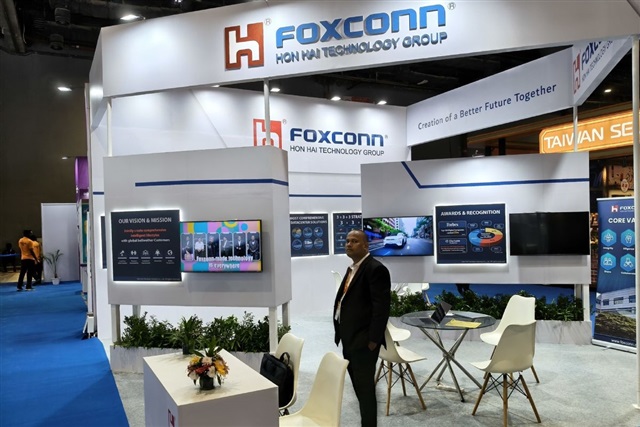
Taiwanese companies continue to perceive significant challenges in investing in India, citing complex tax systems, opaque administrative procedures, logistical inefficiencies, and human resource management difficulties. These operational barriers have contributed to a cautious approach toward Indian investments despite the country's large market potential.
Data from Taiwan's Ministry of Economic Affairs (MOEA) reveals that from 1952 through August 2025, Taiwanese investments in India totaled only US$1.661 billion across 190 projects. Conversely, Indian investments in Taiwan have been minimal, totaling US$7.877 million over the same period. The limited deployment of Taiwanese executives in India, numbering about 500, further underscores the reluctance among Taiwanese businesses to establish a deeper on-ground presence.
Labor dynamics and cultural hurdles
Taiwanese representative offices in India report that while salaries in the Indian private sector rise by roughly 10% annually, high employee turnover remains a persistent issue. Frequent job-hopping obliges firms to maintain backup labor pools. Entry-level technical workers earn between NT$5,000-8,500 (US$164.75-280.08) monthly, white-collar staff receive NT$10,000-17,000, skilled science and engineering professionals command about NT$20,000, and senior managers average NT$34,000 a month.
Taiwanese residents in India predominantly reside in major urban centers such as Delhi, Mumbai, Chennai, Ahmedabad, Bangalore, and Kolkata. Success in establishing trust and long-term partnerships hinges on Taiwanese firms' understanding of India's complex social norms, hierarchical structures, and diverse religious and cultural traditions.
New regulations and sector potential
Companies intending to sell electronic and electrical products in India must prepare for a new safety regulation effective September 1, 2026. This requirement mandates obtaining the ISI certification from the Bureau of Indian Standards (BIS), with certification processes taking about one year and costing around US$30,000. For small and medium-sized enterprises, these costs and timeframes may present significant hurdles.
The Ministry of Economic Affairs identifies electronics and information and communication technology (ICT) as sectors with strong investment potential due to the weak competitive presence of domestic Indian manufacturers. Since most electronic products are imported, India's import substitution policies offer substantial incentives, exemplified by the INR760 billion (approximately US$8.941 billion) semiconductor initiative launched in December 2021—India's largest semiconductor program to date.
The electrical and power equipment sector also offers significant market opportunities. With many regions facing unreliable electricity supply and frequent blackouts, especially during peak summer months, the Indian government's prioritization of power infrastructure investment creates demand for household generators, batteries, uninterruptible power supplies, voltage stabilizers, and similar products.
Additionally, the food processing industry holds promise, as India's extensive agricultural output suffers from poor cold chain and preservation infrastructure. Taiwanese companies, recognized for their expertise in hygiene standards, preservation methods, and flavor innovation, may capitalize on these opportunities by improving logistics and storage to enhance product quality and reduce spoilage.
Water scarcity threatens sustainability
Water scarcity poses a critical challenge for India's development. Out of 20 major river valleys, eight already face water shortages, with eleven expected to dry up by 2025. Despite monsoon rains between June and September, heavy reliance on groundwater during dry periods risks long-term sustainability due to overextraction. This environmental factor could impact industries dependent on reliable water supplies and merits attention from Taiwanese firms considering investment scale and location.
Article translated by Jingyue Hsiao and edited by Jerry Chen