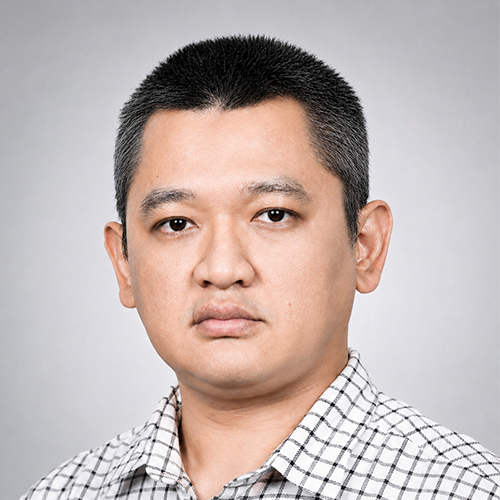
Intel has appointed Lip-Bu Tan as its next CEO following his resignation from the board in 2024 due to dissatisfaction with the company's organizational structure. This decision comes as Intel undertakes significant reforms amid its critical mission to ensure US semiconductor security. Tan, who previously felt overwhelmed by the challenges of transforming Intel, is now seen as a key figure in revitalizing the company during this pivotal time.
On March 12, Intel announced the appointment of Lip-Bu Tan, a veteran technology leader with extensive semiconductor industry experience, as its new Chief Executive Officer, effective March 18, 2025. Tan will succeed interim co-CEOs David Zinsner and Michelle Johnston Holthaus and will also rejoin Intel's board of directors after stepping down in August 2024.
Engineering-first and team unity
Despite Intel's technological advancements, such as its early adoption of backside power delivery in chip manufacturing, the company struggles to compete with TSMC in areas like mass production, yield improvement, and cost management. As discussions continue regarding the comparative merits of Intel's 18A process versus TSMC's 2nm technology, industry experts highlight Intel's significant challenges in achieving production efficiency.
In response to these challenges, Tan has prioritized enhancing engineering capabilities as a key objective for transforming Intel. His focus aims to strengthen the company's ability to produce advanced technologies at scale and improve profitability.
Additionally, rumors have circulated online suggesting that internal organizational conflicts have hindered Intel's efforts to regain its former glory. In a public letter, Tan indicated a desire to restructure the organization to foster greater cohesion and unity among teams, signaling his commitment to addressing these internal issues as part of his leadership strategy.
In an open letter, Tan said Intel is a company he has admired since childhood. However, he acknowledges that past achievements don't guarantee future success, particularly in the rapidly evolving and competitive industry. Challenges motivate him, and as he joins Intel, he sees a unique opportunity to transform the company at a crucial time.
Under his leadership, the focus will be on engineering excellence, prioritizing product development, listening closely to customers, and holding the team accountable to build trust. "Intel will be an engineering-focused company. We will push ourselves to develop the best products, listen intently to our customers and hold ourselves accountable," said Tan.
In the Letter, Tan said that most importantly, it is essential for everyone to work as one team. He learned to believe in and trust his teammates, understanding that was the surest path to victory. Now more than ever, their customers are counting on them to pull together as a team and deliver for them. As their CEO, he will empower leaders to take ownership and actions to move their business forward.
They have a chance to do something special together. In many ways, they are the founders of "The New Intel." They will learn from past mistakes, use setbacks to strengthen their resolve, and choose action over distraction to reach their full potential.
Who is Lip-Bu Tan? a profile of Intel's new CEO
Lip, born in Malaysia and grew up in Singapore, is a highly respected figure in the semiconductor industry. Tan holds a Bachelor of Science in Physics from Nanyang Technological University in Singapore, a Master of Science in Nuclear Engineering from the Massachusetts Institute of Technology, and an MBA from the University of San Francisco.
Tan's extensive career includes serving as CEO of Cadence Design Systems from 2009 to 2021, where he successfully transformed the company, doubling its revenue and achieving a remarkable stock price increase of over 3,200%.
In addition to his role at Cadence, Tan has held various positions on boards and in venture capital, demonstrating his strong leadership and investment acumen. He was recognized with the Robert N. Noyce Award in 2022, the highest honor from the Semiconductor Industry Association.
Tan joined Intel's board in September 2022 but resigned in August 2024 due to personal commitments. Reuters, citing unnamed sources, reported that during his time at Intel, he expressed concerns about organizational inefficiencies and bureaucratic layers that hindered progress. His insights into these issues will likely inform his strategies as he takes on the CEO role.
As Tan steps into this leadership position, he is tasked with addressing Intel's internal challenges while enhancing its production capabilities and profitability amidst fierce competition from rivals like TSMC and Nvidia.
Can a new CEO fix all?
The market maintains a cautious stance, expressing skepticism that a leadership change alone can guarantee the revival of a company facing significant distress.
According to Bloomberg, Stacy Rasgon, an analyst at Bernstein, expressed a positive outlook for Intel, stating that if a choice had to be made, Tan would have been his top selection.
One one hand, Bloomberg Intelligence analysts viewed Intel's leadership change a positive move due to Tan's extensive experience in the semiconductor industry. His leadership is expected to bring more efficiency through streamlined teams, cost reductions, and a stronger focus on customers, especially within Intel's foundry business. This appointment indicates a strategic shift in the company's direction.
However, Intel's turnaround is expected to take time, with significant progress unlikely before the second half of 2025. Challenges include current market weaknesses, loss of market share in desktop PCs and server CPUs, and slow progress in AI accelerators. Crucially, the company's strategy depends on advancing Intel 18A production to regain competitiveness and stabilize margins. Nonetheless, effective execution is essential for Intel to navigate economic and operational challenges.
On the other hand, a leadership change may not be enough to claw back market share lost to rivals like Nvidia and Taiwan Semiconductor Manufacturing Co. According to Bezinga, Truist Securities analyst William Stein said earlier that more drastic measures, such as a strategic split of Intel's manufacturing and product divisions, or significant downsizing, may be necessary to revitalize the company.
Adding to the uncertainty, the new CEO's prior resignation from Intel's board in August 2024, citing disagreements over the company's direction, has raised concerns about potential internal conflicts. Reports indicate his departure stemmed from concerns regarding Intel's workforce size, risk-averse culture, and perceived lag in AI strategy.
Intel's resurgence critical for US national security amid global semiconductor reliance concerns
Intel's resurgence is crucial for US national security due to the vital role semiconductors play in defense and technology. Historically a leader in American semiconductor innovation, Intel faces challenges that question the nation's tech self-reliance. The US's dependence on foreign manufacturers, like TSMC and Samsung, is risky, especially with geopolitical tensions in areas like Taiwan. A supply chain disruption could severely affect the US economy and defense.
Acknowledging this risk, the US government enacted the CHIPS and Science Act in 2022 to boost domestic chip production. Intel has invested over US$100 billion in new plants in Arizona and Ohio to produce cutting-edge semiconductors, aiming at reducing foreign dependency and bolstering national security.
Historical Timeline: Lip-Bu Tan | |
Year | Event |
1959 | Born in Malaysia. |
1970s | Moves to the United States to pursue higher education. |
1981 | Earns a Master of Science degree in Nuclear Engineering from the Massachusetts Institute of Technology (MIT). |
1983 | Complete an MBA from the University of San Francisco. |
1987 | Founds Walden International, a venture capital firm specializing in technology investments. |
2004 | Joins the board of directors at Cadence Design Systems. |
2009 | Appointed CEO of Cadence Design Systems, leading the company's turnaround during a restructuring period. |
2017 | Inducted into the Semiconductor Industry Association (SIA) Hall of Fame. |
2021 | Steps down as CEO of Cadence, becomes Executive Chairman. |
2022 | Joins Intel's board of directors, contributing expertise in semiconductor innovation. |
2024 | Leaves Intel's board. |
Source: DIGITIMES Asia, March 2025
Article edited by Joseph Chen