CONNECT WITH US
Apr 20, 14:51
India's smartphone shipments fall 3% amid cost pressures and weak demand
India's smartphone shipments fell 3% year-on-year in the first quarter of 2026, signaling strain across global supply chains and consumer markets as rising component costs and sluggish demand squeezed volumes and margins. The downturn — and the further price pressures expected ahead — could affect device availability, pricing strategies, and earnings across manufacturers and retailers.
Optical lens giant Largan held its first quarter of 2026 earnings call on April 16, hosted by chairman En-Ping Lin. The company posted 7% year-on-year revenue growth — but headwinds are building as smartphone makers look to downgrade specifications.

Taiwan's networking equipment makers reported stronger-than-seasonal performance in the first quarter of 2026, supported by demand from AI data centers and upgrades to Wi-Fi 7. Accton Technology, Sercomm and WNC each posted record revenue for the period. However, rising memory prices are beginning to pressure cost structures across the sector.

Rising memory prices are reshaping the global smartphone market. The shift is triggering a broad slowdown and accelerating structural shifts across China's handset industry. Data from Omdia and IDC point to weakening shipments in the first quarter of 2026, with cost pressure and product strategy adjustments weighing heavily on Chinese brands, particularly Xiaomi.
The 2026 International Symposium on VLSI Technology, Systems and Applications (VLSI TSA) kicked off on April 14, gathering over 800 semiconductor professionals worldwide. The conference focused on next-generation core areas including GenAI inference acceleration, wafer-level computing, and terahertz wireless communication, while also delving into quantum computer system architectures and extending the reach of semiconductors to AI-driven cardiac analysis and other smart healthcare applications.

China's consumer electronics supply chain is facing mounting pressure, as Lens Technology posted a sharp earnings downturn that triggered a market sell-off and raised broader concerns about industry demand and cost dynamics.

China's smartphone market contracted in the first quarter of 2026, but stronger-than-expected demand for premium devices from Huawei and Apple helped cushion the decline and reshape industry priorities.
Taiwan's Kbro Broadband on April 15 unveiled its next-generation 10G broadband service, backed by a planned NT$10 billion (approx. US$316.45 million) investment to upgrade network infrastructure nationwide, marking a decisive step into the 10G era and a strategic push to reposition cable networks at the core of Taiwan's digital resilience.
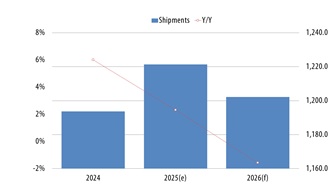
Rising upstream component costs and higher new-phone prices are expected to slow global smartphone shipments in 2026, fueling stronger demand for used devices internationally and prompting companies to bolster secondhand operations; at the same time, uncertainty from the US‑Iran conflict threatens shipping routes and could disrupt supply flows through Dubai.
Memory and component cost surges may curb global phone sales growth in 2026, prompting firms worldwide to adjust prices, marketing, and retail approaches to protect margins. Brands and channel operators are repositioning products, expanding premium offerings, and boosting AI-focused retail education to counter tighter supply, higher costs, and shifting consumer demand.
India's Tata Group has injected fresh capital into its electronics manufacturing arm, Tata Electronics, as it accelerates efforts to scale up iPhone production and strengthen its role in Apple's global supply chain.

Taiwan's optical lens makers opened 2026 with a sharp rebound, driven by a recovery in the global smartphone market and rising demand for high-end camera modules. At the same time, a new narrative is taking hold: silicon photonics (SiPh) and co-packaged optics (CPO) are pulling traditional lens suppliers into the core of AI infrastructure.