
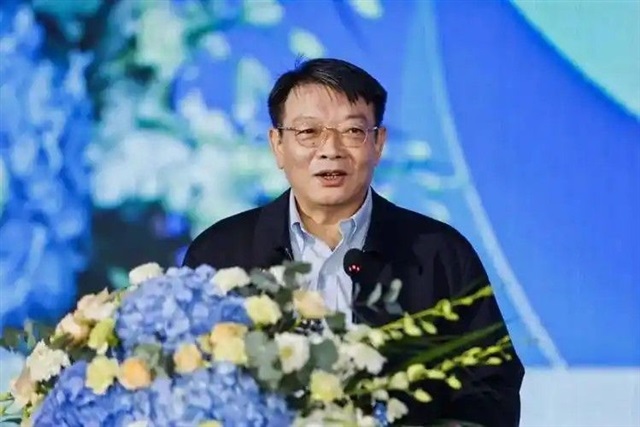
As Nvidia gradually retreats from China's high-end AI accelerator market amid strict US export controls, Advanced Micro Devices (AMD) is deepening its regional AI strategy. Rather than relying solely on traditional CPU and GPU sales, AMD is shifting its focus toward edge AI platforms, AI PCs, agent computers, local developer communities, and university partnerships.
Japanese autonomous driving developer Tier IV is developing an AI chip and will release its chip design and related toolchain as open source, allowing semiconductor manufacturers to use them to develop autonomous driving chips. The company aims to break Nvidia's dominant position in the autonomous driving chip market.
Huawei has unveiled the OceanStor M900 at Huawei Connect 2026, extending its AI infrastructure strategy into memory and storage with a petabyte-scale key-value (KV) cache system designed for AI agents and long-context inference.
Taiwan will launch a pilot emissions trading scheme (ETS) by the end of 2026 to help semiconductor and technology manufacturers align with international systems. Ministry of Environment adviser and former deputy environment minister Wen-Chen Shih said the ETS design must address three key areas.
Japanese semiconductor materials leader Tokyo Ohka Kogyo (TOK) held a completion ceremony on September 15, 2026, for a new KRW101 billion (US$73.1 million) production plant in the Poseung District of Pyeongtaek, Gyeonggi Province.
Huawei expects autonomous AI agents to become the dominant source of AI traffic over the next decade, creating a sharp increase in demand for computing, networking, storage and power infrastructure.
ByteDance has completed a US$290 million funding round for Anew Labs, its AI drug-discovery business spun off from the Chinese technology group, valuing the company at US$1.5 billion, according to Reuters. ByteDance will retain a 56% stake following the fundraising.
Consolidation chatter within China's automotive industry has reignited following an announcement by Guangzhou Automobile Group (GAC Group). Late on September 14, GAC disclosed that it had entered into a non-binding intent agreement with China First Automobile Group (FAW). Under the proposed transaction, GAC intends to acquire a partial stake in an undisclosed vehicle joint venture held by FAW via the issuance of new GAC shares. Upon completion of the share swap, FAW is expected to emerge as GAC's second-largest shareholder.
Foreign commitments timed around SEMICON India are moving deeper into the supply chain. In the three days before the 2026 edition opened on September 17, Lam Research, Applied Materials, and Fujifilm announced India plans worth a combined INR144 billion (US$1.50 billion), covering silicon components, chip equipment, and process chemicals rather than chip production itself.
Japan's Fujifilm plans to set up a greenfield semiconductor materials manufacturing facility in India with a total investment of approximately INR8 billion (US$83.33 million), the company said in a statement on September 16, 2026. Construction of the first phase is scheduled to begin in fiscal year 2026, with commercial production targeted for fiscal year 2028.