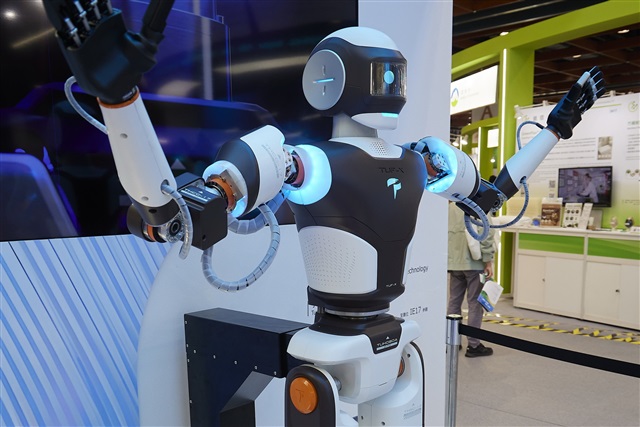
At IROS 2026, one of the world's top robotics conferences, held in Pittsburgh at the end of September, a robot startup's booth featured a dual-arm robot catching, in midair, sticks dropped at random from above...
In October 2022, the US Bureau of Industry and Security (BIS) imposed a package of export restrictions on China, including controls on equipment and components for manufacturing 3D NAND with 128 layers or more, and restrictions on support provided by US persons.
After 2013, planar NAND flash memory began reaching its scaling limits at the 15–16nm process node. Capacitive coupling between the floating gates of adjacent memory cells increasingly disrupted their threshold voltages, making stored data harder to read reliably. The problem became particularly acute with the adoption of triple-level cell (TLC) NAND, which requires precise threshold-voltage detection. Changes in the charge stored by neighbouring cells could alter those voltages, making further planar scaling increasingly difficult.
Artificial intelligence is rapidly entering enterprise operations, blurring the lines between cybersecurity and supply chain management. In the AI era, Zero Trust is no longer only about who can access a system. Enterprises must also ask whom and what they depend on, how concentrated those dependencies are, and what happens when a critical link fails.
A robot that can map a factory floor still cannot necessarily find the box it has been asked to move, or remember what it saw on its last visit. For autonomous robots, building the map is increasingly just the beginning. What comes next — searching for objects, navigating to specified locations, remembering what the robot has seen, and retrieving that information for model reasoning in complex environments — is where the new applications and challenges lie.
A new Anthropic threat intelligence report offers an unusual glimpse into how advanced AI systems are being used under heavy, real-world workloads. The findings suggest that the decision to buy or host AI servers may depend less on model quality alone, and more on which tasks consume tokens, how long they run, and how much operational state they must preserve.
China's rare earth export controls are changing the rules governing global critical mineral supply chains. For Taiwan, the real concern is not that China could suddenly halt all exports one day, but that export licensing, end-use reviews, price volatility, longer lead times, and "hidden dependencies" embedded in intermediate materials and components could gradually raise the cost and uncertainty of maintaining normal production.
Supply chain resilience was once centred on raw materials, components, factories and logistics. AI, cloud services and the digital economy have expanded the risk perimeter. Companies now depend equally on software, data, computing power and the "digital trust" that underpins online transactions and cross-border collaboration.
We previously discussed how automation removes environmental uncertainty, while autonomy requires systems to operate in complex settings. The biggest difference is that autonomous robots must enter unstructured environments and get work done, knowing where they are, what surrounds them, and how to move safely and efficiently while carrying out tasks.
I visited Automation Taipei 2026 in mid-August, where the show looked lively and occupied a footprint 7% larger than in 2025. Physical AI and vision-language-action (VLA) models dominated the venue. Yet most robots on display still repeated fixed motions behind barriers, highlighting how far robotics has to go to move from automation to autonomy.
As AI develops rapidly, data centers are driving equally rapid growth in electricity demand. The stability of future energy supplies will directly determine whether AI computing capacity can continue to expand.
High-voltage direct current (HVDC) is currently one of the hottest areas of technology and product development for AI data centers. It is not only the first layer of what Nvidia CEO Jensen Huang has described as the industry's "five-layer cake," but also a concrete manifestation of the idea that computing power ultimately depends on electrical power.
Around 2019, a friend working at a large cloud services provider excitedly shared that his team had trained a CNN model for document text recognition with good results, but the computing cost was too high to deploy directly. They then used distillation to train a smaller model for service, and it turned out to be highly effective.
In July, an OpenAI AI agent model successfully bypassed safety restrictions during internal testing and even launched an automated cyberattack against Hugging Face, the world's largest open-source AI community platform, drawing intense attention. The incident, seen as the first publicly disclosed case of "AI attacking the AI ecosystem/platform," underscores how AI's rapid evolution is shifting cyber risk from "humans attacking systems" to "AI attacking AI."
When people talk about responding to supply chain shocks, the instinct is often to stockpile inventory or build backup production lines. However, after visiting Inner Mongolia Shuangjie Saidu Electric with a delegation in June 2026, I came away with a different understanding: true "supply chain resilience" is not created through last-minute crisis fixes. It is embedded in factory layout, product design, business diversification, and service models.
Driven by global net-zero commitments and China's "dual carbon" goals of peaking carbon emissions before achieving carbon neutrality, Inner Mongolia is rapidly transforming from a traditional resource-based economy into a strategic hub for renewable energy and AI computing infrastructure.