
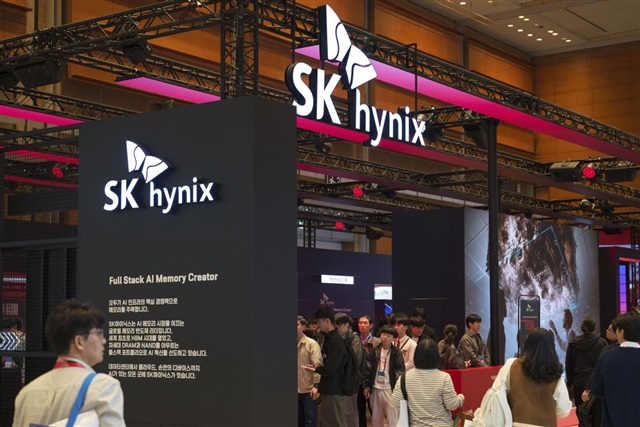
SK Hynix's decision to halt evaluation of a Solidigm pre-IPO and IPO has renewed questions over how it will finance a planned NAND flash plant in the US. Selling remaining assets linked to its investment in Kioxia has emerged as a potential funding option, but Kioxia's share-price decline and the investment's strategic and shareholder value have complicated the timing and necessity of any sale.
According to South Korean media outlet Deal Site, JoongAng Daily, and public disclosures from SK Hynix and Kioxia, SK Hynix halted its evaluation of Solidigm's pre-IPO and IPO on October 23. The need to expand capacity remains unchanged, however. Disposal of Kioxia-related convertible bonds (CBs) remains a market-proposed funding option, and the company has not announced a specific plan.
Solidigm had initially considered raising external capital through a listing to fund a new US production facility while reducing the investment burden on parent company SK Hynix. Following the suspension of the listing evaluation, SK Hynix said it would continue reviewing the investment schedule, scale, and funding sources while balancing business growth with the interests of existing shareholders.
Solidigm is reportedly negotiating with the US Department of Commerce over a proposed investment of US$45 billion to build two NAND plants in the US. The specific investment plan and implementation schedule have not been finalized, and the amount remains subject to negotiations.
As of the end of the third quarter of 2026, SK Hynix held approximately US$86 billion in cash and cash equivalents, giving it substantial financial capacity. However, it must also fund capacity expansions in South Korea and overseas, while planning approximately KRW100 trillion (approximately US$74.6 billion) in shareholder returns for 2026.
Some of those returns have already been implemented, while construction spending will be phased in. Future capital allocation will therefore need to align with actual payment schedules and operating cash flow.
Against this backdrop, the remaining Kioxia-related investment assets have drawn market attention. When SK Hynix participated in the 2018 acquisition of Toshiba Memory, it invested through two structures: a contribution to special-purpose company SPC1 and a subscription for convertible bonds issued by SPC2.
The remaining SPC2 convertible bonds are accounted for separately from the proceeds previously recovered through SPC1.
SPC2, or BCPE Pangea Cayman2, held approximately 14% of Kioxia as of the end of March 2026. Based on Kioxia's market capitalization and exchange rates on November 2, the stake was worth approximately US$17.2 billion, equivalent to 38% of the US plant investment reported by the media.
That figure is provided only to compare the scale of the assets. The actual proceeds from monetization would depend on transaction terms and cannot be directly treated as the amount that could be realized from selling the convertible bonds.
The remaining convertible bonds offer more than potential funding. They also represent future shareholder rights if converted. Under existing agreements, SK Hynix cannot hold more than 15% of Kioxia's voting rights before 2028 without Kioxia's consent, although the restriction does not prohibit conversion of the bonds.
Kioxia's regulatory filings state that, after completing procedures required under competition, foreign-exchange, and foreign-trade laws in relevant jurisdictions, SK Hynix can convert the bonds into SPC2 shares and indirectly exercise Kioxia shareholder voting rights through SPC2.
Retaining the investment would allow SK Hynix to preserve the possibility of participating in future Kioxia shareholder votes. Selling all related assets, by contrast, would mean giving up those rights. Indirect voting rights do not amount to control over Kioxia's operations, however.
The sale price would also affect the decision. Kioxia's share price has fallen significantly from its June peak, meaning that disposing of the assets now would likely raise less than it would have at the market's high point.
The market expects SK Hynix to reassess capital allocation after the scale and implementation schedule of the US plant become clearer. If existing cash, operating cash flow, and other funding channels can cover the investment, the short-term urgency to sell Kioxia-related assets will remain limited.
The key question will be whether the various funding options can support capacity expansion, shareholder returns, and long-term strategic interests at the same time.
Article edited by Ysi Chen