
As the global buildout of artificial intelligence infrastructure accelerates, Taiwan's technology industry has emerged as one of the most closely watched hubs in the world. Ahead of COMPUTEX 2026, Morgan Stanley held its Asia AI Summit in Taipei for the first time, underscoring the island's central role in the global semiconductor supply chain and the AI investment cycle.
Taiwan at the center
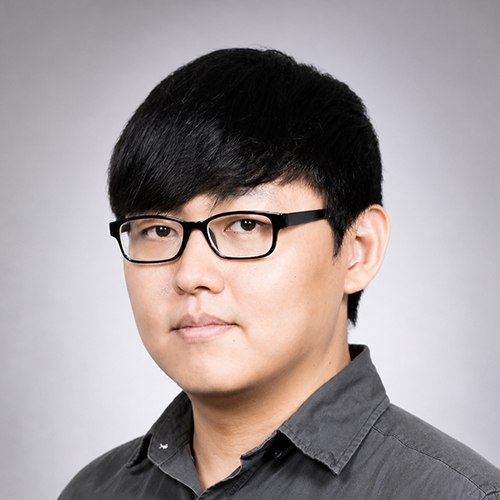
Speaking on the outlook for AI-driven chip demand, Morgan Stanley analyst Charles Chan said that the industry faces few constraints on the demand side, with most bottlenecks now concentrated in supply. He pointed to coordinated capacity expansion across the semiconductor ecosystem — including wafer fabrication, advanced packaging technologies such as CoWoS, high-bandwidth memory (HBM), and ABF substrates — as a key driver of future growth.
Capacity race fuels a 50–60% growth outlook
With major cloud providers continuing to raise capital expenditure, these parallel expansions are expected to significantly increase global AI semiconductor capacity. Morgan Stanley estimates that the total addressable market for AI-related semiconductors could grow at an annual rate of 50 to 60 percent through 2027. The benefits, analysts said, will extend beyond high-end processors. Demand for supporting and peripheral chips is also expected to rise in tandem, suggesting that the AI-driven boom will remain broad-based through the remainder of the decade.
CPUs get their moment
At the same time, the center of AI computing is shifting toward so-called agentic systems — software agents capable of performing tasks autonomously — driving renewed demand for central processing units alongside graphics chips. Chan said that while long-term CPU growth is expected to lag that of GPUs, it is still likely to remain strong at roughly 30 to 40 percent, well above historical norms. He added that demand for ARM-based CPUs in particular could prove stronger than the broader market average.
ASICs poised to challenge GPU dominance
Another major growth driver will be application-specific integrated circuits, or ASICs, which are expected to enter a more visible phase of expansion beginning in 2027. Large cloud service providers are increasingly committing to in-house chip development and allocating greater shares of advanced manufacturing and packaging capacity to custom silicon. Morgan Stanley analysts said ASICs could eventually deliver higher growth potential than GPUs once they reach scale. Chan noted that although ASIC development is complex, the cost efficiency gains compared with GPUs become more compelling once designs mature and reach stable production, encouraging hyperscalers to further increase investment despite technical challenges.
Taiwan's "super cycle" moment
Morgan Stanley said the ongoing surge in AI chip demand and infrastructure spending is fueling what it described as a "super cycle" for Taiwan's economy. Semiconductor exports are expected to remain strong through 2027, supported by sustained global demand for AI infrastructure. The firm added that external technology cycles are likely to generate spillover benefits for domestic industries, while improving consumption and investment trends could help broaden the structure of Taiwan's growth beyond its traditional export dependence.
Article translated by Elaine Chen and edited by Jerry Chen