

CONNECT WITH US

Samsung board chairman warns strike could disrupt chip output

, DIGITIMES Asia, Taipei
0

Credit: AFP

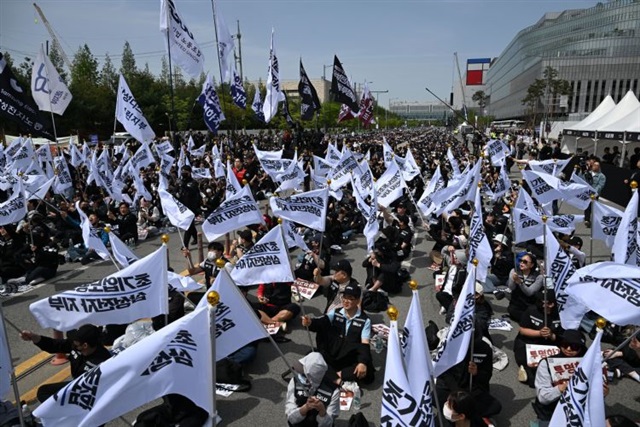
Samsung Electronics' labor dispute is widening beyond a fight over bonuses, after board chairman Shin Je-yoon made a rare appeal for management and unionized workers to resolve the standoff through dialogue as a planned strike threatens to disrupt chip production, customer trust, and South Korea's broader economy.

In an internal memo to employees on May 5, Shin warned that the planned walkout could hurt investors and employees and carry "serious consequences" for the Korean economy, according to Reuters. He said Samsung could lose market leadership if strike action disrupts production and deliveries, causing customers to defect and weakening the company's competitiveness.

The intervention comes as Samsung's labor group prepares for an 18-day strike from May 21 if talks fail. While the dispute centers on the company's bonus system, Korean media have increasingly framed the conflict as a risk to South Korea's largest company by revenue and one of the country's most important export industries.

Board chair makes rare intervention

Korean media described Shin's message as an unusual move by the top of Samsung Electronics' governance structure, underscoring the gravity of the labor standoff.

Shin apologized for the concern caused by the dispute and said he felt a heavy responsibility as board chairman. If a worst-case scenario materializes, he warned, both labor and management could "lose their place to stand."

A strike could cause heavy financial losses, customer defections, and a decline in corporate value, hurting shareholders, investors, employees, and local communities, Shin said. He also warned that disruption at Samsung could trigger capital outflows, reduce national tax revenue, and weaken the won.

"It's time to resolve the problem through sincere dialogue," Shin said.

OPI dispute remains unresolved

The dispute centers on Samsung's excess profit incentive system, also known as the over-performance incentive (OPI) system, with management and labor still divided over how bonuses should be calculated.

Samsung has proposed an exceptional reward plan that could allow the Device Solutions (DS) division to exceed the current OPI ceiling if the semiconductor business becomes the top player in the domestic industry. The union, however, is maintaining its demand for 15% of operating profit to be allocated as a bonus pool.

The joint labor group, which includes Samsung's super-enterprise union, plans to hold a general strike from May 21 to June 7 if negotiations remain stalled. The union secured legal strike rights in March after 93.1% of voting members backed industrial action.

Korean media reported external estimates that an 18-day strike could cause KRW20 to 30 trillion in losses. The figures are not Samsung guidance and should be treated as outside estimates.

Semiconductor timing raises risk

The timing is sensitive for Samsung because it is competing in a semiconductor cycle where development schedules, production stability, and customer confidence are critical.

Shin said the semiconductor business depends on timing and customer trust. If development, production, or delivery schedules are disrupted, Samsung could lose fundamental competitiveness, and customers could turn to rivals, he warned.

Some observers believe the less visible cost of damaged trust could be more serious than immediate production losses. That risk is especially important for Samsung's semiconductor business, where delayed deliveries or missed development milestones could weigh on long-term customer relationships even if production losses prove temporary.

The reports did not say customers have shifted orders away from Samsung because of the strike threat. The concern is that prolonged labor unrest could raise the risk of customer defections if it affects production, delivery, or development schedules.

Economic concerns widen

The dispute has drawn attention beyond Samsung. Korean media reported that outside directors, government officials, political figures, and academics have voiced concern that disruption at the company could damage corporate value and weigh on the broader Korean economy.

Shin warned that a decline in Samsung's corporate value could cut exports by tens of billions of dollars, reduce tax revenue by tens of trillions of won, pressure the exchange rate, and weigh on GDP.

South Korean President Lee Jae-myung recently criticized excessive demands by some organized workers without naming a specific company. Korean media said the remark was widely interpreted as related to the Samsung dispute amid growing public debate, though Lee did not explicitly refer to the company.

Shin urged employees to work together as Samsung faces intense global competition, saying the current conflict should become the foundation for a more constructive labor-management relationship. He also said he would work with management to seek a resolution.

For Samsung, the dispute adds execution and cost risks as it seeks to protect semiconductor competitiveness and customer commitments. The immediate issue is the OPI bonus structure, but the larger question is whether labor unrest could affect delivery reliability and customer confidence in one of South Korea's most important industries.

Article edited by Jack Wu