
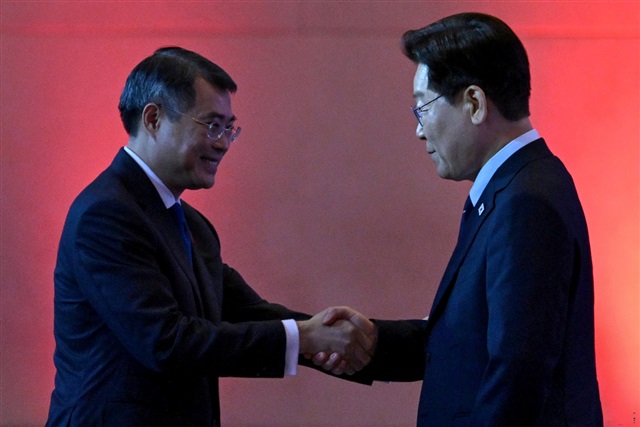
South Korea and Vietnam have expanded cooperation across technology, energy, and infrastructure, signing dozens of agreements during Korean President Lee Jae-Myung's visit to Hanoi, as both countries seek to reinforce supply chain resilience amid global volatility.
Reuters reported that South Korean and Vietnamese companies signed 73 largely non-binding business deals covering areas such as data centers, liquefied natural gas (LNG), semiconductors, and transport infrastructure. This followed 12 earlier cooperation pacts agreed during a summit between Lee and Vietnamese leader To Lam.
According to Yonhap, the two leaders agreed to "work closely together to bolster energy security and stabilize global supply chains," citing instability linked to geopolitical tensions in the Middle East. They also reaffirmed a target to raise bilateral trade to US$150 billion by 2030.
Semiconductor and digital collaboration gains traction
Technology cooperation featured prominently, with the Korea Chip Design Industry Association agreeing to partner with Vietnamese firm FPT on next-generation semiconductor development, Reuters reported. The move aligns with Vietnam's growing role as a manufacturing and technology hub, as companies diversify away from China.
Major Korean firms, including Samsung Electronics, SK Telecom, and SK Innovation, are also exploring investments in data center infrastructure, reflecting rising demand driven by AI and digital transformation.
Separately, the two governments signed agreements to expand cooperation in AI, cybersecurity, and digital systems, Yonhap said, underscoring efforts to build integrated digital supply chains.
Energy projects highlight strategic supply chain priorities
Energy collaboration is another key pillar, particularly in nuclear and LNG projects. Korea Electric Power Corporation (KEPCO) and Vietnam's Petrovietnam agreed to advance feasibility studies and supply chain development for the Ninh Thuan 2 nuclear power project, according to Vietnam Investment Review.
The partnership is expected to support the localization of nuclear supply chains and workforce development, while also addressing Vietnam's rising power demand. Discussions also covered cooperation on rare earths and critical minerals, which are essential inputs for electronics and clean energy technologies.
In parallel, Korean firms are seeking improvements in regulatory frameworks for LNG financing and greater access to strategic infrastructure projects, including oil storage and power generation facilities.
Vietnam remains central to Korean manufacturing strategy
South Korea remains the largest foreign investor in Vietnam, with its manufacturing base accounting for over 30% of the country's exports, Reuters said. Companies such as Samsung have invested more than US$20 billion over decades, making Vietnam a critical node in global electronics supply chains.
However, investment pledges declined in 2025 amid regulatory concerns and trade uncertainty, highlighting ongoing challenges. Korean businesses have raised issues, including tax refunds, investment incentives, and rising labor costs, partly driven by manufacturers relocating from China.
Article edited by Jack Wu