
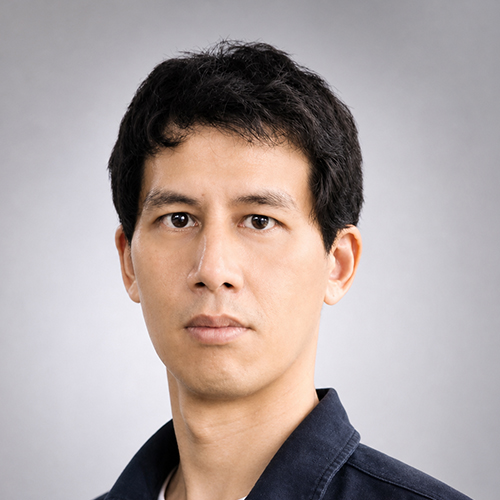
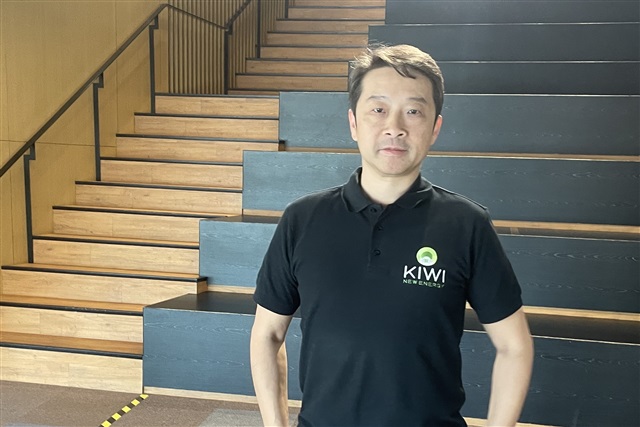
A green energy startup from Taiwan is heading to Silicon Valley with an unconventional argument: the most valuable layer in the energy transition may not be more solar panels, but the AI dispatch layer that sits between generation and consumption.
In 2019, Steve Huang cut open a kiwi after dinner and paused for a moment. The green flesh represented renewable energy. The white core stood for solar power. The tiny black seeds were households across the grid. The brown skin was the Earth. From that image came the name of his company: Kiwi New Energy.
That instinct for finding a coherent system inside a complex problem has shaped how Kiwi has built its position in Taiwan's energy market. It is also the lens the company is now bringing to Silicon Valley.
Kiwi New Energy will be among five Taiwanese companies heading to next month's Plug and Play Summit in Silicon Valley. Ahead of the trip, we sat down with co-founder and chairman Dr. Steve Huang and COO Ryo Lee to discuss what Kiwi plans to bring to one of the world's most competitive pitching stages.
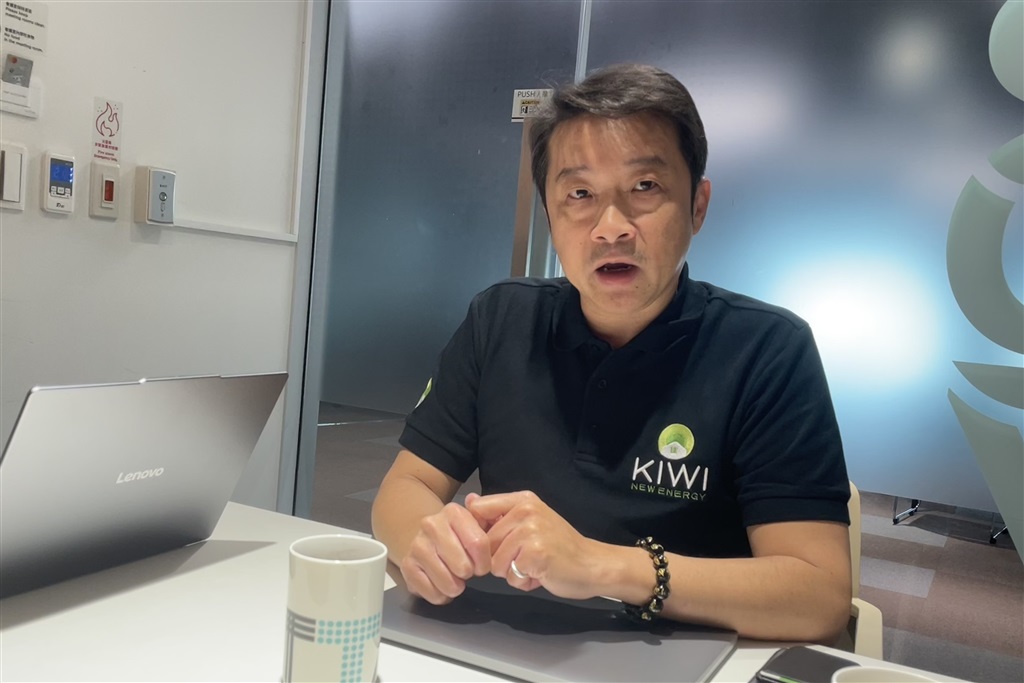
Steve Huang, Co-founder and chairman of Kiwi New Energy. Credit: DIGITIMES
Four startups in, Huang is now taking on the grid
Huang is no stranger to reinvention. After leaving Nvidia in 2005, he spent two decades moving across the energy value chain. His career included a role at solar manufacturer Gintech, the co-founding of silicon wafer company Danen Technology, which later went public, and a self-funded microinverter startup that ultimately shut down after Huawei entered the market. Kiwi, founded in May 2019, is his fourth startup.
"The key traits of a startup are speed and flexibility," Huang says.
Kiwi spent its first few years testing different business models before settling, roughly three years ago, on a clear focus: AI-powered energy management for multi-site retail and food service chains.
The logic is straightforward. Green power procurement has historically favored large technology companies with the scale to sign direct power purchase agreements. For mid-sized retailers — convenience store chains, sporting goods brands, restaurant groups — buying renewable electricity has often been expensive, operationally complex, and difficult to verify. Kiwi built its business around closing that gap.
Why Tesla's closed system mattered
Kiwi's core product is what the company calls an AI Energy Data Center, or AI-EDC. The platform analyzes data from both the generation side and the consumption side, then matches supply to demand in real time across hundreds or thousands of distributed sites. Each kilowatt-hour is tracked through blockchain-based certification, creating auditable records of green energy origin that can support traceability and corporate decarbonization reporting.
The technical depth of the platform becomes most visible in how Kiwi works with Tesla Energy.
Tesla Energy's storage systems operate on a largely closed architecture, which Lee compares to Apple's ecosystem. Third-party vendors typically do not get access to the control layer. Kiwi does. That access stemmed from its FamilyMart deployment in Taiwan. When Kiwi approached Tesla Energy with a plan for a large-scale rollout across convenience store locations, it was granted control-layer integration for Powerwall deployments in Taiwan — an arrangement that is rare in the market.
That access changes what the system can do. If the AI predicts that evening rush-hour foot traffic will drive a store's power consumption higher, or that a location is about to exceed its contracted grid capacity, the system can automatically command the battery to discharge before the penalty threshold is reached. In Taiwan, peak electricity tariffs can exceed NT$8 per kilowatt-hour, making that optimization directly relevant to operating costs as well as sustainability targets.
Kiwi began its FamilyMart deployment with 10 pilot locations. By 2025, that figure had reached 1,000 stores, and the target for 2026 is 3,000.
The demand-side bet that separates Kiwi from the pack
Taiwan's electricity retail sector is crowded, with over 100 licensed providers competing largely on price. Industry gross margins are generally understood to run in the mid-single digits. Kiwi's, by contrast, are in the mid-teens — a gap that reflects the value of its optimization layer rather than energy resale alone.
Lee is direct about where that advantage comes from. "Traditional green energy matching was passive — it only looked at the generation site itself. We start from the demand side. Every location has its own consumption profile, and the system only dispatches power when and where it's actually needed."
The company points to several customer examples. For Decathlon, which faced an end-of-2026 RE100 deadline, the previous off-site green power matching rate had been weak. After switching to Kiwi, green energy penetration rose above 83% outside summer peak months and remained above 70% during summer. Wang Steak, one of Taiwan's largest restaurant groups, operates nearly 40 locations on Kiwi's platform. The company is also building consumption models for a pharmacy chain and a coffee chain, representing more than 400 locations in total.
For smaller operators that cannot independently anchor a large bilateral energy contract, Kiwi's answer is aggregation. The platform bundles fragmented demand from dozens of smaller businesses into a single virtual demand pool, then matches that pool with mid- to large-scale renewable generators. Huang describes the goal as making green power subscriptions "as easy as subscribing to Netflix." Across its current client base, the system helps reduce approximately 45,000 metric tons of CO₂ emissions per year.
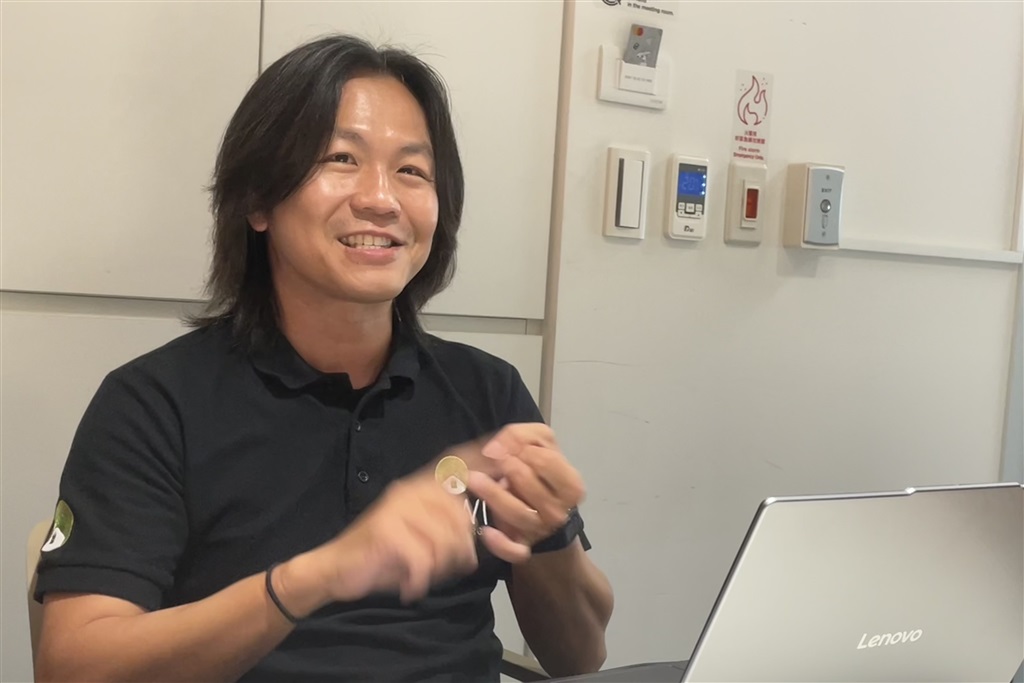
Ryo Lee, Co-founder and COO of Kiwi New Energy. Credit: Digitimes
Curtailment is the pitch in the US
The US market is structurally different from Taiwan's, but the underlying problem Kiwi wants to address is larger in scale.
In a growing number of renewable-heavy markets, daytime solar overgeneration has become a structural challenge. Grid operators are increasingly forced to curtail excess renewable power because the system cannot absorb, move, or store it fast enough. When supply overwhelms demand, electricity prices can even turn negative. This is precisely where AI dispatch becomes commercially valuable.
"AI can predict and dispatch that surplus power," Huang says. "That's exactly the pain point American utilities need solved."
At the Plug and Play Summit, Kiwi plans to engage through the platform's Reverse Pitch mechanism, where major utilities and corporations post specific technology needs they want startups to address. The company sees curtailment reduction, distributed energy optimization, and energy-efficiency management as areas where its software could fit.
Rather than trying to build a US retail footprint from scratch, Kiwi is pursuing a soft-landing strategy centered on software — integrating with existing US virtual power plant operators and aggregators that already have regulatory relationships and customer bases. Advisors have pointed toward large multi-site retail chains as a more practical beachhead than residential users, given stronger enterprise credit profiles and lower customer acquisition costs.
TSMC's Arizona footprint and the energy gap it created
One near-term opportunity Kiwi is actively exploring is the residential and commercial ecosystem forming around TSMC's Arizona fab.
TSMC's Phoenix facility has drawn a wave of Taiwanese suppliers and contractors into the region, along with a growing community of engineers, families, and support businesses. A new cluster is taking shape in the desert — and it needs energy infrastructure to match. Kiwi says a team will visit the area to assess the opportunity firsthand.
The scenario is not unfamiliar to Kiwi. What it has built in Taiwan — aggregating distributed demand across many sites and dispatching green power with precision — is arguably easier to deploy in a community that is still being built, where infrastructure choices have not yet been locked in.
There is also a demand-side fit. Taiwanese suppliers operating in Arizona face the same RE100 and carbon reporting pressures from TSMC and downstream customers that they do at home. Kiwi has spent years serving that customer profile in Taiwan. The language, the needs, and the pain points are ones the company already knows well.
Credit: Digitimes
Japan first, then the Bay Area
Between Taiwan and Silicon Valley, Kiwi has been building a presence in Japan. Post-Fukushima energy market liberalization created a more open environment for electricity trading, with clearer room for software-led optimization and cross-party coordination. Kiwi has established a local subsidiary, built partnerships with local operators, and is running a proof of concept with a major Japanese convenience store chain, with a formal announcement expected in the second half of the year.
The Silicon Valley trip also marks the start of a formal fundraising push. Kiwi is preparing a Pre-A round targeting US$5 million. After reaching breakeven in 2025, the company's 2026 milestones include deployments across more than 3,000 branded retail locations globally, 120 MW of managed renewable capacity, and an estimated annual revenue of US$30 million.
Whether the Taiwan-proven model will translate smoothly to the US grid — fragmented by state-level regulation, dominated by incumbents, and already crowded with venture-backed energy startups — remains an open question. But Kiwi's core argument is one that more energy players are beginning to take seriously: the grid's next major upgrade may not be more generation alone, but a smarter layer deciding where that power should go.
Article edited by Jack Wu