
CONNECT WITH US

Interview: AI compute startup TBC details biological computing platform linking living neurons and machine learning

, DIGITIMES Asia, Taipei
0

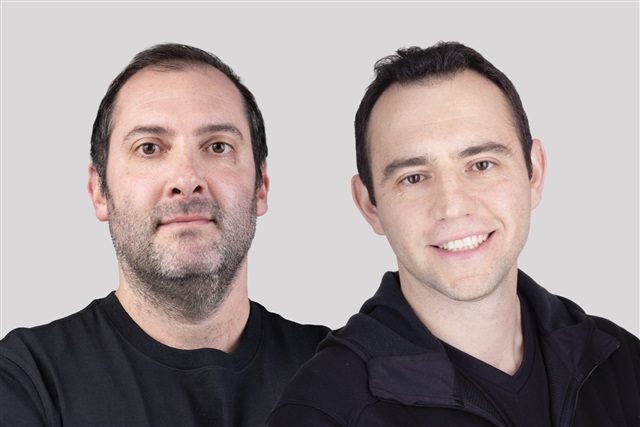
TBC COO Jon Pomeraniec (L) and CEO Alex Ksendzovsky (R). Credit: TBC

In an era where AI systems are rapidly scaling beyond the limits of traditional silicon, new experimental companies are beginning to question what "compute" itself should look like. One of the most unusual entrants is The Biological Computing Company (TBC), which proposes a hybrid model integrating living neurons with modern machine learning systems to enhance performance, efficiency, and adaptability. The idea sits at the intersection of neuroscience and computing.

According to TBC, co-founded by CEO Alex Ksendzovsky and COO Jon Pomeraniec in 2022, its platform encodes real-world data, such as images and video, into living neuronal cultures, then translates their responses into machine-readable representations that AI models can use. In this framing, biological systems are not a replacement for silicon but a parallel-processing layer designed to enhance existing architectures.

Early materials from the company describe applications in computer vision, generative video, and dynamic world models, where conventional GPU and transformer-based scaling is becoming increasingly costly in terms of energy and compute demand.

The significance of TBC's approach lies less in near-term commercial deployment and more in its challenge to prevailing assumptions about scaling laws in AI. As models grow larger and infrastructure demands accelerate, the industry has largely doubled down on more data, more parameters, and more compute. TBC instead argues that biological systems, refined over billions of years through evolution, may offer an alternative pathway to efficiency gains that cannot be achieved with silicon alone.

In February, TBC raised a US$25 million seed round led by Primary Ventures as it launched what it calls the world's first biological computing platform for computer vision and generative AI and opened a flagship lab in San Francisco's Mission Bay.

While still in an early and experimental phase, the company's vision reflects a broader shift in the AI landscape: a search for fundamentally new computing paradigms as conventional architectures approach economic and physical constraints.

In an interview with DIGITIMES Asia, TBC's co-founders shared their views and strategies of the company's biological computing approach and its potential role in addressing the growing computing demands of AI systems.

Vision and impact

Q: Could you please describe TBC's long-term vision? How do you hope that the integration of living neurons with AI will transform AI or computing architectures over the next five to ten years?

A: TBC is building a new class of computing that integrates living neurons with modern AI systems. Over the next five years, the company is focused on showing how biological networks complement silicon and emerging modalities to unlock new performance, efficiency, and adaptability. More specifically, success means TBC's technology becoming a go-to capability for generative video and world models, computer vision, and biologically-inspired compute.

Over a ten-year horizon, we will move to real-time compute, in which these biological neurons are part of the inference loop. Success means opening a new scaling path beyond brute-force silicon, using biology as a working compute substrate, integrating biological systems directly with silicon, and real-time biological compute that operates continuously rather than in discrete inference steps.

These systems support stable, long-horizon world models and generative video, real-time sensorimotor control for robotics, and pattern completion in dynamic environments such as simulation, time-series forecasting, and complex system modeling. In practice, this enables persistent simulation engines that update in real time, autonomous systems that adapt through experience rather than retraining, and AI infrastructure that delivers orders-of-magnitude gains in efficiency while supporting capabilities that are impractical on silicon alone.

Core technology

Q: Could you explain the core principles behind embedding neurons into computation? How do you convert the electrical signals from living neurons into data representations usable by AI models?

A: TBC is harnessing the brain's intelligence to evolve how we compute. We connect living neurons with modern AI to make frontier models more stable, scalable, and efficient. Our neural-based solution integrates directly with state-of-the-art foundation models to improve performance while reducing compute cost, reflecting a belief that the future of high-performance computing will increasingly incorporate biological intelligence.

In practice, TBC provides two product lines: 1) neural-based optimizers and 2) algorithm discovery. Our approach improves performance where brute-force computing approaches and conventional scaling struggle.

For neural-based optimizers, we encode real-world data (e.g., images, video) into living neurons, record neural responses, and then map those higher-dimensional representations into state-of-the-art AI models via modular adapters. For generative and interactive world models, we enhance image and video length and quality without increasing model size or retraining cost. For computer vision, we improve classification performance while reducing compute requirements.

In parallel, our algorithm discovery platform applies biologically derived principles to inform new AI system design, creating a compute layer that strengthens existing architectures rather than replacing them.

Stability and reliability

Q: Living neurons are highly sensitive to environmental conditions. How do you ensure the stability and reliability of your system in long-term operation or potential commercial applications?

A: We've been developing these systems in place for many years, and can control the environment the living neurons operate in – called a medium – ensuring the cells remain viable for up to a year.

There continues to be significant progress in maintaining and passaging cell lines within regenerative medicine labs and bioengineering firms. We are seeking partnerships in these areas to ensure sustainable supplies of rat cortical and inducible pluripotent stem cells, which can be passaged to create an almost infinite supply.

Scalability and production

Q: As your technology is primarily in the lab stage, what challenges do you foresee for large-scale deployment or mass production, and how do you plan to address them?

A: We want to note that while we operate out of a lab, we are commercially available right now – our solutions can be applied today. Our immediate plans focus on our customers, helping them build generative models with our technology, and achieving key technical milestones in the first half of 2026.

Our goal is to continue expanding investment in compute training resources and engineering talent to scale with AI workloads and ensure adoption across frontier AI model labs and hyperscaler companies.

From a supply chain and scaling perspective, TBC's current products do not face meaningful manufacturing constraints. Our biological systems generate adapters once, after which the commercial product consists of software deployed digitally to customers. The software layer scales easily.

As a result, scaling today's adapter-based offerings does not require scaling biological hardware. Looking ahead, as we work toward tighter biological–silicon integration, sourcing and manufacturing living neural systems at a larger scale may become a consideration. We are already actively developing strategies to address this, including approaches based on stem-cell–derived neurons and scalable biological production methods, to ensure long-term viability as the technology matures.

Ethics and regulation

Q: How does TBC approach ethical standards, cell sourcing, and regulatory compliance for this technology?

A: Ethical design is foundational to how we develop our technology and how we operate as a company.

The two most common ethical questions of biological computing are where the neurons come from and whether a biological computing system could become sentient.

TBC only uses neurons that are ethically sourced through established, lawful biomedical supply chains, without coercion, exploitation, or inducement, and with full chain-of-custody visibility. We treat provenance the way the best medical and life sciences organizations do, and we hold our partners and suppliers to the same standards. These standards help guide how we select partners and scale our technology.

On sentience, we will be very transparent: there is no sentience in the dish, and there will never be sentience in the dish. The actual science is very clear. Our neural cultures are not capable of producing consciousness; in fact, the system is intentionally designed so that sentience is not possible. These are controlled, non-sentient biological substrates, and they lack the biological structures, developmental context, and integrated systems required for consciousness. We retain control of the compute, output, and use cases at every step of the process.

Beyond those hard limits, we operate with defined sourcing standards, documented safeguards, and independent expert review.

Our approach is informed by established biomedical ethics frameworks and the responsible research guidance used by leading scientific organizations, such as those developed in stem cell research. We are transparent about what the technology does, what it does not, and where the boundaries lie.

Performance and benchmarking

Q: Compared to traditional AI models, what advantages does neuron-based computing offer in terms of energy efficiency, cost, or performance?

A: Neuron-based computing offers a different path to AI progress: better performance without relying solely on larger models, more chips, and more power. At TBC, we use living neural systems to improve how AI models process information, thereby increasing quality per unit of compute and reducing the energy and cost required to achieve a given level of performance.

TBC enables AI systems to operate more efficiently and reliably by integrating real biological neural computation into modern machine-learning pipelines. Biological networks complement silicon to unlock new performance and efficiency capabilities across modern AI systems – demonstrating scalable quality gains that are critical for real-world products operating under tight energy constraints.

AI is hitting the limits of silicon scalability, and gains in AI models are plateauing. TBC is solving this problem through a multi-phase process, beginning with using living neurons to optimize today's generative AI models, eventually building towards hybrid carbon, biological, and silicon computing systems capable of real-time inference and continuous learning. Our mission is to learn from evolution and redefine computing itself.

By training living neurons to process information and applying those lessons to the next generation of computing systems, we make training and inference for AI models better, faster, cheaper, and more efficient.

Q: Additionally, have you conducted any tests showing improvements in speed, energy use, or output quality over conventional silicon chips? Could you share any benchmarks or quantitative results?

A: As previously mentioned, in testing, our model shows a 23 times improvement in compute efficiency for image reconstruction, and can produce interactive video twice as long as benchmarks. Our technical blog goes extensively into the testing we've done. Still, as an example, a test on the Minecraft Oasis generative model showed that our TBC adapter yielded an average 19% improvement in image quality compared to the base Oasis model, while maintaining this image quality over a longer time.

Comparison with other advanced computing approaches

Q: How does your approach compare with neuromorphic computing or quantum computing? What are the differences and potential advantages?
A: Biological computing and quantum computing serve distinct and complementary roles. Both systems leverage interconnected networks and diverge from classical, deterministic computation, as biological networks process information probabilistically, responding dynamically to stimuli in ways that resemble quantum superpositions collapsing into specific states upon measurement.

However, the underlying mechanisms differ fundamentally. Unlike quantum systems, biological neural networks do not require extreme cooling or error correction at scale, making them more adaptable for large-scale, real-world AI applications. This scalability allows TBC to enhance compute efficiency for vision and LLMs, while expanding into dynamic architectures for real-time decision-making. Rather than competing, biological and quantum computing will likely serve complementary roles in the future.

Most importantly, biological computing can show real-world gains and solve real-world problems today. Again, we have real customers using our technology today.

Model integration

Q: Which AI model architectures can your neuron-based adapter currently support? Do you plan to extend compatibility to large Transformers, generative models, or multi-modal systems in the future?

A: TBC is uniquely focused on translating neural dynamics into deployable software and system-level performance gains for modern silicon-based AI models. We are the only company applying biological computing to real AI applications at commercial scale, and the first to commercialize them. Our products directly improve world models and generative video systems by increasing stability, coherence, and visual quality while reducing compute requirements, establishing the first practical bridge between biological computation and production-grade AI infrastructure.

We started with diffusion transformer models and have since expanded into broader generative and interactive models. Our biological computing platform is inherently multi-modal, and a key advantage is that we can scale across multiple types of computing systems.

Q: Is there anything else you would like to share about the future potential, applications, or unique aspects of TBC's technology that you feel are important for our audience to understand?

A: At our core, we're developing a new way to communicate with the natural world and apply these observations and lessons in practical, measurable ways. We are building an alternative to traditional silicon computing by using living neurons as a computational substrate to enhance generative AI systems and infrastructure.

This is not a distant research project. We are focused on building products today, with tangible outputs and near-term commercial applications. A central goal for us is to demonstrate that biological computing can deliver real performance and economic value right now.

We see a different path to scaling intelligence. The systems we're trying to build already exist in nature, refined over billions of years. The idea of using living neural networks for computation is, in some ways, both the most obvious and the most elusive direction in computer science.

Our goal is straightforward: to build a reliable platform that enables biological networks to augment modern AI and help solve real-world problems meaningfully. We're building the infrastructure to make biological intelligence usable, scalable, and impactful, opening up a new way to understand and interact with the physical world.

Article edited by Jack Wu