
India's Union Budget 2026 has introduced a comprehensive set of tax exemptions and duty-free incentives aimed at securing a larger share of the global technology supply chain, though the measures hold particular relevance for semiconductor and electronics manufacturers.
Built for foreign investors
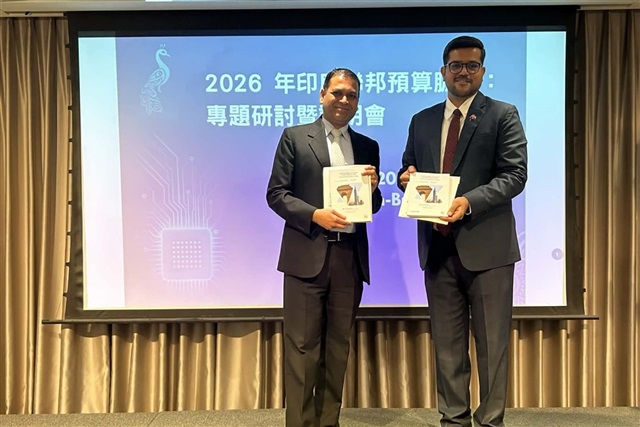
The fiscal roadmap, detailed March 16, 2026, at a workshop organized by the India Taipei Association (ITA), seeks to eliminate import friction and provide long-term tax certainty for international firms. Key measures include a five-year income tax exemption for foreign companies supplying capital goods and tooling to Indian contract manufacturers in bonded zones — a benefit available until 2031.
"India's budgets are not merely an annual fiscal statement. They become an important policy document for all serious economic partners, including Taiwan," said Ninad S. Deshpande, Director General of the ITA, during the workshop's opening remarks. He emphasized that India is evolving from a major consumer market into a core production base and R&D center for Taiwanese enterprises, urging firms to seize the strategic window in frontier technology sectors opened by the 2026 budget.
Dhaval Trivedi, Partner at K C Mehta & Co LLP and head of the India-Taiwan Corridor, described the budget as "tailor-made for Taiwanese investors," adding that the government's strategy is designed to move companies beyond simple assembly operations.
"What the government is trying to seek from Taiwan is to set up a full-fledged manufacturing entity in India," Trivedi said, noting that while assembly-only operations may see fewer benefits, localized production lines will now face substantially lower costs than competing jurisdictions.

Credit: ITA
Chips at the center
A centerpiece of the budget is the launch of the India Semiconductor Mission (ISM) 2.0, which doubles investment commitments to US$4.41 billion to strengthen the domestic chip production ecosystem, with subsidies covering up to 50% of project costs. To support this, the government has moved customs duties toward 0% for approximately 70 types of capital goods and critical semiconductor inputs, such as silicon quartz and boron.
Credit: ITA
Alongside ISM 2.0, the budget significantly expands funding for the Electronic Components Manufacturing Scheme (ECMS), creating a prime entry point for Taiwan's printed circuit board and electronic component manufacturers to reduce costs and expand market share across South Asia.
The 2026 budget also marks a significant legal shift with the introduction of the Income Tax Act 2025, which replaces a decades-old law with simplified language to reduce ambiguity and litigation for foreign investors. Under the new framework, the effective tax rate for technical service fees and technology transfers has been cut from 20% to 8.75%. Separately, a long-term tax holiday for data centers has been extended until 2047, complementing the capital equipment supplier incentives available until 2031.

Credit: ITA
This shift toward deep-rooted manufacturing is already taking shape in Gujarat, where Tata Electronics is progressing on the nation's first 12-inch wafer fabrication plant in Dholera. The US$11 billion project, a partnership utilizing technology licensed from Taiwan's PSMC, was reported in October 2025 to be advancing at a "rapid pace" with no construction delays, with milestones including the completion of a mock-up cleanroom and ongoing piling for wastewater treatment and project offices.

Credit: ITA

Credit: ITA
Parallel to infrastructure efforts, the focus has also shifted to human capital. Through Micron Technology's specialized workforce initiatives, a Center for Excellence has been established in collaboration with local institutions, offering a 90-day mandated skill training program to ensure engineering talent is "ready to be productive from day one" as the domestic chip ecosystem scales.

Credit: DIGITIMES Asia
Seven sectors, one vision
Beyond the high-tech sector, the budget identifies seven "strategic and frontier" sectors for scaled manufacturing:
Rare Earth Permanent Magnets
A new scheme with a US$0.12 billion outlay aims to build "Rare Earth Corridors" for mining and processing in states like Odisha and Tamil Nadu.
Bio-Pharma
India is targeting 5% of the global market share for biological medicines, supported by new research institutes and over 1,000 clinical trial sites.
Chemical Parks
The government will establish three dedicated parks using a cluster-based "plug-and-play" model.
Textiles
An Integrated Textile Programme focuses on labor-intensive growth and technical textile parks to boost exports.
Capital Goods
A US$1.10 billion outlay will support high-tech tool rooms and a domestic ecosystem for container manufacturing.
Geopolitics as a tailwind
Geopolitical shifts are driving these policy changes. Stanley Wang of the Institute for Information Industry (III), alongside Aman Jain of Invest India, noted that Western "de-risking" and "tech decoupling" have placed semiconductors at the center of geopolitical competition. The combination of Taiwan's advanced manufacturing expertise and India's vast STEM talent pool, they argued, is upgrading the bilateral relationship from simple capacity expansion to full-scale industrial integration. Wang further highlighted that India's recent trade negotiations could allow 99.5% of Indian-made goods to enter markets like the EU duty-free, providing a significant export incentive for Taiwanese firms operating in India.

Stanley Wang, Institute for Information Industry Credit: DIGITIMES Asia
States compete for the prize
Regional representatives underscored the competitive landscape within India. Rohit Naik, representing the Government of Gujarat, promoted Dholera as India's first "Semicon City," offering a complete semiconductor ecosystem with high-efficiency logistics and stable power supply, backed by a 20–25% state subsidy on capital expenditure that can be stacked with federal grants. Meanwhile, Prakash from Guidance Tamil Nadu highlighted that his state leads India in electronics exports, accounts for over 40% of the nation's electric vehicle production, and hosts a powerful Taiwanese supply chain cluster anchored by firms including Foxconn, Foxlink, Pou Chen, and Feng Tay — earning Tamil Nadu the reputation as the "Second Home for Taiwanese Business in India."
Chai meets bubble tea
Bilateral trade between India and Taiwan is expected to surpass US$12 billion this year. For Taiwanese companies, entering the Indian market has become what speakers at the event called a "strategic imperative" to ensure global competitiveness. Trivedi concluded his remarks on that note, observing that these measures are designed to foster long-term trust — and that there is "no better 'date' than when Indian Masala Chai meets the Taiwanese Bubble Tea."

Credit: Invest India
Article edited by Jack Wu