
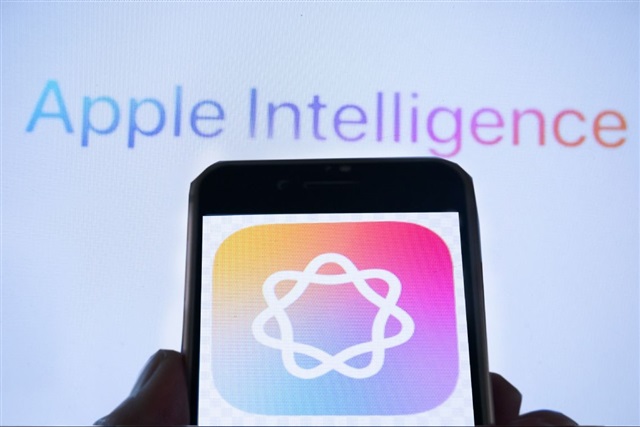
As the race to embed artificial intelligence into consumer devices heats up, Apple has formally confirmed a strategic partnership with Google to integrate the Gemini model into the next generation of Siri and Apple Intelligence. The tie-up between the two tech heavyweights is expected to sharpen Siri's capabilities and could also lift demand for Apple's future hardware.
The partnership is designed to help Apple quickly offset shortcomings in its in-house Ajax model, especially in long-context reasoning and world knowledge, by tapping Google's more mature AI technology. Under the arrangement, Gemini will serve as a core model for Apple Foundation Models and be integrated into the next-generation Siri system.
Apple will license Google's fully trained Gemini model, but inference will be handled on Apple's own Private Cloud Compute (PCC) systems and on user devices, rather than routing data through Google Cloud. The upgrade is scheduled to launch with iOS 26.4 in spring 2026, with Apple paying roughly US$1 billion per year for licensing and customised technical support.
Because Gemini will mainly run inside Apple's PCC environment, with Google supplying only the model and related technologies, supply chain sources say the deal is unlikely to generate meaningful direct hardware demand for Google, with most gains coming from indirect spillover effects.
For Apple, Gemini's large parameter scale and the expected surge in Siri usage will sharply increase compute workloads across its PCC systems. This is likely to speed up infrastructure investment to support the needs of more than two billion active devices.
Since 2025, Apple has launched a series of data centre projects, including a 250,000-square-foot AI server manufacturing facility in Houston, Texas, focused on customised Apple Silicon servers and expanding PCC capacity. Supply chain sources say these investments will support Gemini integration in the near term and prepare Apple for the long-term development of its own AI models.
Rising AI demand is also expected to lift server assembly requirements. Apple's long-time partner Foxconn, along with other qualified system integrators, stands to benefit.
Foxconn already holds a leading position in the AI server market, with product lines covering both Nvidia GPU and Google TPU-based ASIC architectures. Backed by the broad portfolio of its subsidiary Foxconn Industrial Internet (FII), the group is expected to gain stronger momentum in its AI-related businesses.
Supply chain players note that while the deal is a software-level alliance between two major US tech companies, Taiwan's hardware ecosystem remains just as critical. Whether Apple leans on external AI support in the short term or builds its own compute capabilities over time, large-scale data centre infrastructure will remain essential.
For system integrators with global logistics networks and precision manufacturing capabilities, this marks a key opportunity to capture value across the AI supply chain.
Article translated by Levi Li and edited by Jack Wu