
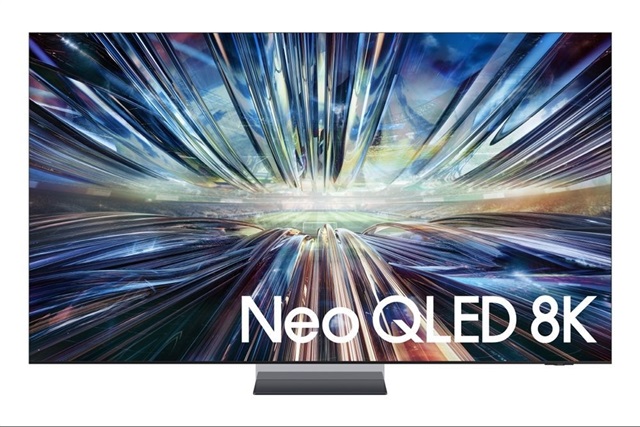
The 8K TV market, once seen as the hallmark of premium products, is rapidly fading as major manufacturers cease launching new models. Currently, Samsung Electronics remains the primary player in the 8K TV space, while the 8K Association, which it spearheads, is shrinking swiftly.
According to Chosun Biz, industry sources reveal that the 8K Association, established by Samsung to expand the 8K ecosystem, now counts only 19 member companies. This marks a steep decline from July 2022, when membership stood at 33.
Notable exits include Hisense, TCL CSOT, Changhong, and TPV Technology. Presently, among TV manufacturers, only Samsung and Panasonic remain members. Major panel makers such as Samsung Display (SDC), BOE, Innolux, and TCL CSOT have almost entirely withdrawn, leaving AUO as the sole remaining panel producer on the list. Content creators like Amazon and Frames Dealer, along with technology and equipment firms including Tencent, Harmonic, and Astro, have also left the association.
The 8K Association was launched under Samsung's leadership in 2018 alongside its debut of 8K TVs, formally establishing itself during CES 2019. The group has been responsible for setting 8K standards and promoting related certifications. However, recent inactivity and an increasing number of non-8K businesses within the organization have rendered it largely nominal, with frequent member withdrawals.
Initially, the 8K TV market showed promise driven by Samsung's lead and participation from giants like LG Electronics and Sony. Market research firm IHS Markit projected in early 2019 that annual 8K TV shipments would grow from 338,000 units to 3.725 million by 2021.
Reality diverged sharply from these forecasts. Data from Omdia indicates global 8K TV shipments totaled approximately 386,800 units in 2022, dropping further to 214,400 units in 2023, and expected to fall to 136,800 units in 2025. Within the overall TV market, 8K sets represent just about 0.1% of sales.
Industry experts attribute the disappointing growth primarily to the long-flagged issue of insufficient content supporting 8K resolution. The inability to produce enough native 8K video material, combined with slowing TV demand, has stifled adoption.
Currently, most global over-the-top (OTT) streaming content remains in full HD (FHD), with only some available in 4K. Many believe that pushing 8K before 4K has fully matured in the market was premature.
Although Samsung and LG have introduced AI-powered upscaling technologies that enhance FHD and 4K content to near-8K quality, actual improvements are limited and have failed to stimulate consumer interest significantly.
Consequently, LG ceased releasing new 8K OLED and LCD TV models starting in 2023 and 2024, respectively, maintaining only minimal sales of existing 8K lines. Sony stopped production of its sole 8K model, the Bravia Z9K series, beginning in 2025.
In contrast, Samsung continues to offer 8K options within its 2025 Neo QLED TV lineup. Industry insiders note that as content quality improves, Samsung is advancing its technology and aims to retain dominance in the 8K TV segment.
Article edited by Jack Wu