
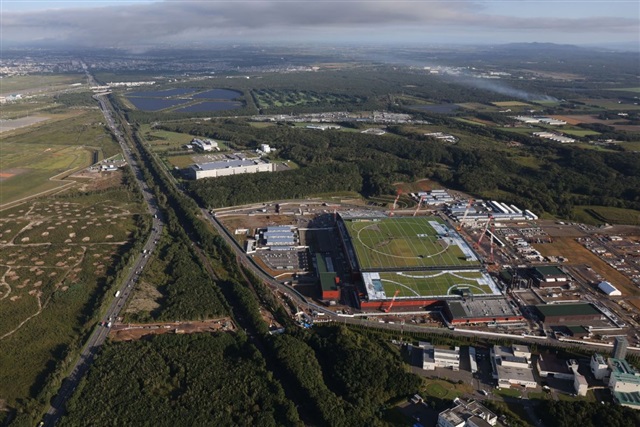
Japan is accelerating its national push to rebuild an advanced semiconductor ecosystem as Rapidus, the country's flagship next-generation chip venture, secures financing from major banks and private equity from more than twenty Japanese companies. According to reports from Nikkei and Asahi Shimbun, Japan's three megabanks, Mitsubishi UFJ Bank, Sumitomo Mitsui Banking, and Mizuho Bank, will provide Rapidus with up to JPY2 trillion (approx. US$12.8 billion) in financing.
The loans would be extended in stages beginning in fiscal 2027 (April 2027–March 2028) to support Rapidus' target of beginning mass production of 2nm chips in the second half of that year and to stabilize the company's long-term financial foundation.
Most of this financing is expected to be backed by debt guarantees from Japan's Information-technology Promotion Agency (IPA), a government-affiliated body. The three banks stated that the Development Bank of Japan (DBJ) is separately considering new equity investments totaling up to JPY25 billion.
This financing push comes as Rapidus continues to expand its shareholder base. More than twenty Japanese companies, including Honda, Canon, Kyocera, and multiple financial institutions, are preparing to join as new investors. Existing shareholders such as Sony are also expected to increase their stakes. Together, new and existing investors are expected to provide a combined JPY130 billion by the end of fiscal year 2025, meeting Rapidus' annual private-sector fundraising target. Individual contributions reportedly range from JPY500 million to JPY20 billion, though final figures and participating companies may shift as discussions continue.
Rapidus was founded in 2022 with ian nitial capital of JPY7.3 billion from eight major companies, including Toyota, NTT, SoftBank, Sony, NEC, Kioxia, and Mitsubishi UFJ Bank. New investors such as Fujitsu are reportedly considering contributions of up to JPY20 billion. Regional banks are also coordinating possible investments.
As it secures these commitments, the company's plant in Chitose, Hokkaido, produced its first 2nm test wafers in July 2025. After establishing stable 2nm mass production in 2027, Rapidus plans to progress to 1.4nm manufacturing within two to three years. The total investment required for developing and scaling production from 2nm to 1.4nm nodes is expected to exceed JPY7 trillion.
The Japanese government has already committed approximately JPY2.9 trillion to Rapidus, but the company must still secure roughly ¥4 trillion from bank financing and private-sector contributions. Despite the growing support, private investors remain comparatively cautious given the enormous capital requirements, technological uncertainties, and the challenge Rapidus still faces in securing future customers.
Still, the combination of massive bank-backed financing, expanding corporate investment, and strong government guarantees underscores Japan's determination to reestablish itself as a global leader in cutting-edge semiconductor manufacturing. Rapidus is ultimately at the center of Japan's national strategy.
Article translated by Emily Kuo and edited by Jack Wu