
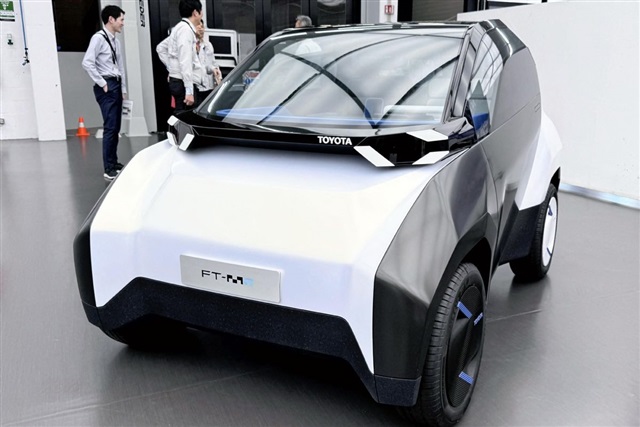
Toyota plans to transition its entire lineup of approximately 50 vehicle models to software-defined vehicles (SDVs) by 2030, equipping them with advanced software capabilities that allow owners to upgrade vehicle functions through over-the-air (OTA) updates after purchase.
Toyota, the world's largest automaker with annual vehicle production and sales of approximately 10 million units, will gradually introduce its proprietary Arene software operating system across new models, according to Kyodo News, Nikkei, and Reuters.
The move is intended to help Toyota catch up with Chinese and US electric vehicle (EV) manufacturers that have taken the lead in SDV development.
Arene rollout targets subscription growth
Beyond maintaining annual new vehicle sales of approximately 10 million units, Toyota aims to expand its subscription and service businesses through post-purchase software updates and other digital offerings.
By fiscal 2030, which runs from April 2030 through March 2031, the company expects operating profit from businesses other than new vehicle sales to reach JPY3 trillion (approximately US$18.9 billion), an increase of around 40% from current levels.
The large-scale adoption of SDVs is expected to contribute to this growth.
According to Toyota's public relations department, Executive Vice President Hiroki Nakajima outlined the company's Arene deployment plans to investors in Brussels, Belgium, last week.
He also revealed that Toyota intends to expand Arene beyond its own vehicles by 2035, making the platform available to models produced by partner automakers and other manufacturers.
Toyota previously announced plans to introduce Arene for the first time in the 2025 model-year RAV4 SUV, indicating that adoption would gradually expand across future vehicle launches.
SDVs could reshape supply chains
As SDVs become more widespread, customers are expected to visit dealerships less frequently because many vehicle functions can be updated remotely. The transition will also require automotive component manufacturers to reassess their development strategies.
In the SDV era, many functional improvements can be delivered through software rather than hardware replacements, potentially reducing the total number of components required in vehicles.
Engines and solid-state batteries on the roadmap
At a technology briefing in Belgium, Toyota also unveiled plans for a new engine designed for hybrid electric vehicles (HEVs) and conventional internal combustion engine vehicles.
The company intends to sell these engines to other automakers, targeting JPY250 billion (approximately US$1.575 billion) in sales from its external engine business by 2032.
Meanwhile, Toyota expects to commercialize all-solid-state batteries between 2027 and 2028. Initial applications are planned for commercial vehicles, drones, and other sectors.
Article translated by Scarlett Yu and edited by Jerry Chen